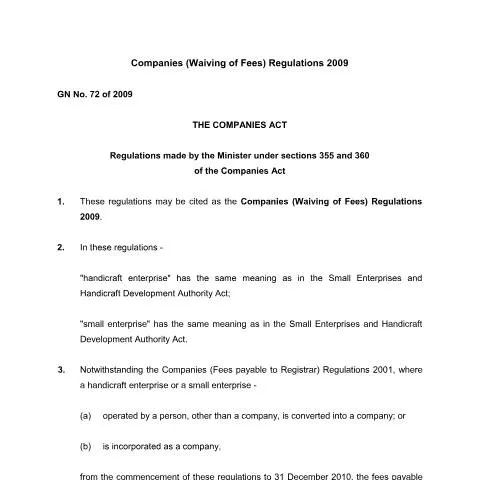
Understanding GN. 72 of 2009: Fees Waiver for Enterprises
The GN. 72 of 2009, formally known as the Companies (Waiving of Fees) Regulations 2009, plays a pivotal role in nurturing entrepreneurial growth in Mauritius, specifically targeting handicraft and small enterprises. This regulation, established under the authority of the Companies Act, aims to alleviate financial burdens during a critical phase for new businesses, thereby promoting incorporation and formalization within the industry.
Who is Required to Use This Regulation?
- Individuals operating handicraft enterprises or small enterprises.
- Those converting from sole proprietorships or other structures into incorporated companies.
- Entrepreneurs looking to incorporate their handicraft or small business entities from June 2009 until December 2010.
This waiver is particularly beneficial for those transitioning into a company structure, as it allows for significant savings on registration fees, thus encouraging the formalization of business operations.
Steps to Engage with GN. 72 of 2009
The process involves several key steps, beginning with gathering the necessary documentation to ensure successful registration under the stipulated regulations. Here’s a chronological overview:
- Determine your eligibility: Ensure that your business qualifies as a handicraft or small enterprise in accordance with the Small Enterprises and Handicraft Development Authority Act.
- Prepare your documentation: This includes proof of existing business operations, identification documents, and proposed company structure.
- Complete the application: Fill out the requisite forms for incorporation while explicitly indicating your reliance on the fees waiver.
- Submit your application: Deliver your application to the Registrar of Companies, ensuring all documents are included to avoid delays.
- Await confirmation: The Registrar will review and process your application, informing you of the outcome.
Documentation Checklist
| Document Type | Description | Required? |
|---|---|---|
| Business ID | Your identification and business registration details. | Yes |
| Proof of Business Operations | Documentation showing operation of handicraft or small enterprise. | Yes |
| Proposed Company Structure | Details regarding shareholders, directors, and company name. | Yes |
| Fees Waiver Application | Specific form indicating your intention to waive fees. | Yes |
Addressing Errors and Missing Documents
In the event of any discrepancies or omissions in your submitted application, it is crucial to act swiftly to rectify the situation. Here are the steps to take:
- Contact the Registrar: Reach out to the office directly, explaining your situation and seeking guidance on how to proceed.
- Review your submission: Go through your original documents and application to identify any missing components or errors.
- Submit corrections promptly: If you identify errors, correct them and re-submit the necessary documentation as instructed by the Registrar.
Timeliness is essential, as delays can lead to your application being rejected or stalled indefinitely. Keeping a record of all correspondence and submissions can aid in resolving any issues effectively.
Implementation and Processing Timeline
The processing timeline for applications submitted under GN. 72 of 2009 can vary based on several factors, including completeness of documentation and the current workload of the Registrar’s office. Generally, applicants should anticipate the following:
- Initial Processing: Expect a review within 4 to 6 weeks of submission.
- Request for Additional Information: If your application is incomplete, the Registrar may reach out within the first month.
- Final Decision: A formal decision is usually communicated within 2 months of complete application submission.
To track your application’s status, maintain regular contact with the Registrar's office and consult their online platforms, where available.
Comparative Overview: GN. 72 of 2009 vs. Other Company Regulations
Understanding how GN. 72 of 2009 fits within the broader regulatory framework is crucial for entrepreneurs. Below is a comparison with other related regulatory forms:
| Regulation | Purpose | Fees Involved | Eligibility |
|---|---|---|---|
| GN. 72 of 2009 | Waives fees for small and handicraft enterprises incorporating as companies. | None for eligible businesses | Small and handicraft enterprises. |
| Companies (Fees Payable to Registrar) Regulations 2001 | Outlines standard fees for all company registrations. | Standard fees applicable | All company types. |
| GN. 61 of 2000 | Regulates the annual return submission process for registered companies. | Standard fees apply | All registered companies. |
This comparative overview highlights the unique position of GN. 72 of 2009 in facilitating the incorporation of small and handicraft enterprises without the financial burdens typically associated with registration.
Unique Situations: Navigating Complexities
There may be instances where individuals face unique challenges during their application process under GN. 72 of 2009, such as:
- Foreign Entrepreneurs: Non-residents intending to establish a business will need to comply with additional regulations. This may include obtaining a work permit or business visa prior to proceeding with the incorporation.
- Minors as Directors: Should the applicant or a director be underage, legal representation is required to act on their behalf. This may involve additional documentation and delays.
- Urgent Situations: If an enterprise requires expedited registration due to time-sensitive contracts or opportunities, specific requests can be made to the Registrar, though this may incur additional scrutiny.
Understanding these complexities can make a significant difference in the application experience. It is advisable for applicants facing special situations to seek guidance from a legal professional or advisory service familiar with Mauritian company law.
Final Considerations and Best Practices
As entrepreneurs navigate the intricate landscape laid out by GN. 72 of 2009, adhering to best practices can enhance their experience and likelihood of successful incorporation:
- Stay Informed: Regularly update yourself on any changes in regulations or procedures related to company registration.
- Maintain Clear Documentation: Always keep accurate records of your business activities, financial transactions, and correspondence with the Registrar.
- Engage with Local Business Networks: Connect with other business owners who have undergone the same process. They can provide valuable insights and guidance.
- Utilize E-Services: Where possible, leverage the digital resources offered by the government, such as the govmu.org portal, to streamline your application process.
By following these guidelines and understanding the nuances of GN. 72 of 2009, entrepreneurs can effectively navigate the incorporation process and capitalize on the opportunities presented by the waiver of fees for their handicraft or small enterprises.
Understanding GN 72 of 2009: Scope and Application
GN 72 of 2009, officially known as the “Gazette Notice 72 of 2009” is a significant regulatory framework that has shaped the landscape of public service recruitment and management in Mauritius. It primarily addresses the appointment and conditions of service for public officers, streamlining processes and ensuring that appointments are made in a fair and transparent manner.
The notice serves as a guideline for all institutions under the purview of the Public Service Commission (PSC) and local government authorities, ensuring that recruitment processes align with national policies aimed at enhancing efficiency and integrity within public services.
Key Provisions of GN 72 of 2009
One of the critical aspects of GN 72 of 2009 is its emphasis on merit-based recruitment. The announcement delineates the procedures for applications, assessments, and final appointments, mandating that all candidates undergo a transparent selection process. This includes:
Job Advertisement: All vacancies within the public sector must be advertised publicly, allowing a wide pool of candidates to apply. The notice stipulates that advertisements must include details such as job responsibilities, qualifications required, and application deadlines.
Meritocracy in Selection: Candidates’ qualifications and experience are evaluated against predetermined criteria, ensuring that the selection is based solely on merit. Additionally, the PSC is required to keep detailed records of the selection process, facilitating transparency and accountability.
Appeal Mechanism: GN 72 of 2009 also introduces an appeal process for candidates who feel aggrieved by the recruitment decisions. This process allows unsuccessful candidates to formally challenge decisions and ensures fairness in appointments.
Diversity and Inclusion: The framework promotes diversity in hiring, urging public sector institutions to consider candidates from various backgrounds to reflect the demographic composition of the nation.
Understanding these provisions is essential for both potential candidates and administrators, as it lays the groundwork for a more efficient and equitable public service.
Impact of GN 72 of 2009 on Public Sector Efficiency
The implementation of GN 72 of 2009 has had a profound effect on the efficiency of the public sector in Mauritius. By introducing a structured approach to recruitment, the notice has led to several positive outcomes:
Streamlined Recruitment Processes
Prior to the issuance of GN 72 of 2009, recruitment processes within the public sector were often criticized for being lengthy and lacking transparency. The standardized approach outlined in the notice has significantly reduced the time taken to fill vacancies. By clearly defining timelines for each stage of the recruitment process, from advertising to appointment, public institutions can now respond rapidly to staffing needs.
Enhanced Accountability and Oversight
The requirement for detailed record-keeping and transparency has facilitated greater accountability within the public sector. The PSC and local government authorities are now under greater scrutiny, ensuring that hiring practices are not only fair but also publicly defensible. This has helped restore public trust in the recruitment processes.
Fill in your form directly online
No printing: type your details into the boxes of the official form, tick, then download the PDF ready to send.
- 1Type into the form boxes
- 2Tick in one click
- 3Save and download the PDF
Professional Development Opportunities
Another significant impact of GN 72 of 2009 is its contribution to the professional development of public officers. By establishing clear pathways for recruitment and promotion, the notice has paved the way for a more skilled and competent workforce. It encourages public officers to pursue continuous development, aligning their personal growth with the strategic objectives of their respective institutions.
Challenges and Areas for Improvement
While the positive impacts of GN 72 of 2009 are evident, there are still challenges that need addressing. For instance, the appeal process, while beneficial, can lead to delays in finalizing appointments, affecting overall operational efficiency. Additionally, the emphasis on meritocracy requires ongoing training for selection committees to accurately assess candidates' qualifications without bias.
Public institutions must constantly evaluate and refine their recruitment practices in alignment with GN 72 of 2009 to ensure continued improvements in public service delivery.
Future Directions and Amendments to GN 72 of 2009
As Mauritius continues to evolve in the context of digital transformation and changing workforce dynamics, there is a pressing need to revisit and potentially amend GN 72 of 2009 to ensure it remains relevant and effective.
Integrating Technology in Recruitment
With the government’s strong push towards digital services, integrating technology into the recruitment process represents a significant opportunity for enhancement. Expanding online application systems can streamline submission and tracking processes, making it easier for candidates to apply and for public institutions to manage applications efficiently.
Additionally, incorporating data analytics can help in identifying trends in recruitment practices, enabling public institutions to make informed decisions about workforce planning and development.
Addressing Changing Workforce Demographics
The demographic makeup of the workforce is shifting, with younger generations bringing different expectations and skills to the job market. GN 72 of 2009 should consider these changes by promoting flexibility in job roles and encouraging work-life balance, which could increase the attractiveness of public sector employment to younger candidates.
Continuous Review and Stakeholder Engagement
Regular reviews of GN 72 of 2009 are crucial to keep the regulations aligned with best practices both locally and globally. Engaging with stakeholders, including current public officers, prospective candidates, and civil society organizations, can provide valuable insights into areas that require improvement.
Such engagement can foster collaborative efforts to refine recruitment practices, ensuring they meet the needs of an evolving society while remaining true to the core principles of transparency and meritocracy laid out in GN 72 of 2009.
In conclusion, GN 72 of 2009 has laid a solid foundation for public sector recruitment in Mauritius, yet the journey is far from complete. The ongoing evolution of the labor market and advancements in technology necessitate a proactive approach to ensure that this framework continues to serve the best interests of both public service and the citizens of Mauritius.