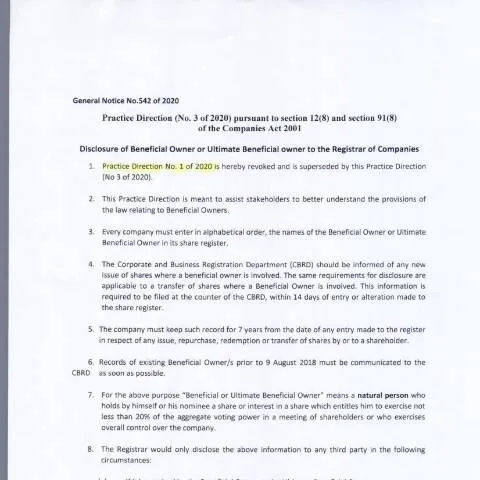
Understanding the Role of Companies - GN 542 of 2020 in Corporate Governance
The Companies - GN 542 of 2020 document serves as a pivotal element in the framework of corporate governance in Mauritius. As businesses navigate the complexities of ownership disclosure, this directive establishes clear guidelines about the responsibilities of companies regarding their beneficial owners. Understanding this document is crucial for compliance and transparency within corporate structures.
Who is Responsible for Filing this Document?
Within the corporate landscape, the obligation to submit information regarding beneficial ownership falls primarily on the company itself. This includes:
- All registered companies operating in Mauritius.
- Entities involved in the transfer of shares where a beneficial owner is involved.
Additionally, the document is relevant to individuals or entities representing stakeholder interests, such as legal representatives or accountants, ensuring that disclosure practices are upheld systematically. Stakeholders must be proactive in maintaining accurate records to align with the stated legal obligations.
The Path to Compliance: Completing the Form
Filling out the Companies - GN 542 of 2020 form requires meticulous attention to detail. Below are the key steps to ensure accuracy:
- Gather Relevant Information: Compile names of all beneficial owners in alphabetical order as stipulated.
- Detail Share Information: Indicate any new share issues or transfers involving a beneficial owner, adhering to the prescribed timeline.
- Record Maintenance: Ensure records of beneficial owners are maintained for a minimum of seven years, as mandated.
The completeness of this information is essential not just for compliance but also for fostering trust with stakeholders and regulatory bodies. Ensure all entries are clearly legible and accurate to avoid complications during submission.
Submission Channels: Online vs Paper vs In-person
The submission channels for the Companies - GN 542 of 2020 form are diverse, catering to the varying needs of businesses:
| Submission Method | Details | Pros & Cons |
|---|---|---|
| Online Submission | Accessible through the government e-services portal. | Pros: Efficiency, quicker processing. Cons: Requires internet access. |
| Paper Submission | Via mail or in-person to the Corporate and Business Registration Department (CBRD). | Pros: Tangible records. Cons: Potential delays in processing. |
| In-person Submission | Directly at the CBRD counter. | Pros: Immediate confirmation of receipt. Cons: Time-consuming due to wait times. |
Choosing the right submission method can significantly impact the efficiency of your filing process. Each option has its unique benefits and limitations, so consider your organization’s capacity for online engagement and the urgency of your filing.
Monitoring Your Submission: Keeping Track with the Registrar
Once the Companies - GN 542 of 2020 form is submitted, understanding the follow-up process is imperative. The Corporate and Business Registration Department (CBRD) allows stakeholders to:
- Check the status of their submission through the e-portal.
- Contact CBRD for updates or clarification regarding any open queries.
It is advisable to maintain records of submission dates and any correspondence related to your application to streamline follow-up inquiries. Being proactive can prevent unnecessary delays or complications during the review process.
Addressing Potential Issues: Errors and Omissions
Despite best efforts, errors may occur during the completion or submission of the Companies - GN 542 of 2020. It is essential to understand the appropriate steps to rectify such issues:
- Identify the Error: Review the submission carefully to pinpoint discrepancies.
- Notify the Registrar: Contact the CBRD immediately to report the issue.
- Follow Instructions: Adhere to any guidance provided by the Registrar to amend the submission.
Timely communication is crucial to mitigating any complications. Additionally, keeping an open line of communication with your accountant or legal advisor can help clarify any complex situations arising from errors in your disclosure.
The Stakes of Compliance: Consequences of Non-compliance
Non-compliance with the Companies - GN 542 of 2020 can lead to severe repercussions. The legislation outlines specific penalties, which may include:
- A fine not exceeding MUR 300,000 for companies (excluding small private companies).
- A fine not exceeding MUR 100,000 for small private companies.
In addition to financial penalties, failing to meet disclosure requirements can lead to reputational damage and reduced trust among stakeholders. It is vital for all businesses to prioritize compliance to safeguard against these potential risks.
Conclusion: Embedding Transparency in Corporate Culture
Ultimately, the Companies - GN 542 of 2020 is not merely a regulatory requirement but a cornerstone of corporate transparency. In a world where accountability is paramount, ensuring compliance with beneficial ownership disclosure can foster a culture of trust and integrity. By embracing these practices, companies contribute positively to the regulatory environment in Mauritius and enhance their own operational credibility in the marketplace.
Understanding GN 542 of 2020: Key Implications for Companies in Mauritius
GN 542 of 2020, officially introduced by the Government of Mauritius, is a significant piece of legislation that reshapes the regulatory landscape for companies in the country. This notification primarily addresses the requirements for the registration of businesses under the Companies Act and introduces specific guidelines for operation and compliance. Understanding the intricacies of GN 542 is crucial for entrepreneurs, legal professionals, and stakeholders involved in the business sector in Mauritius.
One of the most notable implications of GN 542 is the emphasis on enhanced transparency and accountability within companies. This regulation mandates that businesses submit detailed annual returns, including financial statements and disclosures, to the Registrar of Companies. Failure to comply with these requirements can result in penalties and even the dissolution of the company. As such, it is essential for companies to maintain accurate financial records and ensure timely submissions to remain compliant.
Fill in your form directly online
No printing: type your details into the boxes of the official form, tick, then download the PDF ready to send.
- 1Type into the form boxes
- 2Tick in one click
- 3Save and download the PDF
Additionally, GN 542 introduces the concept of beneficial ownership, requiring companies to disclose information about individuals who ultimately own or control the business. This move aligns with international standards aimed at combating money laundering and ensuring corporate governance. Companies must now maintain a register of beneficial owners, which will be accessible to the authorities upon request. This level of scrutiny may necessitate companies to revise their governance structures and practices accordingly.
Steps for Compliance with GN 542: A Practical Guide
For companies operating in Mauritius, navigating the compliance landscape introduced by GN 542 can be challenging, yet manageable with a structured approach. Below, we outline practical steps that businesses can take to ensure compliance with this regulation:
- Review Corporate Structure: Companies should begin by assessing their current corporate structure to identify any changes needed to meet the requirements of GN 542. This includes determining the beneficial owners and updating records accordingly.
- Update Internal Policies: Establish or revise internal policies and procedures for financial reporting and record-keeping. This may involve staff training and implementing new software solutions to streamline operations.
- Compile Required Documentation: Gather all necessary documentation, including financial statements, annual returns, and details of beneficial owners. Ensure that these documents are prepared in accordance with the guidelines set forth by the Registrar of Companies.
- Seek Professional Advice: Engage legal and accounting professionals who specialize in corporate law and compliance to assist in understanding the nuances of GN 542 and its implications for your business.
- Regular Compliance Audits: Schedule regular compliance audits to evaluate adherence to GN 542 and make adjustments as needed. This proactive approach helps in identifying potential issues before they escalate.
The Impact of GN 542 on Foreign Investments in Mauritius
GN 542 of 2020 not only impacts local businesses but also has far-reaching implications for foreign investors looking to establish a presence in Mauritius. The legislation enhances the credibility and attractiveness of Mauritius as a destination for foreign investment by fostering a transparent business environment.
Foreign investors are increasingly scrutinizing regulatory frameworks before committing capital to new ventures. The provisions of GN 542 signify Mauritius's commitment to upholding international standards in corporate governance and compliance, which can enhance investor confidence. Investors favor jurisdictions that prioritize transparency, making GN 542 a potential catalyst for increased foreign investment.
Moreover, the strict regulations surrounding beneficial ownership serve to mitigate the risks associated with corruption and financial mismanagement. These measures can ultimately lead to a more stable business environment, encouraging foreign enterprises to explore opportunities in sectors such as technology, finance, and tourism.
However, it is crucial for foreign investors to conduct thorough due diligence on local partnerships and navigate the compliance landscape effectively. Understanding the obligations set out in GN 542 will be instrumental in securing successful and sustainable business operations within Mauritius.