Understanding the Purpose of the Measuring Device Classification
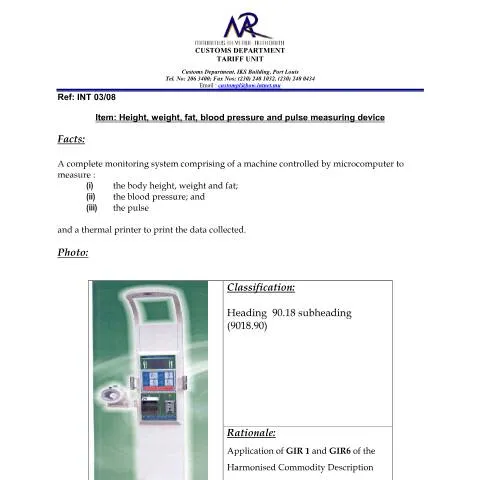
The classification of height, weight, fat, blood pressure, and pulse measuring devices plays a critical role in the regulation of healthcare equipment within Mauritius. This document, referred to as the Measuring Device Classification, is essential for manufacturers and importers to ensure compliance with local legislation concerning health and safety standards. The document outlines the specifications of devices that need to be registered and the formal procedures that govern their utilization in medical and fitness settings.
Who Needs to Submit this Classification Document?
The responsibility of submitting the Measuring Device Classification lies primarily with manufacturers, importers, and distributors of the aforementioned measuring devices. Healthcare providers intending to use such devices must also be aware of the implications of this classification, particularly in terms of liability and compliance with safety regulations.
Profiles of Submitters
- Manufacturers: Local or international companies producing measuring devices need to provide detailed specifications for registration.
- Importers: Businesses that import these devices must classify them correctly to avoid penalties.
- Healthcare Providers: Clinics and hospitals utilizing these devices need to ensure they are compliant with local regulations.
Each profile may have specific requirements regarding the documentation needed to accompany the submission of this classification. For instance, manufacturers might need to submit technical specifications and safety certifications, while healthcare providers may require proof of device calibration.
Navigating the Sections of the Measuring Device Document
The document consists of several distinct sections, each of which requires meticulous attention to detail. Understanding what information is needed in each section is crucial to avoid delays or rejections of the classification request.
Detailed Breakdown of Sections
- Device Description: This section requires a complete description of the measuring device, including its make, model, and specific functionalities.
- Technical Specifications: Here, submitters must outline the technical details such as dimensions, weight, materials used, and operational parameters.
- Compliance Certifications: A crucial part of the submission; any safety or regulatory certifications must be included to demonstrate adherence to local standards.
- Intended Use: Clearly stating the device's intended medical or fitness purposes is necessary for proper classification.
- Manufacturer Details: The name and contact information of the manufacturer must be provided, along with evidence of their ability to produce the device in compliance with regulations.
Each section is pivotal; missing any information can lead to unnecessary delays. Be sure to verify the information against the requirements to ensure completeness.
Required Documentation for Successful Submission
Preparing the necessary documentation is key to a smooth submission process. Each submitter's requirements may differ based on their role in the market, but common documentation includes:
General Document Checklist
- Completed Measuring Device Classification Form.
- Technical specifications sheet.
- Copy of safety and compliance certifications.
- Proof of manufacturer's ability to produce the device (if applicable).
- Calibration certificates for the device (for healthcare providers).
Submitting a complete and accurate set of documents expedites the process, ensuring that the classification is processed without unnecessary setbacks.
Submission Channels: Online, Paper, or In-Person?
Understanding the channels available for submission can help streamline the process. There are multiple options for submitting the Measuring Device Classification document:
Comparison of Submission Methods
| Method | Advantages | Considerations |
|---|---|---|
| Online Submission | Fast processing, easy tracking via the government portal. | Requires digital copies of documents, internet access. |
| Paper Submission | Useful for those unfamiliar with online systems; physical copies can be provided. | Longer processing time, potential for loss in transit. |
| In-Person Submission | Immediate confirmation of submission, ability to clarify any issues on the spot. | Time-consuming; may require travel to the submission office during operating hours. |
Each channel has its pros and cons; choosing the one that aligns with your needs will enhance the chances of a smooth submission process.
Consequences of Non-Compliance and Errors
Failure to comply with the classification requirements can lead to significant repercussions, including fines, delays in the approval of devices, or even legal action against manufacturers and healthcare providers. It is critical to understand the implications of non-compliance.
What to Do in Case of Issues
- Missing Documents: If the submission is incomplete, regulatory authorities will typically issue a notice requesting the missing documents. Promptly respond to any such notices.
- Errors on the Form: Errors can result in classification delays. If you discover an error post-submission, contact the relevant authority immediately to rectify it.
- Refusal of Classification: If the classification is denied, the submitter has the right to appeal the decision. Gather additional information or documentation to support your case.
Being proactive in addressing issues can mitigate the consequences of compliance failures.
The Regulatory Framework Supporting the Measuring Device Classification
Understanding the legal backdrop for this document is essential for compliance and successful submission. The classification of measuring devices is governed by several laws and regulations, including:
Key Legislative References
- Public Health Act: Establishes the requirements for medical devices, including classification protocols.
- Consumer Protection Act: Ensures that the devices meet safety standards before they can be sold or used.
- Customs Regulations: Outlines the procedures for importing measuring devices, ensuring they are classified correctly upon entry.
This regulatory framework is necessary to ensure public safety and the efficacy of the medical devices used across Mauritius.
Understanding the Application Process in Practice
Once the form is submitted and the necessary documentation provided, the application process kicks into gear. Understanding the steps involved post-submission will equip applicants with the knowledge needed to navigate potential challenges.
Step-by-Step Application Journey
- Initial Review: The regulatory body will conduct a preliminary review of the documents submitted to ensure all required information is present.
- Technical Assessment: A detailed technical assessment will be carried out to verify that the device meets safety and operational standards.
- Classification Decision: After the assessments, a classification decision is made, and the applicant is notified accordingly.
- Issuance of Classification Certificate: If approved, a classification certificate will be issued, allowing the device to be used within the healthcare or fitness industry.
Each of these steps requires careful monitoring, and applicants are encouraged to stay in contact with the regulatory body for updates on their application status.
Understanding the Classification of Health Measurement Devices in Mauritius
Health measurement devices are crucial for assessing various aspects of physical health, including height, weight, fat percentage, blood pressure, and pulse rate. The classification of these devices in Mauritius is defined by specific guidelines set forth by health authorities, aiming to ensure accuracy, reliability, and compliance with national health standards.
In Mauritius, the Ministry of Health and Wellness takes an active role in the regulation and classification of medical devices, including health measurement tools. These devices fall under different categories based on their intended use, risk factors, and the environment in which they are employed. Understanding these classifications not only helps consumers make informed choices but also assists healthcare providers in selecting the appropriate devices for patient care.
For example, devices such as sphygmomanometers (used for measuring blood pressure) and weighing scales are classified under general medical devices. These instruments are deemed low-risk, requiring minimal regulatory oversight. However, devices capable of performing more complex functions, such as digital body fat analyzers or advanced blood pressure monitors with integrated data management systems, may be categorized as higher-risk devices due to their potential impact on patient health outcomes.
It is essential for manufacturers and distributors of health measurement devices in Mauritius to understand the classification system, which can affect marketing, distribution, and compliance requirements. They must provide comprehensive product information, including device specifications, intended use, and maintenance guidelines, to satisfy the regulatory framework established by the Ministry of Health and Wellness.
The Role of Technology in Health Measurement Devices
In recent years, technology has significantly transformed the landscape of health measurement devices. The proliferation of smart technology and digital health solutions has influenced how individuals measure and monitor their health metrics such as height, weight, body fat, blood pressure, and pulse. In Mauritius, the incorporation of digital platforms has led to the emergence of smart health devices that not only provide real-time data but also offer connectivity features for enhanced user engagement.
Fill in your form directly online
No printing: type your details into the boxes of the official form, tick, then download the PDF ready to send.
- 1Type into the form boxes
- 2Tick in one click
- 3Save and download the PDF
Smart scales, for instance, are now equipped with Bluetooth connectivity that allows users to sync their measurements with mobile applications. This integration facilitates better tracking of health metrics over time, encouraging individuals to take proactive steps toward healthier lifestyles. Similarly, digital blood pressure monitors often come with accompanying apps that provide educational resources, reminders, and the ability to share results with healthcare professionals, thereby enhancing patient engagement and adherence to treatment plans.
Moreover, technological advancements have resulted in the development of wearable devices capable of continuously monitoring pulse rates and even detecting irregularities in heart rhythms. These innovations are particularly beneficial for individuals with chronic health conditions, enabling early detection and timely intervention. However, users must ensure that these devices are certified and compliant with local regulations, as the accuracy of measurements can vary significantly between different products.
As Mauritius continues to embrace technology in healthcare, there is a growing emphasis on establishing regulations that encompass these emerging digital health devices. The Ministry of Health and Wellness is actively working to create a framework that ensures the safety, efficacy, and quality of smart health measurement devices while also educating consumers about the importance of using certified products.
Best Practices for Using Health Measurement Devices
Utilizing health measurement devices effectively requires adherence to best practices to ensure accuracy and reliability. In Mauritius, individuals must familiarize themselves with the operational guidelines for each type of device to guarantee precise readings that inform their health decisions.
For instance, when using a weighing scale, it is advisable to do so at the same time of day under consistent conditions, such as wearing similar clothing. This practice minimizes discrepancies caused by fluctuating factors such as hydration levels or dietary changes. Similarly, for measuring blood pressure, it is essential to follow recommended protocols, including resting for a few minutes before taking a measurement and ensuring the cuff is placed correctly on the arm.
Moreover, users should regularly calibrate their devices according to manufacturer guidelines. This is particularly important for blood pressure cuffs, as improper calibration can lead to misleading results that could affect health management decisions. Individuals are encouraged to keep a log of their readings over time, which can offer valuable insights when discussing health concerns with healthcare professionals.
In addition to these practical tips, it is crucial for users to be aware of the limitations of their devices. For instance, while smart devices can provide convenience and enhanced tracking capabilities, the accuracy of their readings may not always match that of professional-grade equipment used in clinical settings. Therefore, users should approach their health data with an understanding of these nuances and seek professional evaluations when necessary.
Ultimately, by embracing best practices for using health measurement devices, individuals in Mauritius can make more informed choices regarding their health and well-being.