Understanding the Claim on Export of Waste PET Bottles: An Essential Process
In an increasingly environmentally-conscious world, the management and recycling of waste materials have taken center stage in policy discussions and regulatory frameworks. For businesses engaged in the export of waste PET bottles or PET flakes, or those recycling waste PET into reusable goods, navigating the proper channels to claim refunds on these exports is paramount. This guide delves into the specifics of the Claim on Export of Waste PET Bottles or PET Flakes or Waste PET Bottles Recycled into Reusable Goods, including its purpose, the steps involved in completion and submission, and potential pitfalls to avoid.
A Historical Overview: The Regulatory Framework Behind the Claim
The regulatory landscape for waste management and recycling in Mauritius has evolved significantly. The Excise Act forms a cornerstone of the legislation, particularly sections that address waste management and recycling incentives. The introduction of Section 52A was aimed at encouraging recycling initiatives and the export of recyclable materials by providing financial refunds for quantities exported or recycled. This legal backdrop underlines the importance of the Claim PET Bottles form, as it serves as a formal mechanism to facilitate the refund process.
The Role of the Mauritius Revenue Authority (MRA)
The Mauritius Revenue Authority (MRA) administers the claims associated with the export of waste materials. Understanding MRA's role is crucial for exporters as they navigate the refund process. The MRA ensures compliance with national laws while facilitating the processing of claims efficiently.
Who Should Submit the Claim and When?
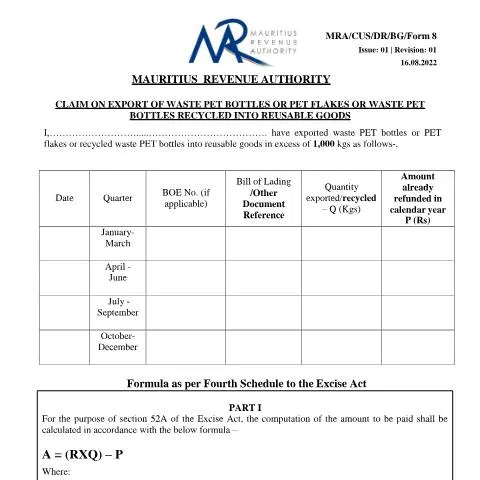
Only exporters or recyclers who have exported more than 1,000 kgs of waste PET bottles or PET flakes, or those who have recycled waste PET into reusable goods, are eligible to submit this claim. The claims can be made quarterly for the following periods:
- January - March
- April - June
- July - September
- October - December
Each quarter represents a window for businesses to assess their eligible exports and submit the necessary claims, making it essential to maintain accurate records of exports within these timeframes.
Decoding the Claim PET Bottles Form: Key Sections Explained
Completing the Claim PET Bottles form comprehensively is vital for a successful refund application. This section provides a detailed breakdown of the form's components, with emphasis on critical areas that typically present challenges for applicants.
Exporter Information
The first section of the form requires detailed information about the exporter. Accurate filling of this area is non-negotiable, as any discrepancies can lead to rejection. Ensure to include:
- Name of the exporter: The legal entity as per registration documents.
- Signature: The signature must be that of an authorized representative.
- Company seal: Affixing the company seal legitimizes the submission.
Export Details
This section captures the specifics of the export transaction. Key elements include:
- Date: The exact date of export must align with shipping documents.
- Quantity exported/recycled (Q): This must be reported accurately in kilograms.
- Bill of Lading/Other Document Reference: Essential for tracing the export.
Ensuring accuracy in these details is critical, as the refund amount calculation relies heavily on this data.
Supporting Documentation: Compilation and Submission
Alongside the Claim PET Bottles form, a set of supporting documents must be submitted. Preparing these documents ahead of time will streamline the process:
Necessary Documents
- Bill of Lading: This document serves as proof of export and should match the quantities listed on the claim form.
- Weight certification: A certificate from an authorized entity confirming the weight of the exported/recycled materials is mandatory.
- Any other relevant documents: This may include contracts, invoices, or certifications that can support your claim.
Failure to provide complete documentation can lead to delays or outright claim denials.
Calculating the Refund: Understanding the Formula
The refund amount is calculated using a specific formula as outlined in the Excise Act. The formula can be detailed as follows:
| Variable | Description |
|---|---|
| A | The amount of refund to be paid for the quarter. |
| R | The refund rate set at Rs 15 per kg for waste PET bottles or flakes. |
| Q | The total quantity exported/recycled for the current and previous quarters within the same calendar year. |
| P | The total amount already refunded in the current calendar year. |
This formula emphasizes the importance of maintaining accurate records across multiple quarters, as previous claims directly impact the current refund calculation.
What to Expect After Submission: The Processing Journey
Once the claim form and all supporting documents have been submitted, the MRA undertakes a thorough review process. This involves the following steps:
Review and Approval
The claim will be initially checked by a customs officer for completeness and accuracy. Approval is dependent on:
- Verification of documents against the submitted claim.
- Confirmation that exports align with quantities claimed.
- Compliance with all regulatory requirements.
Once processed, claims deemed accurate and complete will be approved, and a refund will be issued via the selected payment method (cheque or bank transfer).
Handling Rejections or Queries
In some instances, claims may be rejected or additional information may be requested. Here’s how to handle such situations:
- Understand the Reason: Carefully review any communication from the MRA detailing the rejection.
- Gather Additional Information: If further documentation is required, respond promptly with the requested materials.
- Seek Clarification: If anything is unclear, do not hesitate to contact the MRA directly for guidance.
Frequently Overlooked Aspects of the Process
Even seasoned exporters may overlook nuances within the claims process. Here are critical points to keep in mind:
Timeliness is Key
Ensure your claims are submitted within the specified periods for each quarter. Late submissions are typically not accepted and can lead to lost refunds.
Record Keeping
Maintain a meticulous record of all transactions, receipts, and export documents. These records can be invaluable in case of any audits or inquiries from the MRA.
Consultation with Experts
Consider consulting with a tax advisor or an expert in Mauritian tax law if the process feels overwhelming. Their insights can help streamline your submissions and improve compliance.
Final Thoughts: The Importance of Compliance and Sustainable Practices
As businesses increasingly focus on sustainable practices, engaging in the export and recycling of PET materials not only supports eco-friendly initiatives but also offers financial incentives through refund claims. By understanding the intricacies of the Claim on Export of Waste PET Bottles form and adhering strictly to the guidelines provided, businesses can effectively navigate the regulatory landscape and contribute positively to both the economy and the environment.
Understanding the Export Process for Waste PET Bottles and Flakes
The export of waste PET bottles, PET flakes, or recycled PET bottles transformed into reusable goods is subject to specific procedural guidelines at the national level in Mauritius. This process is fundamentally governed by the Environmental Protection Act and the Waste Management Act, which outline the necessary permits and documentation needed for lawful exportation.
Fill in your form directly online
No printing: type your details into the boxes of the official form, tick, then download the PDF ready to send.
- 1Type into the form boxes
- 2Tick in one click
- 3Save and download the PDF
Before initiating the export procedure, exporters must first ensure that they are registered with the relevant local authorities, particularly the Ministry of Environment, Sustainable Development and Climate Change. Registration includes obtaining a valid Environmental Impact Assessment (EIA) if the scale of exports warrants it. The EIA is crucial for assessing the potential environmental effects of exporting waste materials.
Once registered, exporters need to submit a detailed application to the Ministry, accompanied by the required supporting documents. The application should include:
- A completed export application form (a sample can be referred to from the Ministry's website).
- Evidence of registration with the Mauritius Revenue Authority (MRA) for tax purposes.
- Documentation proving the recyclable nature of the PET bottles or flakes, such as supplier certifications and quality assurance reports.
- A detailed export plan outlining the anticipated quantities, export destinations, and methods of recycling or disposal once the materials reach their destination.
It is worth noting that the export of these materials is closely monitored to prevent illegal shipping to countries that could potentially misuse or improperly dispose of the waste. Therefore, the exporter must demonstrate compliance with both local and international regulations regarding waste management.
Financial Implications and Tax Considerations
Exporters of waste PET bottles and recycled goods must be aware of the financial implications associated with their operations, especially in terms of taxation and potential incentives provided by the Mauritian government.
The MRA oversees all tax-related matters, including Value Added Tax (VAT) exemption for exported goods. Exporters need to apply for VAT exemption prior to the export of their goods. To qualify for this exemption, exporters must demonstrate that the products being exported are indeed waste materials or recycled goods that align with the guidelines set forth by the Environmental Protection Act.
In addition to VAT considerations, exporters should also explore any available incentives laid out by the government to promote recycling and the export of recycled goods. This includes grants or subsidies aimed at fostering sustainable practices in export-oriented businesses. Exporters can inquire about such incentives by contacting the Ministry of Finance and Economic Development, along with the MRA.
When calculating the financial viability of exporting waste PET materials, it is essential to consider the costs of compliance, such as fees for necessary permits, transportation, and any potential taxes that may apply depending on the destination country. Comprehensive budgeting will assist exporters in mitigating risks and ensuring profitable operations.
Best Practices for Sustainable Exportation
In light of increasing global attention on sustainable practices, exporters of waste PET materials must adopt best practices to ensure eco-friendly operations. The focus should be on minimizing the environmental impact throughout the export process.
Key best practices include:
- Collaborating with Reputable Recycling Facilities: Establish partnerships with verified recycling companies that adhere to international standards for waste management and recycling. This not only enhances the credibility of the exporting business but also ensures a secure and environmentally responsible use of the exported materials.
- Maintaining Transparency: Keep clear records of all transactions and maintain open communication with all stakeholders involved in the export process. This includes the negotiating terms with buyers, ensuring they understand and agree to the environmental standards required for handling the recycled goods.
- Investing in Quality Control: Before shipping waste materials, ensure that they meet the specifications required by the importing country. This may involve additional sorting, cleaning, or processing to enhance the quality of PET flakes or bottles.
- Staying Informed on Regulatory Changes: Regulatory frameworks can evolve, so it is crucial for exporters to stay updated on any changes in both local and international regulations regarding waste management and recycling. Joining industry associations or forums can provide valuable insights and networking opportunities.
By adhering to these best practices, exporters not only align themselves with market demands but also contribute positively to sustainable development efforts, thereby enhancing their brand reputation in an increasingly eco-conscious global market.