Navigating the Auction Sales Notice Q3 of 2012: An Essential Guide
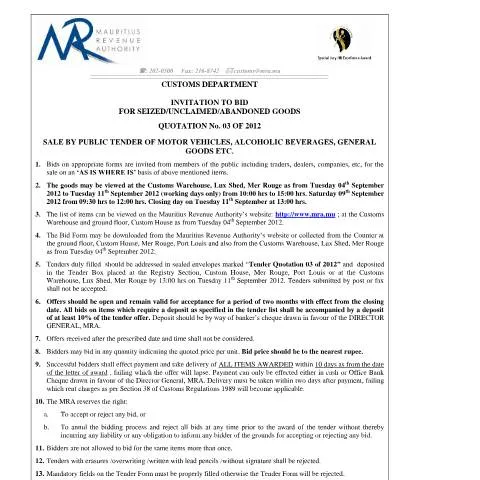
The Auction Sales Notice Q3 of 2012, issued by the Mauritius Revenue Authority (MRA) on 29 August 2012, serves as a crucial document for individuals and businesses interested in procuring unclaimed, abandoned, or seized goods. Understanding the intricacies of this notice is essential for effectively participating in the auction process. This guide will delve into the document's key components, highlight its significance, and offer practical advice on how to engage with the auction procedure.
The Framework of the Auction Sales Notice
This notice delineates the parameters for the public auction of various goods, including motor vehicles and alcoholic beverages. It is vital to grasp the structure of the notice to avoid misinterpretation and to ensure compliance with the requirements laid out by the MRA.
Key Dates and Viewing Period
- Announcement Date: 29 August 2012
- Viewing Period: 4 September 2012 - 11 September 2012
- Submission Deadline: 11 September 2012 by 13:00 hrs
Potential bidders are allowed to inspect the items at the Customs Warehouse, Lux Shed, Mer Rouge, during specified hours on weekdays and a limited time on the weekend. This viewing period is critical for assessing the condition of items before placing bids.
Understanding the Auction Procedure
Engaging in the auction requires meticulous adherence to the specified procedures. The steps are straightforward yet crucial for a successful bidding experience.
From Bidding to Acquisition: Step-by-Step
- Inspection of Goods: Visit the Customs Warehouse during the viewing period to examine the items available for auction.
- Bid Submission: Download the Bid Form from the MRA’s website or collect it at the Customs House. Complete it meticulously, ensuring all mandatory fields are filled.
- Deposit Requirement: Include a deposit of at least 10% of your bid amount in the form of a banker’s cheque, addressed to the Director General, MRA.
- Sealed Submission: Place your completed bid form in a sealed envelope marked “Tender Quotation 03 of 2012” and submit it at the designated Tender Box.
- Payment and Delivery: If successful, remit the payment and collect your items within the stipulated timeframe.
Each of these steps is vital to ensure that your bid is considered valid and meets the MRA's requirements for the auction.
Interpreting Important Terminology
The Auction Sales Notice includes specific terminology that may require clarification to avoid misunderstandings.
| Term | Description |
|---|---|
| AS IS WHERE IS | The items are sold in their current condition, with no warranties regarding their state or functionality. |
| Deposit | A monetary guarantee (10% of the bid) required to accompany your tender submission. |
| Tender Box | A secure location where completed bid forms must be deposited before the deadline. |
| Successful Bidder | The participant whose bid is accepted by the MRA. |
Grasping these terms will enhance your comprehension of the auction process and ensure that you navigate it successfully.
Common Misconceptions and Clarifications
Participation in the auction can often lead to confusion due to prevalent misconceptions. Here we clarify some of these to empower bidders with accurate information.
Debunking Myths
- Myth 1: Bids can be submitted via email or fax.
- Reality: All bids must be physically submitted in sealed envelopes by the specified deadline; electronic submissions are not permitted.
- Myth 2: The highest bidder automatically wins the item.
- Reality: The MRA reserves the right to accept or reject any bid without obligation to disclose reasons.
Understanding these distinctions can save potential bidders from unnecessary disappointment and confusion during the auction process.
Who Should Engage in this Auction?
This notice caters to a diverse audience, ranging from individual bidders to corporate entities. Here’s a closer look at who may find value in participating in the auction.
Target Audience
- Individual Buyers: Those looking for deals on vehicles or general goods.
- Dealers and Traders: Businesses aiming to stock up on inventory at competitive prices.
- Collectors: Individuals interested in specific items such as rare alcoholic beverages or vehicles.
Understanding your position in this spectrum can tailor your approach to bidding, ensuring you are well-prepared for the auction.
Final Steps: What Happens After Winning a Bid?
For successful bidders, the auction process transitions into the payment and collection phase. Review the following essential steps to ensure a smooth conclusion to your bidding experience.
Post-Award Actions
- Payment Deadline: Ensure that payment is completed within 10 days of receiving the award letter.
- Delivery Schedule: Plan for item collection within two days post-payment to avoid additional rental charges as stipulated in the Customs Regulations.
- Documentation: Keep all transaction records, including the award letter and payment receipts, for your records.
Failure to comply with these steps may result in your bid being forfeited and the items going to the next eligible bidder.
Conclusion: Engaging with the Auction Sales Notice Q3 of 2012
The Auction Sales Notice Q3 of 2012 is a gateway to valuable opportunities for individuals and businesses alike. Being well-informed and prepared is crucial for navigating this intricate process, thus enhancing your chances of successful participation. By understanding the document's framework, adhering to the outlined procedures, and utilizing the insights shared herein, bidders can effectively engage with the auction process and potentially secure their desired items.
Understanding the Auction Process in Mauritius
The auction process in Mauritius is governed primarily by the Auction Sale Act and the regulations set forth by various government authorities, including the Ministry of Finance and Economic Development. Potential bidders should familiarize themselves with the steps involved in participating in an auction to ensure compliance with legal requirements and to enhance their chances of securing properties or goods sold at auction.
Initially, it is crucial to register as a bidder, which often involves completing specific forms and providing necessary documentation such as proof of identity and financial capability. For instance, bidders may need to present a valid National Identity Card as part of their registration process. Only registered bidders will be permitted to participate in the auction.
Once registered, bidders should keep an eye on the notices published regarding upcoming auctions. These notices usually contain critical information about the items for sale, auction dates, and any prerequisites that need to be met prior to the auction. The Auction Sales Notice Q 3 of 2012 (29.08.2012) serves as an example where potential bidders had the opportunity to view the properties and understand the terms of sale, which could include details on minimum bids and deposit amounts required to secure a bidding position.
It’s also important to acknowledge the auctioneer's role during the auction. The auctioneer is responsible for conducting the auction legally and fairly, ensuring that all bidders have an equal opportunity to place their bids. Moreover, the auctioneer will often explain the rules of the auction before it begins, including how bidding increments work, and what happens in the case of a tie bid. Understanding these nuances can be advantageous for bidders looking to navigate the competitive landscape of auction sales.
Legal Implications of Auction Sales
When engaging in an auction sale, it is imperative for bidders to understand the legal implications tied to the purchase of items, especially properties. The Auction Sales Notice Q 3 of 2012 highlights the importance of reviewing the terms and conditions stipulated in the auction details. Bidders must conduct due diligence, which may involve checking for outstanding debts, liens, or any legal encumbrances associated with the auctioned property.
Moreover, once a bid is accepted, the bidder enters into a legally binding agreement, thus making it critical for them to be aware of the responsibilities that come with the purchase. For instance, the winning bidder is typically required to pay a non-refundable deposit immediately after the auction closes, followed by the full payment within a specified period. Failing to meet these terms can result in the forfeiture of the deposit and may also lead to legal actions from the auctioneer or seller.
Additionally, buyers should be informed about their rights post-auction. For example, if the auctioned item does not meet the described condition or if there are discrepancies regarding the sale, the buyer may have the right to seek recourse. Understanding these aspects can save buyers from potential legal disputes in the future.
Post-Auction Procedures and Compliance
After successfully winning a bid at an auction, a variety of compliance procedures follow. Firstly, the auctioneer will typically issue a sale agreement that outlines the particulars of the sale, including the item description, final bid price, and payment terms. Both parties—buyer and auctioneer—must ensure that all stipulations in the agreement are adhered to.
It is essential for buyers to keep a record of all transactions and correspondence related to the auction sale. This documentation will be invaluable should any disputes arise regarding the sale. Furthermore, once the full payment has been made, the auctioneer will facilitate the transfer of ownership, which may involve additional paperwork such as property surveys for real estate or certificates of ownership for goods.
Compliance with local tax obligations is another crucial step following an auction sale. The Mauritius Revenue Authority (MRA) plays a vital role in advising buyers on potential tax liabilities arising from their auction purchases. Buyers are advised to consult with MRA regarding taxes applicable to property transactions, which can vary based on the nature and value of the purchase. Understanding these obligations ahead of time will ensure that buyers do not face unexpected financial burdens post-auction.
Lastly, buyers should also consider the logistics of taking possession of their auction purchases. Depending on the nature of the item, this may involve additional costs such as transport fees or renovations for properties. Being aware of these factors will prepare buyers for a smooth transition after the auction.