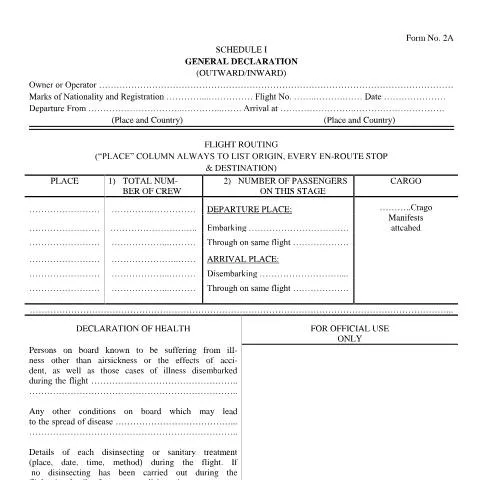
Navigating the Intricacies of the Aircraft Report (Inward/Outward) - Form No. 2A
The Aircraft Report, officially referenced as Form No. 2A, plays a crucial role in the aviation regulatory framework of Mauritius. This document is not merely a bureaucratic requirement; it serves as a vital tool for ensuring the safety and compliance of air travel. Each airline or aircraft operator must submit this report, detailing critical information regarding flights entering or leaving the country. Understanding the specifics of this form is essential for operators to navigate the complexities of aviation regulations effectively.
Who Needs to Navigate the Form No. 2A?
The necessity for Form No. 2A extends beyond just airlines; it encompasses a variety of stakeholders associated with aviation. Here is an insightful look into who must engage with this document, the exceptions, and some unique scenarios:
- Aircraft Owners: Individuals or companies owning aircraft must complete the form for all inward and outward flights.
- Airline Operators: Commercial airlines must submit this report regularly, particularly for international flights.
- Charter Services: Operators of charter flights must also comply with this requirement, especially when crossing international borders.
- Private Pilots: Individuals operating private aircraft, particularly when traveling internationally, are required to submit this form.
While the majority of stakeholders must submit this report, there are unique circumstances. For instance, certain private flights operating solely within Mauritian airspace may be exempt from some of the more detailed reporting requirements. However, it is prudent for operators to confirm such exceptions with the Civil Aviation Authority of Mauritius (CAAM) to avoid complications.
Deciphering the Structure of Form No. 2A
The construction of Form No. 2A is meticulously designed to capture essential information regarding every flight. It consists of several key sections that operators must complete with precision. Understanding these sections can significantly ease the submission process:
- General Declaration: This section requires the owner's or operator’s details, including flight number, registration marks, and dates of departure and arrival.
- Flight Routing: Operators must list each leg of the flight, including all stopovers, in the “PLACE” column, ensuring that information is provided in a sequential manner from departure to destination.
- Crew and Passenger Information: This part captures the total number of crew members and passengers on board, which is critical for safety and regulatory assessment.
- Cargo Details: Operators need to declare the cargo being transported, including any accompanying cargo manifests.
- Health Declaration: Any known illnesses among passengers or crew during the flight must be reported, alongside details of any sanitary measures taken or required.
Each section must be filled out with attention to detail. Mistakes or omissions can lead to delays or complications in processing the flight, impacting schedules and compliance with international aviation laws.
Submission Pathways: Options for Filing Form No. 2A
Operators have distinct pathways when it comes to submitting Form No. 2A. Understanding these options can streamline the process and enhance compliance:
- Online Submission: Utilizing the e-services offered by the government through the official government portal is often the most efficient route. This method allows for instant submission and tracking of the application.
- Paper Submission: Operators may still submit a paper application at designated offices. However, this method can be slower and may involve longer waiting times, given the manual processing involved.
- In-Person Filing: Visiting the relevant office to file the form in person may also be an option, particularly for urgent submissions or clarifications needed on the spot.
Operators should assess the most suitable submission method based on their operational needs, the urgency of the flight schedule, and the level of support available through each channel.
The Role of Form No. 2A within the Broader Aviation Framework
Form No. 2A is not an isolated document; it exists within a web of regulatory procedures essential for ensuring safe air travel in and out of Mauritius. This form facilitates communication between airlines and aviation authorities, enabling a cohesive operational structure. The accuracy of the information provided is paramount for several reasons:
- Regulatory Compliance: Timely and accurate submissions help maintain compliance with local and international aviation laws.
- Safety Protocols: By reporting crew and passenger health, the form plays a part in public health measures, especially during pandemics.
- Operational Efficiency: Clarity and completeness in submissions help avoid delays and streamline airport processes.
Thus, the Aircraft Report serves as a linchpin in the safety and effectiveness of aviation operations within the region.
Ensuring Completeness: Common Pitfalls and Solutions
Filing Form No. 2A comes with its challenges. Operators often encounter issues that can delay processing or lead to rejections. Here are some common pitfalls and strategies to avoid them:
- Incomplete Information: Omitting critical details can lead to the form being returned for corrections. Operators should double-check all entries before submission.
- Incorrect Health Declarations: Misreporting health conditions of passengers or crew can attract regulatory scrutiny. It is essential to verify all health-related information with the crew prior to submission.
- Improper Documentation: Not attaching necessary supplementary documents, such as cargo manifests or health certificates, can hold up the process. Make sure to prepare these documents in advance.
In the case of rejection or requests for additional information, swift communication with the relevant authorities is crucial. Keeping records and maintaining a clear line of communication can significantly alleviate the stress of rectifying such issues.
Post-Submission: Tracking Your Aircraft Report
Once Form No. 2A is submitted, operators are advised to actively track their submission’s status. This can typically be done through the online portal or by contacting the relevant administrative office. Understanding the processing timeline, which may vary based on volume and complexity, is important for ensuring operational readiness.
Should there be delays beyond the expected timeframe, operators should not hesitate to follow up with the pertinent authority, ensuring that their flight plans are not adversely affected.
What If There’s a Denial or an Error?
In the unfortunate event of a denial or acknowledgment of errors in the submitted Aircraft Report, operators should take immediate action to address these concerns. Here’s a structured approach to handling such situations:
- Review the Feedback: Carefully analyze the reasons provided for the denial or error. Understanding these points is critical for making the necessary corrections.
- Gather Supporting Documentation: If the denial is based on missing or inaccurate information, ensure all supplementary documents are in order to support your appeal.
- Submit Corrections Promptly: Once the necessary information is compiled, resubmit the corrected report as quickly as possible to minimize disruptions.
- Consult the Authorities: If there are uncertainties regarding the feedback or the correction process, reaching out to the appropriate administrative contact can provide clarity and guidance.
In essence, proactive management of the Aircraft Report process can significantly lessen the likelihood of complications and enhance compliance with aviation regulations.
Conclusion: The Importance of Diligence in Aviation Reporting
In summary, navigating the intricacies of Form No. 2A requires diligence, attention to detail, and a proactive approach. Operators must understand the critical role this document plays in the aviation landscape of Mauritius. By familiarizing themselves with the requirements, potential pitfalls, and submission pathways, stakeholders can ensure compliance, enhance operational efficiency, and contribute to the safety of air travel.
Engaging with the regulatory framework surrounding Form No. 2A is not just about fulfilling an obligation; it reflects a commitment to the highest standards of safety and professionalism in the aviation industry.
Understanding the Aircraft Reporting Process: Inward and Outward Reports
In the context of aviation operations in Mauritius, it is essential for operators, flight crew, and relevant authorities to understand the intricacies of the Aircraft Report, especially the Inward and Outward Reports. These documents are critical for ensuring compliance with national regulations and maintaining the safety and security of air travel.
The Inward Aircraft Report is prepared by the aircraft commander upon arrival in Mauritius, outlining details such as the flight number, aircraft registration, and number of passengers. The report must be submitted to the Airport Authority of Mauritius and the relevant customs and immigration authorities. This ensures that the arrival procedures are streamlined and that all necessary checks are implemented.
Conversely, the Outward Aircraft Report is compiled prior to departure and submitted before the aircraft takes off. This report includes similar details as the inward report, with additional emphasis on cargo being transported and any special declarations required for hazardous materials. Operators are urged to submit these reports electronically to reduce processing times and enhance efficiency.
To facilitate the reporting process, the Government of Mauritius has established specific guidelines that must be adhered to. The reports can typically be submitted via the National Civil Aviation Authority's portal or through designated e-services provided by the Airport Authority. It is crucial for operators to regularly check for updates on submission guidelines as regulations may change to adapt to international standards.
Common Challenges in Aircraft Reporting and How to Overcome Them
While the framework for submitting Aircraft Reports in Mauritius is well-defined, operators may encounter various challenges during the reporting process. Understanding these challenges and having strategies in place can significantly enhance compliance and operational efficiency.
Fill in your form directly online
No printing: type your details into the boxes of the official form, tick, then download the PDF ready to send.
- 1Type into the form boxes
- 2Tick in one click
- 3Save and download the PDF
One common issue faced by airline operators is the timely compilation of necessary data for the reports. For instance, discrepancies in passenger manifest details or inaccuracies in the aircraft registration information can lead to delays. Operators are encouraged to implement robust data collection systems that allow for real-time updates and verification of information.
Another challenge pertains to the standards set by customs and immigration authorities. Frequent updates to legal requirements or documentation needed for hazardous materials can lead to confusion. To address this, operators should establish clear communication with the relevant authorities, participating in training sessions and keeping abreast of regulatory changes via official governmental channels.
Time constraints can also impact the ability to file reports accurately. As flights are often on tight schedules, it is essential for operators to allocate sufficient time for completing the Aircraft Reports. Setting internal deadlines ahead of the actual submission date can mitigate the risk of rushed filings, allowing for thorough checks and validations.
Furthermore, operators should ensure that all flight crew members are well-versed in the reporting requirements. Regular training and workshops can help equip staff with the necessary knowledge to avoid common pitfalls, ensuring smooth operations during both arrival and departure of flights.
Future Trends in Aircraft Reporting in Mauritius
The landscape of aircraft reporting in Mauritius is poised for transformation due to advancements in technology and evolving international regulations. As digitalization continues to permeate various sectors, the aviation industry is also embracing these changes to enhance reporting efficiency.
One significant trend is the move towards fully automated reporting systems. The integration of Artificial Intelligence (AI) and machine learning to analyze data submitted in aircraft reports can streamline processes, reduce human error, and ensure compliance with international aviation standards. Such technologies can aid in faster processing times and improve the accuracy of data submitted.
Moreover, authorities in Mauritius are increasingly focused on aligning with global best practices. Initiatives such as adopting the International Civil Aviation Organization (ICAO) standards and practices will further enhance reporting protocols, ensuring that Mauritius remains competitive in the international aviation arena.
Additionally, there is a growing emphasis on sustainability within the aviation sector. Future aircraft reports may incorporate sections dedicated to environmental compliance, requiring operators to report on carbon emissions and other ecological impacts. This shift not only reflects a commitment to sustainable aviation but also positions Mauritius as a forward-thinking hub for air travel.
In summary, the future of aircraft reporting in Mauritius is bright, with significant advancements on the horizon. By staying informed about technological innovations and regulatory changes, operators can better prepare for the evolving landscape of aviation reporting.