Navigating the Registration Form for Exporters under Preferential Trade Agreements
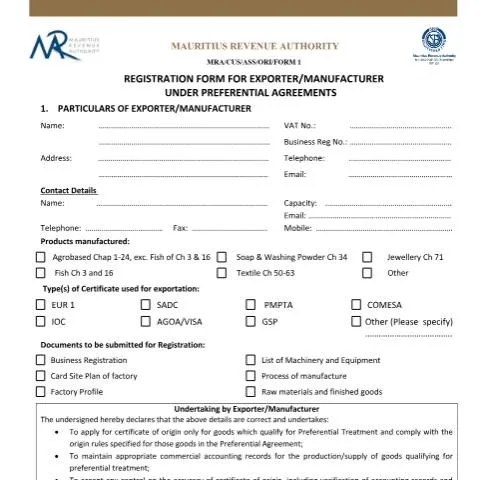
When engaging in international trade, knowing how to leverage preferential trade agreements can significantly enhance your business's competitive edge. One of the pivotal steps in this journey is the completion and submission of the Registration Form for Exporter or Manufacturer under Preferential Trade Agreements (referred to as RegistrationForm-PreferentialAgreements). This document is essential for exporters and manufacturers seeking to benefit from reduced tariffs and trade barriers under various agreements established by the government of Mauritius.
Understanding Your Target Audience: Who Should Complete This Registration?
The need for this registration form is primarily aimed at exporters and manufacturers who produce goods eligible for preferential treatment under agreements like SADC, COMESA, AGOA, and others. It’s important to identify specific profiles that may require distinct considerations:
- Small and Medium Enterprises (SMEs): These entities often seek to expand their market reach and could significantly benefit from preferential tariffs.
- Established Manufacturers: Larger companies already operating in international markets must ensure they are compliant with the latest trade agreements.
- Specific Industry Producers: Certain sectors, such as agro-based industries, textile manufacturers, and jewelers, might qualify for different trade agreements.
Understanding the nuances of your industry and the specific agreements applicable can guide you in filling out the form correctly, avoiding common pitfalls, and ensuring that all necessary documents are submitted.
Decoding the Registration Form: Key Sections to Complete
Completing the Registration Form effectively requires an in-depth understanding of its various sections. Here’s a breakdown of what to expect:
1. Particulars of Exporter/Manufacturer
This section demands detailed information about your business. Ensure that you accurately provide:
- Name: The legal name of your business.
- VAT and Business Registration Numbers: Ensure these are up-to-date and correctly reflected.
- Contact Details: Having a reliable contact point is crucial for communication regarding your application.
2. Product Details
It is crucial to specify all products manufactured, including their respective commodity codes. This detail helps customs authorities understand the nature of your business and evaluate eligibility for preferential treatment.
3. Certification Types
Select the types of certificates used for exportation. This may include:
- EUR 1
- SADC
- COMESA
- AGOA/VISA
Each type correlates with a specific agreement, so be sure to select those applicable to your exports.
The Path Forward: Submission Channels and Their Distinctions
Your registration can be submitted through various channels. Understanding which method to choose can save time and reduce the likelihood of errors:
- Online Submission: Via the Mauritius Revenue Authority (MRA) website, this method allows for quick processing. Ensure you have your MauPass account linked to your National ID.
- Papers via Post: If you prefer traditional methods, you can print and send your completed form to the Customs Department at Customs House, Mer Rouge, Port-Louis. Ensure you consider postal delivery times.
- In-Person Submission: Visiting the Customs House allows for immediate feedback, but be prepared for possible queues. Bring additional copies of your documents.
Timing Is Everything: Submission Calendars and Processing Timeline
Understanding the timing for your application is vital. The fiscal year runs from July 1 to June 30, and registration should ideally be completed at the start of the fiscal year to ensure your exports can benefit from preferential rates promptly.
Upon submission, the processing time can vary. Generally, you can expect:
- Immediate Acknowledgment: You will receive an acknowledgment of receipt.
- Processing Time: Typically, expect about 14 working days for processing. Delays could occur if additional documentation is required.
Troubleshooting: Handling Refusals, Errors, or Missing Documents
Not all submissions go smoothly. If your application is rejected or if you are notified of missing documents, here’s how to proceed:
- Review the Feedback: The Customs Department will provide reasons for refusal. Examine these closely to identify what went wrong.
- Gather Missing Documentation: Quickly assemble the required paperwork. This could include updated business registration details or additional proof of production capacity.
- Resubmission: After addressing the concerns raised, resubmit your application promptly. Keep a record of all correspondence.
What Happens Next?
Upon successful registration, you will receive a registration number, which is essential for future transactions under the preferential agreements. Keep this number accessible, as it will be required for any certificates of origin you need to apply for moving forward.
Comparing Similar Forms: Understanding Distinctions
Often, the Registration Form for Exporters under Preferential Trade Agreements might be confused with other customs documentation. Here’s a quick comparison:
| Form Name | Purpose | Key Differences |
|---|---|---|
| Registration Form for Exporter | Enrollment for preferential tariff treatment | Focus on manufacturer/exporter eligibility |
| Certificate of Origin Application | Request for a certificate that verifies goods' origin | This is submitted after registration |
| Import Declaration Form | Declaration for goods being imported | Used for incoming goods, not exports |
The Bigger Picture: Where This Form Fits into Broader Trade Processes
This registration form serves as the first step in a much broader compliance and operational process. After registering, exporters must:
- Maintain accurate records for customs audits.
- Apply for certificates of origin for qualifying products.
- Stay updated on changes to regulations and preferential agreements.
Each of these elements is crucial for a seamless export operation, underlining the importance of the initial registration process.
Final Insights: Ensuring Compliance and Maximizing Benefits
Securing registration under the preferential trade agreements is a strategic move for exporters and manufacturers alike. Properly completing the Registration Form for Exporter or Manufacturer is vital to unlocking the benefits associated with these agreements. By understanding the nuances of the form, the submission process, and the subsequent steps, you can position your business to thrive in international markets.
Understanding Preferential Trade Agreements (PTAs) in Mauritius
Preferential Trade Agreements (PTAs) play a crucial role in enhancing Mauritius' trade capacity by allowing exporters and manufacturers to benefit from reduced tariffs and improved access to markets. PTAs enable Mauritius to strengthen its economic ties with partner countries, fostering trade relationships that can lead to increased export volumes and revenue. It is essential for businesses to grasp the significance of these agreements, which often align with the country's broader economic objectives, including diversification and sustainable growth.
Fill in your form directly online
No printing: type your details into the boxes of the official form, tick, then download the PDF ready to send.
- 1Type into the form boxes
- 2Tick in one click
- 3Save and download the PDF
Under the framework of PTAs, Mauritius enjoys preferential treatment with several countries. These agreements generally focus on specific sectors such as textiles, agriculture, and services, which are pivotal to the Mauritian economy. Understanding the intricacies of these agreements and the specific rules of origin associated with them is vital for exporters and manufacturers to avail themselves of the benefits.
For instance, businesses must ensure their products meet the rules of origin criteria stipulated in each PTA. This often involves stringent documentation and verification processes to confirm that goods are either wholly produced or undergo substantial transformation within Mauritius. Given the complexity of this landscape, companies are advised to consult the Mauritius Revenue Authority (MRA) or the Ministry of Foreign Affairs, Regional Integration and International Trade for comprehensive guidelines and assistance.
Required Documentation for Registration as an Exporter or Manufacturer
When registering as an exporter or manufacturer under the Preferential Trade Agreements in Mauritius, it is critical to be aware of the specific documentation required throughout the registration process. Submitting accurate and comprehensive documentation ensures compliance with legal standards and facilitates smoother processing of applications.
The key documents commonly required include:
- Business Registration Certificate: This certificate verifies that your business is officially registered in Mauritius, providing proof of your operation and legal standing.
- Tax Compliance Certificate: Issued by the Mauritius Revenue Authority (MRA), this document certifies that your business is compliant with all tax obligations.
- Proof of Identity: For individual proprietors, a copy of the National Identity Card is required. In the case of companies, documents proving the identity of directors and shareholders should be submitted.
- Product Descriptions: Detailed descriptions of the products intended for export or manufacturing, including specifications, compositions, and indications of their origins.
- Quality Certificates: Depending on the product category, quality assurance documents or certifications may be necessary to demonstrate compliance with industry standards.
It's important to note that additional documents may be required based on the nature of the products and the specific PTA involved. As such, prospective exporters or manufacturers are encouraged to perform due diligence and seek guidance from relevant authorities, ensuring that all necessary paperwork is meticulously prepared before submission to the Public Service Commission (PSC) or relevant trade bodies.
Navigating the Application Process: Tips for Success
Successfully navigating the application process for registration as an exporter or manufacturer entails more than merely submitting necessary documentation. It involves strategic planning and understanding the intricacies of the Mauritian administrative landscape. Here are some practical tips to enhance your chances of success:
- Familiarize Yourself with Relevant Regulations: Acquainting yourself with the specific regulations governing PTAs and export activities in Mauritius is vital. This includes understanding the advantages and obligations outlined in the agreements.
- Consult with Trade Experts: Leveraging the expertise of trade consultants or legal advisers who are well-versed in Mauritian trade laws can provide invaluable insights into the application process and potential pitfalls.
- Utilize E-Services: Take advantage of the e-filing options available through the government portals such as govmu.org, which streamline the application process and enhance tracking capabilities for your submission.
- Maintain Clear Communication: Keeping lines of communication open with the PSC and other relevant bodies can facilitate quicker resolutions to any questions or issues that arise during the application review process.
- Prepare for Follow-ups: Be proactive and ready to provide additional information or documentation if requested by the authorities to expedite the approval process.
By thoroughly preparing and adhering to these guidelines, businesses can effectively position themselves to navigate the complexities of the registration process under the Preferential Trade Agreements, paving the way for successful export operations.