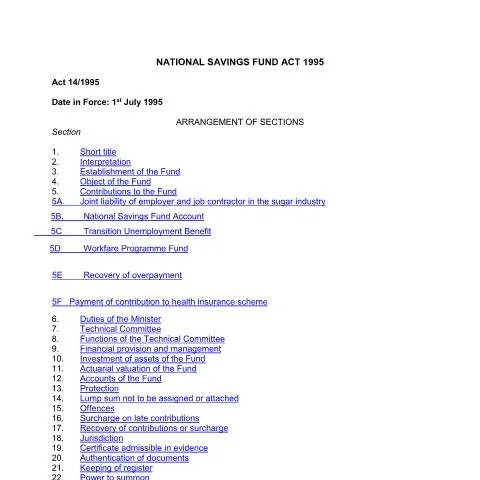
Understanding the National Savings Fund Act 1995 of Mauritius
The National Savings Fund Act 1995 is a key piece of legislation enacted by the Parliament of Mauritius to establish a structured scheme for the financial security of employees upon retirement or in the event of death. This Act aims to promote savings among employees and ensure their well-being post-employment, aligning with the country’s broader social security objectives.
Scope and Objectives of the Act
The primary purpose of the Act is to create and manage a dedicated National Savings Fund that accumulates contributions from both employees and employers. These contributions are intended to provide employees with a lump sum or pension benefits upon retirement, or to their beneficiaries in case of death. The Fund also supports various related programs, including unemployment benefits and workfare initiatives, fostering social protection and economic stability for the working population.
Who Is Affected by the Act?
The Act applies broadly to employees who are engaged in full-time or part-time employment, including apprentices and public officers, provided they meet the age criteria of 18 years and above but below the retirement age. It encompasses both Mauritian citizens and certain categories of non-citizens working within Mauritius, with specific exclusions such as non-residents or those on certain types of work permits. Employers are also integral to the scheme, as they are responsible for deducting and remitting contributions to the Fund.
Key Provisions and Contributions
Establishment of the Fund
The Act formally establishes the National Savings Fund, which is managed under the authority of the Minister responsible for social security. The Fund is designed to collect contributions from employees and employers, and to invest these funds prudently to ensure growth and sustainability.
Contributions and Payment Mechanisms
- Contributions are calculated based on the employee’s basic wage or salary, excluding allowances, bonuses, or overtime, and are subject to maximum limits specified in the legislation.
- Both employers and employees share the liability for contributions, with specific provisions for joint liability in certain sectors such as the sugar industry.
- Employers are required to deduct contributions from employees’ wages and remit them to the Fund using approved forms, ensuring transparency and compliance.
Management and Investment
The Act provides for the appointment of a Technical Committee responsible for overseeing the Fund’s administration and investment strategies. The Committee’s functions include conducting actuarial valuations, managing the assets prudently, and ensuring the Fund’s financial health over time.
Legal and Administrative Framework
The legislation stipulates various administrative procedures, including the keeping of registers, issuing certificates, and the authentication of documents. It also outlines offences related to non-compliance, late contributions, or fraudulent activities, with penalties and surcharge mechanisms in place to enforce adherence.
Protection and Benefits
Employees are assured that their contributions and accrued benefits are protected under the Act. Lump sums payable upon retirement or death are exempt from attachment or assignment, safeguarding employees’ rights to their savings. The Act also provides for recovery procedures for unpaid contributions or surcharges, ensuring the integrity of the scheme.
Fill in your form directly online
No printing: type your details into the boxes of the official form, tick, then download the PDF ready to send.
- 1Type into the form boxes
- 2Tick in one click
- 3Save and download the PDF
References and Implementation
The National Savings Fund Act 1995 is complemented by regulations issued by the Minister, detailing operational procedures and standards. The Act came into force on 1 July 1995, marking a significant milestone in Mauritius’s social security framework, with ongoing updates to adapt to changing economic conditions and policy priorities.
For further information, stakeholders are encouraged to consult the official legislation and relevant government portals, which provide detailed guidelines on contribution procedures, compliance requirements, and the management of the Fund.