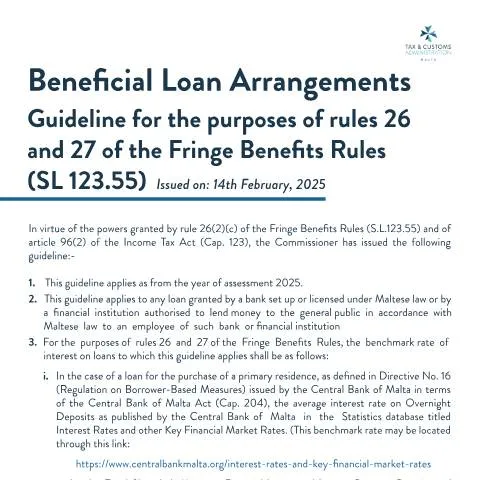
The Intricacies of Fringe Benefits: Unpacking Beneficial Loan Arrangements
When navigating the complex landscape of employee compensation in Malta, understanding the nuances of fringe benefits is pivotal. Among these, beneficial loan arrangements stand out due to their unique nature and potential implications for both the employee and the employer. The Tax Guidelines — guidelines-in-relation-to-fringe-benefits-for-beneficial-loan-arrangements document issued by payroll_social_security provides essential insights into how these arrangements are structured and taxed.
Understanding Beneficial Loan Arrangements
Beneficial loans, typically provided by employers to employees at lower-than-market interest rates, can offer significant financial benefits. However, they also raise important tax considerations that must be meticulously understood and adhered to. The guidelines clarify how these benefits are evaluated for tax purposes and the necessary compliance requirements.
- Definition and Scope: Beneficial loans are loans offered by employers at preferential interest rates.
- Tax Implications: The difference between the market interest rate and the actual interest rate charged on the loan constitutes a taxable fringe benefit.
- Eligibility Criteria: Not all employees may qualify; specific conditions apply based on the employment contract and the nature of the loan.
Navigating the Guidelines: Key Considerations
These guidelines provide a framework for both employers and employees to understand how beneficial loans are assessed within the Maltese tax regime. It is essential to note the following key aspects:
1. Taxable Value of the Benefit
The guidelines detail how the taxable value of the fringe benefit is calculated, typically adhering to a formula that takes into account:
- The interest rate applied on the beneficial loan
- The market interest rate prevailing at the time of the loan
This difference is crucial as it represents the taxable fringe benefit that the employee must report.
2. Reporting Responsibilities
Both employers and employees have specific responsibilities regarding the reporting of these benefits:
- Employers: Must ensure that the taxable benefit is appropriately recorded and reported to the tax authorities. This may involve adjustments to payroll submissions.
- Employees: Are responsible for declaring any taxable fringe benefits during their annual tax returns.
Who Should Pay Attention? The Target Audience
Understanding these guidelines is crucial for a wide array of stakeholders:
1. Human Resources and Payroll Departments
HR personnel must stay informed about the implications of beneficial loans within their compensation packages. Accurate record-keeping and reporting practices are vital to avoid potential penalties.
2. Employees Receiving Loans
Employees should familiarize themselves with how beneficial loans work and their tax obligations to manage their expectations regarding take-home pay and tax liabilities.
Deciphering Key Tax Terms
Grasping the terminology surrounding fringe benefits is essential for both clarity and compliance. A few critical terms include:
| Term | Definition |
|---|---|
| Market Interest Rate | The standard rate charged by financial institutions for similar loans. |
| Fringe Benefit | Additional benefits provided to employees beyond their normal salary. |
| Taxable Income | The portion of an individual’s income that is subject to taxation. |
Implementation Steps: A Practical Guide
To ensure compliance with the guidelines, both employers and employees should follow a structured approach:
1. Understand Loan Terms
Before entering into a beneficial loan agreement, both parties should clearly understand the loan's terms, including interest rates and repayment schedules.
2. Calculation of Benefits
Employers should calculate the taxable benefit as per the guidelines, ensuring that this figure is incorporated into the payroll system.
3. Documentation and Reporting
Maintain thorough documentation of the loan agreement, interest calculations, and all communications related to the loan and its terms. Proper documentation is crucial for accurate reporting and compliance.
Interconnections with Other Tax Documents
The guidelines on beneficial loans do not exist in isolation. They interplay with various tax laws and forms. Employees and employers alike must be cognizant of these relationships.
1. Income Tax Returns
Taxable fringe benefits, including those from beneficial loans, must be reported accurately in income tax returns. Employees should cross-reference the information provided in the guidelines with their tax returns to verify correct reporting.
2. Payroll Reporting Forms
Employers typically need to adjust their payroll reporting forms to account for the taxable benefit of the loan. Understanding this relationship is crucial for compliance with the Public Administration Act (Cap. 595 of the Laws of Malta).
Avoiding Common Misinterpretations
Misinterpretation of the guidelines can lead to compliance issues. Here are some typical pitfalls to avoid:
- Assuming No Tax Implications: Many employees mistakenly believe that beneficial loans are tax-free. Understanding the taxable nature of the benefits is crucial.
- Ignoring Reporting Obligations: Both parties must report the benefits correctly. Failing to do so can lead to penalties.
- Miscalculating Taxable Amount: Incorrect calculations based on inaccurate interest rates or assumptions about market rates can lead to significant discrepancies.
Conclusion: Empowering Stakeholders for Informed Decisions
Understanding the Tax Guidelines — guidelines-in-relation-to-fringe-benefits-for-beneficial-loan-arrangements is imperative for anyone involved in employee compensation in Malta. By grasping the complexities of beneficial loans, recognizing their tax implications, and ensuring accurate reporting, both employers and employees can navigate this aspect of payroll with confidence and compliance.
Understanding Beneficial Loan Arrangements
Beneficial loan arrangements refer to loans provided to employees or executives at favorable interest rates, which typically differ from the market rate. Such arrangements may include personal loans or mortgages, but the tax implications can vary based on the specifics of the arrangement. In Malta, the Income Tax Act (Cap. 123 of the Laws of Malta) outlines how these benefits are assessed for tax purposes.
When an employer extends a loan to an employee at a reduced interest rate, the difference between the interest charged and the market interest rate may be classified as a fringe benefit. It’s crucial to document the terms of the loan clearly, including the interest rate, repayment terms, and the purpose of the loan. This documentation will serve as evidence should there be any inquiries from the Maltese tax authorities, the Commissioner for Revenue.
Tax Calculation and Reporting for Employees
Employees receiving beneficial loans must be aware of how these loans affect their tax liabilities. The taxable benefit is generally calculated as the difference between the interest that would have been paid at the market rate and the interest actually paid. For example, if an employee takes a loan of €10,000 at an interest rate of 2% when the market rate is 4%, the taxable benefit would be calculated as follows:
- Market interest for one year: €10,000 x 4% = €400
- Interest paid by the employee: €10,000 x 2% = €200
- Taxable benefit: €400 - €200 = €200
This taxable benefit must be reported in the employee's annual income tax return. If not reported, it could result in penalties or additional tax assessments by the tax authorities.
Exceptions and Special Considerations
While beneficial loans are generally subject to tax, certain exceptions may apply. For instance, small loans that do not exceed a specified amount may not be classified as fringe benefits. Additionally, loans that are provided for specific purposes, such as education or home purchases, might have different tax implications. Employers are encouraged to seek advance rulings from the Commissioner for Revenue to clarify potential tax liabilities related to fringe benefits.
Employers also need to keep detailed records of all loan arrangements and payments made by employees. Such documentation can greatly assist in clarifying the tax position during audits or inquiries by the tax authorities. It’s also advisable for both employers and employees to stay informed about any changes in tax legislation that may affect the treatment of beneficial loans.