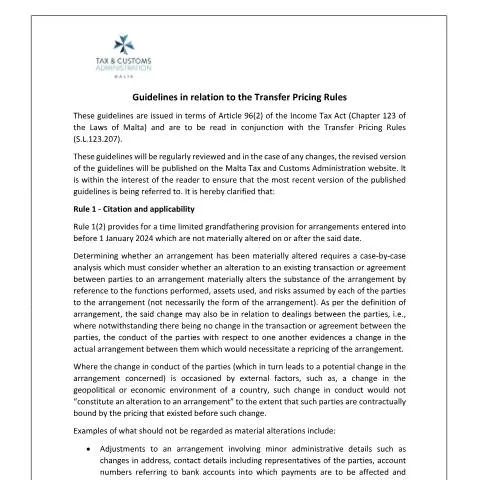
Understanding Transfer Pricing Rules: A Practical Guide
The realm of corporate taxation is intricate, especially when it comes to transfer pricing. Malta's Tax Guidelines — guidelines---transfer-pricing-rules document serves as a critical reference point for businesses engaging in inter-company transactions. This guide will provide a comprehensive breakdown of the document's content and how to effectively navigate its complexities.
Key Components of the Transfer Pricing Guidelines
The guidelines encompass a variety of aspects crucial for compliance with Malta's tax laws. Here are the primary components:
- Definition of Transfer Pricing: Understanding what constitutes transfer pricing is essential. It generally refers to the prices charged between associated enterprises for goods, services, or use of property.
- Arm's Length Principle: Central to the guidelines, this principle mandates that transactions between related parties must be priced as if they were between unrelated parties.
- Methods of Valuation: The guidelines specify various accepted methodologies, such as Comparable Uncontrolled Price Method, Cost Plus Method, and Profit Split Method, each with its own application context.
How to Utilize the Guidelines Effectively
For businesses preparing their transfer pricing documentation, understanding how to leverage these guidelines is fundamental. Follow these steps:
- Conduct a Comprehensive Analysis: Begin with a thorough analysis of your inter-company transactions. Identify the nature, volume, and pricing strategy currently in place.
- Select the Appropriate Methodology: Choose the transfer pricing method that best aligns with the characteristics of your transactions and ensure it adheres to the arm's length principle.
- Document Your Findings: Maintain structured documentation that supports the chosen pricing method. This documentation is pivotal in justifying the pricing strategy during any tax audits.
Articulating with Other Taxation Documents
The transfer pricing guidelines do not exist in isolation; they interact with various other taxation documents and regulations. Understanding these connections is vital:
- Corporate Tax Returns: The transfer pricing information must correlate with your corporate tax filings to avoid discrepancies.
- Double Tax Treaties: These treaties may contain provisions impacting how you must approach transfer pricing, particularly in cross-border transactions.
- Local Tax Authority Guidelines: Always cross-reference the guidelines with directives issued by the Maltese tax authorities to ensure compliance with local practices.
Limitations of the Transfer Pricing Guidelines
While the guidelines provide a robust framework, there are inherent limitations:
- Lack of Specific Examples: The guidelines may not include exhaustive examples for all types of transactions which can lead to misinterpretation.
- Applicability Scope: Certain industries or sectors may have specific rules that supersede the guidelines, necessitating additional research.
- Dynamic Nature of Tax Laws: Frequent changes in tax regulations can impact the relevance of certain guidelines over time.
Common Procedural Queries
Businesses often have similar questions regarding the transfer pricing guidelines. Here are some that frequently arise:
- What documentation is required? While the guidelines suggest maintaining adequate records, the specifics can vary based on transaction types and methodologies used.
- How often should transfer pricing documentation be updated? Companies should consider updating their documentation at least annually or whenever there is a significant change in their operations or market conditions.
- What are the implications of non-compliance? Non-compliance can lead to adjustments by tax authorities, resulting in penalties and increased scrutiny during audits.
Avoiding Common Misinterpretations
Understanding the transfer pricing guidelines can be complicated, leading to potential misinterpretations. Here are some common pitfalls to avoid:
- Confusing Internal and External Comparables: Businesses often mistake internal transfer prices as benchmarks for external comparisons, which can lead to compliance issues.
- Assuming All Methods Are Equally Applicable: Each transfer pricing method has specific contexts in which it is applicable. Selecting the wrong method can render your compliance efforts ineffective.
- Neglecting Local Market Factors: Failing to consider local market conditions and regulations can distort the application of the arm's length principle.
Crucial Concepts to Grasp
To successfully navigate the transfer pricing landscape, several key concepts should be clearly understood:
| Concept | Description |
|---|---|
| Arm's Length Principle | Transactions must be priced as if conducted between unrelated parties. |
| Transfer Pricing Methods | Different approaches to determine the pricing for inter-company transactions. |
| Documentation Requirements | Necessary records to validate the chosen pricing method and compliance with regulations. |
| Market Analysis | Understanding market trends and conditions that influence pricing strategies. |
Practical Insights for Businesses
Finally, to ensure compliance and enhance your company's tax strategy, here are some practical insights:
- Engage with Tax Advisors: Consulting with tax professionals experienced in transfer pricing can provide tailored insights and avoid common pitfalls.
- Stay Updated with Legal Changes: Regularly review changes in Maltese tax regulations that may affect your transfer pricing practices.
- Utilize Technology: Implementing software solutions can streamline the documentation process, ensuring compliance and efficiency.
The Tax Guidelines — guidelines---transfer-pricing-rules document is a vital resource for businesses operating in Malta. Understanding its nuances and effectively applying its principles will not only ensure compliance but also enhance overall corporate tax strategy. Always remember that each business is unique, and consulting with experts in the field is recommended to navigate the complexities of transfer pricing effectively.