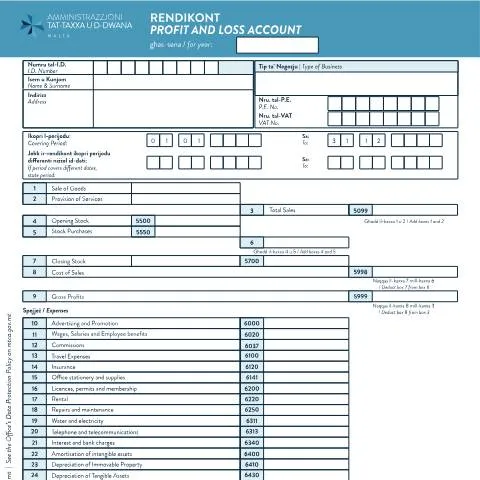
A Navigational Guide to the Profit and Loss Document: Understanding Its Significance in Malta's Income Tax System
When engaging with the Maltese tax system, one often encounters the vital Profit and Loss document, identified officially as profit-and-loss-mlt-eng.pdf. This document is crucial for businesses and self-employed individuals, as it serves as a key component in determining their income tax obligations. Understanding how to navigate this document, from its purpose to its completion and submission, can streamline the tax reporting process and ensure compliance with the law.
Understanding the Context: The Role of the Profit and Loss Document
The Profit and Loss document serves a distinct purpose within the broader framework of Malta's income tax obligations. It captures a business's revenues and expenditures over a specific period, which ultimately informs the calculation of taxable income. The significance of this document extends beyond mere accounting; it is a formal declaration to the Inland Revenue Department that plays a critical role in a taxpayer's fiscal responsibilities.
Bridging Business Operations and Taxation
For businesses, the Profit and Loss document is not just a financial statement; it encapsulates operational results that will influence tax liabilities. Each figure reported can impact the amount of tax owed, and inaccuracies may lead to penalties or increased scrutiny from tax authorities. Consequently, the meticulous preparation of this document is essential.
Who Should File the Profit and Loss Document?
The responsibility of completing and submitting the Profit and Loss document primarily falls on:
- Individuals operating a business as sole traders
- Partnership entities
- Companies and corporations
Each profile carries its nuances. For instance, sole traders may have fewer complexities in their reporting compared to corporate entities that must adhere to more rigorous regulations.
Special Considerations for Different Business Types
Understanding the specific requirements based on the type of business entity is crucial. Below are some examples:
| Business Type | Filing Requirements | Notable Exceptions |
|---|---|---|
| Sole Trader | Full disclosure of income and expenses | Limited tax relief on personal expenses |
| Partnership | Collective profit and loss reporting | Shared liabilities; partners may have different tax rates |
| Corporation | Annual audited financial statements required | Compliance with IFRS standards |
Document Completion: Step-by-Step Guidance
Completing the Profit and Loss document may seem daunting, but following a structured approach can aid in accurate reporting. Each section of the document is designed to capture essential information, which together totals to the net profit or loss of the business.
Revenue Reporting
Begin by documenting all sources of revenue. This includes:
- Sales income from goods and services
- Investment income
- Any other income streams pertinent to the business
It is crucial to maintain precise records of all revenue received, as discrepancies could lead to significant tax implications.
Expense Documentation
Following revenue, detail all business-related expenses. Common categories include:
- Operational costs (rent, utilities)
- Employee salaries and benefits
- Marketing and promotional expenses
- Depreciation of assets
Documenting expenses accurately allows for deductions that can significantly impact taxable income. Keep in mind that not all expenses are deductible, and understanding which expenses qualify is essential.
Submission Channels: Navigating the Process
Once the document is completed, it's time to consider how and where to submit it. The Maltese government provides various channels for submission, each with its advantages.
Online Submission via e-ID
The most efficient method is online submission through the Inland Revenue Department's portal. Using your e-ID ensures secure authentication and quick processing of your submission. This method is particularly beneficial for those who prefer a paperless approach and want to avoid potential postal delays.
Paper Submission
For those who prefer traditional methods, submitting a physical copy at designated government offices remains a viable option. Ensure that your document is printed clearly, signed where required, and accompanied by any necessary supporting documentation.
In-Person Submission
An alternative is to deliver your completed Profit and Loss document in person. This method allows for immediate feedback and clarification from tax officials, although it may involve waiting times at busy offices.
After Submission: What to Expect
Upon submission, the Inland Revenue Department undertakes a review of your Profit and Loss document. Understanding what happens next can alleviate concerns and prepare you for potential follow-ups.
Review Process
The review process typically includes:
- Verification of reported figures against existing data
- Assessment of compliance with tax regulations
- Possible requests for additional documentation or clarification
It’s crucial to monitor your submissions and respond promptly to any requests from tax authorities, as delays could result in penalties.
Tracking Your Submission Status
To stay informed about the status of your submission, utilize the Inland Revenue Department's online portal. Regular checks can provide updates and highlight any actions you need to take.
Implications of Non-Compliance and Errors
Failing to submit the Profit and Loss document or inaccuracies in reporting can have serious repercussions. Non-compliance may result in:
- Financial penalties
- Increased audit likelihood
- Potential legal action
Thus, it is imperative to approach the completion and submission of this document with diligence. Accurate reporting and adherence to deadlines significantly reduce the risk of encountering issues with the Inland Revenue Department.
The Legal Framework and Historical Context of the Profit and Loss Document
The Profit and Loss document is rooted in Malta's regulatory framework, governed by the Public Administration Act (Cap. 595). Understanding this context helps frame the importance of this document within the broader administrative and legal landscape.
Evolution of Tax Reporting in Malta
Historically, the Maltese tax system has evolved to incorporate more structured reporting mechanisms, including the implementation of formalized documents like the Profit and Loss. This evolution reflects Malta's commitment to transparency and compliance with international standards.
The introduction of the e-ID system further streamlines the process, enhancing security and accessibility for taxpayers.
Final Thoughts: The Importance of Diligence in Tax Reporting
Accurate completion and timely submission of the Profit and Loss document are fundamental to maintaining good standing with the Maltese tax authorities. By understanding its role, the requirements for different business types, and the submission processes, taxpayers can navigate their fiscal responsibilities efficiently.
Ultimately, the importance of this document extends beyond compliance; it fosters a culture of financial accountability and transparency, which benefits both the taxpayer and the Maltese government. For further assistance or specific queries, it is advisable to consult directly with the Inland Revenue Department or a tax professional familiar with Maltese tax law.
Understanding Profit and Loss Statements in Malta
In Malta, as in many jurisdictions, the profit and loss statement is a critical financial document that summarizes the revenues, costs, and expenses incurred during a specific period. This document serves as an essential tool for business owners, investors, and stakeholders to evaluate a company’s financial performance and profitability.
The profit and loss statement is often prepared on a monthly, quarterly, or annual basis. Companies operating in Malta, particularly those registered with the Malta Business Registry, are expected to adhere to the local accounting standards as set out by the Financial Reporting Standards (FRS) applicable in Malta. Understanding these local standards is crucial for the accuracy of financial reporting.
A profit and loss statement typically includes sections for revenue, cost of goods sold (COGS), gross profit, operating expenses, and net profit. It is important to understand how each category is calculated:
- Revenue: This is the total income generated from sales or services before any deductions. It's crucial for businesses to accurately report revenue to reflect their actual performance.
- Cost of Goods Sold (COGS): Reflects the direct costs attributable to the production of the goods sold by the company. For companies in Malta, determining COGS requires a thorough understanding of inventory valuation methods, such as FIFO (First In First Out) or LIFO (Last In First Out), both of which may affect taxable income under the Income Tax Act.
- Gross Profit: This is calculated as revenue minus COGS. It provides insight into the efficiency of a company's production process.
- Operating Expenses: These include all indirect costs incurred during normal business operations, such as salaries, rent, utilities, and marketing expenses. Companies must ensure these expenses are classified correctly to reflect their actual operating costs.
- Net Profit: This represents the actual profit made by the company after all expenses have been deducted from revenue. It's a key indicator of profitability and is often scrutinized by potential investors.
For businesses in Malta, detailed knowledge of how to create and interpret these statements is vital, especially for compliance with the tax authorities, such as the Malta Revenue, under the Income Tax Act. Incorrect reporting can lead to audits or penalties, emphasizing the need for accurate record-keeping and accounting practices.
Tax Implications of Profit and Loss Statements
The preparation of profit and loss statements has significant tax implications for businesses operating in Malta. The Income Tax Act governs the taxation framework, determining how profits are taxed and what deductions can be claimed. Understanding these tax implications can aid businesses in strategic planning and compliance.
Businesses are generally subject to a corporate tax rate of 35%, but Malta’s unique taxation system includes several incentives that can lead to reduced effective tax rates. For instance, companies can benefit from refunds on certain taxes paid, which can effectively lower the overall tax burden when distributed to shareholders.
When preparing profit and loss statements, it is essential to consider the following tax-related aspects:
- Deductible Expenses: Only expenses that are wholly and exclusively incurred for the production of income can be deducted. This means businesses must maintain detailed records of all expenses to justify their claims during tax assessments.
- Capital Allowances: Companies can also claim capital allowances on qualifying capital expenditures, which can reduce taxable income. Understanding what qualifies for capital allowances is crucial for accurate financial planning.
- Losses and Carry Forward: In cases where a business incurs a loss, it can carry forward that loss to offset future profits. This can be particularly advantageous for new companies or those experiencing temporary downturns.
- Tax Compliance: Filing obligations associated with profit and loss statements include submitting annual returns to the Malta Revenue. Ensuring compliance with these requirements is essential to avoid penalties and maintain good standing with tax authorities.
To navigate the complexities of taxation, many businesses in Malta seek the assistance of financial advisors or accountants who are familiar with local tax law. Engaging a professional can help ensure that profit and loss statements are accurately prepared and compliant with all regulations, thereby minimizing tax liabilities and aiding strategic business planning.
The Role of Profit and Loss Statements in Business Decision-Making
Profit and loss statements are not only essential for compliance with tax regulations but also play a pivotal role in business decision-making. Stakeholders use these statements to assess the financial health of the organization, informing strategic decisions and operational adjustments.
Here's how profit and loss statements influence decision-making:
- Performance Analysis: By comparing profit and loss statements across different periods, businesses can identify trends in revenue and expenditure. This can reveal opportunities for growth or indicate areas where costs can be reduced. For instance, a consistent rise in revenue may encourage a company to invest in expansion, while increasing operating expenses might necessitate a review of operational efficiency.
- Budgeting and Forecasting: Accurate profit and loss data is crucial for creating reliable budgets and financial forecasts. Businesses can use historical data to project future performance, guiding investment and resource allocation decisions.
- Investor Relations: Investors often require access to profit and loss statements to evaluate the potential return on investment. A well-documented statement can attract investment by showcasing profitability and sound financial management.
- Creditworthiness: Financial institutions typically assess profit and loss statements when considering loan applications. Consistent profitability reflected in these statements can enhance a company's creditworthiness and improve the chances of obtaining financing.
- Strategic Planning: Profit and loss statements help in the formulation of strategic plans. By understanding financial performance, businesses can make informed decisions regarding pricing strategies, product lines, and market expansion, aligning their operations with overarching business goals.
In summary, profit and loss statements are invaluable tools that contribute to comprehensive financial analysis, informed decision-making, and strategic planning for businesses in Malta. The interplay between financial performance and strategic objectives underscores the importance of maintaining efficient accounting practices, ensuring that these statements accurately reflect the financial realities of the business.