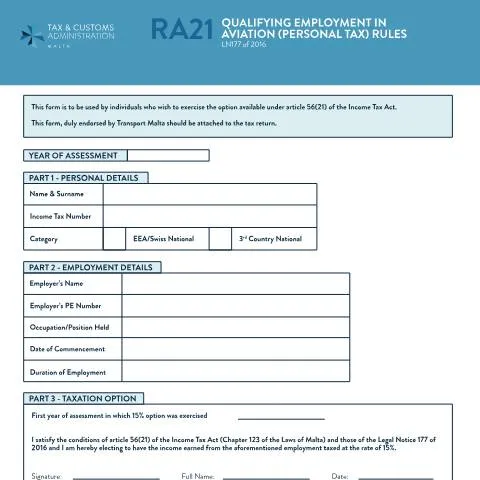
Understanding the RA Forms — ra21-qualifying-employment-in-aviation
Navigating through the intricacies of tax regulations can be daunting, especially for individuals engaged in the aviation sector. The RA Forms — ra21-qualifying-employment-in-aviation document plays a pivotal role in determining the eligibility of workers in the aviation industry for tax benefits or incentives. This guide aims to illuminate the nuances of this specific form, detailing the processes involved from the initiation of the application to the final decision.
Who Needs to File the RA21 Form?
Individuals working in the aviation field, particularly those in specialized roles or positions deemed to contribute to the aviation sector's growth, are typically the ones required to complete this form. This encompasses:
- Employees of airlines or airports.
- Personnel involved in aircraft maintenance.
- Individuals working in air traffic control.
- Other roles directly associated with aviation operations.
Importantly, the qualifications for submitting this form may differ based on specific scenarios, including the nature of employment, duration of roles performed, and even the nationality of the applicant. Foreign workers and residents with differing employment statuses should pay close attention to the details outlined within the form and accompanying instructions.
A Comprehensive Breakdown of the RA21 Form Contents
The ra21-qualifying-employment-in-aviation form is structured to gather essential information about the applicant’s employment status and roles. Understanding its sections can significantly ease the filling process. Here’s what to look out for:
Employment Details
Applicants are required to provide comprehensive information about their position, including:
- Name and address of the employer.
- Job title and description of duties.
- Duration of employment.
Qualification Criteria
This section emphasizes the criteria that determine qualifying employment within the aviation sector. Applicants should be prepared to articulate how their roles meet these criteria, as this will impact the processing of their application.
Supporting Documentation
When submitting the RA21 form, it is crucial to attach supporting documents that substantiate the information provided. Commonly required documents may include:
- Contracts of employment.
- Pay slips or salary statements.
- Letters from employers verifying employment status and roles.
Being thorough in this section ensures that the application is processed smoothly and reduces the potential for delays.
Step-by-Step Process: From Filling to Submission
Completing the RA21 form is just the beginning; the submission process plays a critical role in the overall experience. Here’s a detailed look at the steps involved:
Step 1: Filling Out the Form
Begin by carefully reading the instructions accompanying the RA21 form. Accurate completion of the form is paramount, as discrepancies may lead to application rejection or delays.
Step 2: Compiling Supporting Documentation
As previously mentioned, gathering the necessary documents is vital. Ensure that all documentation is current and reflects the information provided in the form.
Step 3: Submission Methods
The RA21 form can typically be submitted through various channels:
- Online Submission: Utilizing the Central e-ID authentication, applicants may submit the form digitally through designated governmental portals.
- Mail Submission: Alternatively, applicants can choose to print and send the completed form along with the required documents to the relevant tax authority.
Step 4: Tracking Application Status
Once submitted, tracking the application status is advisable. Applicants may do this through the governmental portal using their e-ID or by contacting the income tax department directly for updates regarding their application's progress.
Potential Outcomes: What Happens Next?
After submission, several scenarios can unfold, depending on the provided information and supporting documents. Here’s what applicants might expect:
Approval of the Application
If the application meets all criteria, the income tax authority will approve it, allowing the applicant to access the relevant tax benefits associated with qualifying employment in aviation.
Request for Additional Information
In some cases, the authority may require further clarification or additional documents. In such instances, it is essential to respond promptly to avoid delays in the application process.
Rejection of the Application
If the application is rejected, the applicant will be informed of the reasons behind the decision. Understanding these reasons is crucial as it allows for rectifications or adjustments for future submissions.
Unique Cases: Special Considerations for Foreign Workers
Foreign nationals seeking to complete the RA21 form must navigate additional considerations that affect their eligibility. Key aspects to bear in mind include:
- Work permits and residency status are critical; applicants must ensure compliance with local regulations.
- Documentation must be sufficient to demonstrate that their employment aligns with the qualifying criteria set forth by the income tax authority.
For foreign workers, it is often beneficial to consult with legal or tax professionals familiar with Maltese tax law to ensure accurate completion of the form and adherence to all necessary regulations.
Implications of Not Submitting the RA21 Form
Choosing not to submit the RA21 form, despite being eligible, could result in significant consequences. These may include:
- Loss of potential tax benefits pertinent to aviation employment.
- Increased taxable income, which could lead to higher tax liabilities.
- Potential issues with future employment documentation or tax compliance.
By failing to engage with this process, individuals in the aviation sector may inadvertently disadvantage themselves financially, highlighting the importance of understanding and utilizing the RA21 form effectively.
Preparing for Future Filings: Keeping Records and Documentation
In preparation for submitting the RA21 form or similar documents in the future, maintaining comprehensive records is essential. Here's how to do so effectively:
- Document Management: Organize contracts, pay slips, and any other relevant documentation in a dedicated file, both physical and digital.
- Regular Updates: As job roles or employment details change, promptly update your records to reflect current information.
- Consultation with Professionals: It might be wise to seek periodic advice from tax professionals to navigate any changes in tax laws or obligations associated with your employment.
Conclusion: Navigating the RA21 Form for a Successful Tax Experience
Engaging with the RA Forms — ra21-qualifying-employment-in-aviation is an important step for anyone employed in the aviation sector wishing to maximize their tax position. By understanding the form's requirements, adhering to submission protocols, and preparing adequately, one can ensure that they are not only compliant with Maltese regulations but also positioned to receive the benefits to which they are entitled. The journey through the administrative complexities might seem intricate, but with the right preparation and knowledge, it becomes significantly more manageable.
Understanding the RA21 Form in the Context of Employment in Aviation
The RA21 form, officially titled "Qualifying Employment in Aviation," serves as a pivotal document for individuals seeking employment recognition in various aviation sectors in Malta. This form is essential for both local citizens and foreign nationals, as it outlines the criteria for qualifying employment within the aviation industry, ensuring compliance with both local and international regulations. To fully grasp the implications and requirements of the RA21, it’s important to dissect its components and understand how they align with the needs of aviation employers and employees alike.
Primarily, the RA21 form encompasses details about the applicant’s employment history, qualifications, and specific roles undertaken within the aviation sector. It is crucial that applicants provide accurate and comprehensive information as this will be evaluated against the criteria set by the Authority for Transport in Malta (Transport Malta). The evaluation process typically includes verification of qualifications against the European Union Aviation Safety Agency (EASA) regulations, as well as ensuring that the employment experience corresponds with the roles defined by the aviation authority.
Common Pitfalls When Filling Out the RA21 Form
While the RA21 form is straightforward, many applicants encounter challenges that can delay or complicate the verification process. One common pitfall is failing to provide adequate proof of experience, particularly in roles that require specific certifications or licenses. Applicants are advised to include copies of relevant documents such as training certificates, employment letters, and references from previous employers in the aviation field. This not only substantiates claims made within the RA21 but also speeds up the processing time significantly.
Another frequent oversight involves misunderstanding the employment categories defined by Transport Malta. The RA21 form has specific classifications for different job roles, and applicants must ensure that their previous positions fall under these categories. Misclassification can result in rejection or further inquiries, leading to additional delays. It is also essential to take note of the required language, as the form must be filled in either English or Maltese. Submissions in other languages will not be accepted, further emphasizing the need for accuracy and adherence to guidelines.
Benefits of Completing the RA21 Form
Completing the RA21 form offers numerous advantages for individuals seeking to establish their career in aviation. Firstly, successful submission and approval of the RA21 can significantly enhance employability, as it formally recognizes one’s qualifications and experience in the aviation sector. Employers in Malta are increasingly reliant on validated qualifications due to the stringent safety and regulatory standards dictated by EASA, making the RA21 a valuable asset in a competitive job market.
Additionally, having an approved RA21 form may open up further professional development opportunities. Many aviation companies offer training and advancement programs exclusively for employees who have validated qualifications. The RA21 thus acts as a stepping stone for career progression, allowing individuals to access specialized training that can lead to higher positions within their organizations.
Finally, the RA21 form facilitates compliance with various local and international aviation regulations. By ensuring that all employees meet the necessary criteria, companies strengthen their operational integrity and minimize the risk associated with regulatory breaches. This not only protects the company but also contributes to the overall safety and reliability of Malta's aviation sector, an essential aspect for an island nation heavily dependent on air travel and tourism.