Understanding the 2024 Annual Average Exchange Rates PDF and Its Impact on Your Tax Obligations
As Malta continues to navigate its financial landscape, the 2024 Annual Average Exchange Rates PDF emerges as a crucial document for both individuals and businesses alike. Understanding what this PDF entails and how it interacts with your income tax responsibilities is essential for smooth compliance and financial planning.
The Purpose of the 2024 Annual Average Exchange Rates PDF
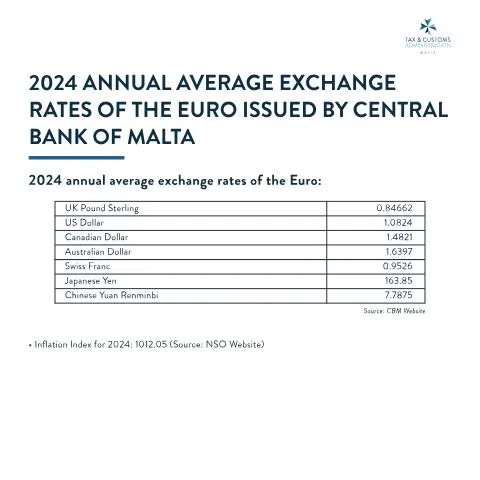
The primary role of the 2024-annual-average-exchange-rates-pdf is to provide a standardized reference for average exchange rates over the fiscal year. This information is vital for Maltese taxpayers who must report their income accurately when dealing with foreign currencies. Understanding these exchange rates can significantly influence tax calculations, especially for income derived from overseas.
Why Average Exchange Rates Matter
- Tax Calculations: If you earn income in a foreign currency, the rates provided in this document will determine how much of that income is converted to euros for tax purposes.
- Foreign Investments: Investors with interests outside Malta will need these rates to assess their gains or losses comprehensively.
- Compliance: Accurate reporting is critical. Utilizing the correct exchange rates helps avoid issues with the Income Tax Department.
Who Should Submit the 2024 Average Exchange Rates PDF?
Not everyone in Malta will need to submit this document, but it is especially relevant for:
- Individuals with Foreign Income: If you earn salary or dividends from abroad, the average exchange rates will apply.
- Businesses Engaging in International Trade: Companies that import or export goods need to report accurately to comply with local tax laws.
- Investors: Those with diversified portfolios, especially in foreign currencies, must ensure they use the correct figures in their tax returns.
Exceptions and Special Cases
While most taxpayers will find this document applicable, certain groups may have different obligations or exemptions. For example:
- Non-Residents: Non-residents may have specific tax agreements that influence their reporting of foreign income.
- Tax-Exempt Entities: Charitable organizations may not need to report foreign income, depending on their status.
Completing the 2024 Annual Average Exchange Rates Document
Filling out the document accurately is crucial for ensuring that you meet your tax obligations without facing penalties. Here’s a breakdown of what to consider:
Key Sections of the Document
| Section | Description | Common Pitfalls |
|---|---|---|
| Personal Information | Fill out your name, ID number, and contact details. | Ensure your ID number is correct; errors can lead to delays. |
| Income Sources | Detail all income sources in foreign currencies. | Missing any income source can lead to penalties. |
| Exchange Rates Used | Indicate the average rates downloaded from the PDF. | Using outdated rates can affect your calculations. |
| Signature and Date | Sign and date the document for submission. | Omitting these fields will invalidate your submission. |
Tips for Accurate Completion
- Always use the latest version of the document from the Income Tax Department.
- Double-check all figures against official exchange rates published in the PDF.
- Keep a copy of your completed document for your records.
Where and How to Submit the Document
Once you have completed the document, knowing where to submit it is vital. You have several options:
Submission Channels
- Online Submission: The most efficient method is via the Maltese e-ID through the Income Tax Department's online portal. This method is generally faster and provides immediate confirmation.
- Postal Submission: If you prefer traditional methods, you may submit the document via post. Be sure to send it with sufficient time for delivery to avoid late penalties.
- In-Person at the Tax Office: You can also visit the Income Tax office to submit your document directly. This can be beneficial if you have questions or need additional support.
Understanding Response Times
After submission, you may wonder how long it will take for your document to be processed:
- Online submissions typically receive confirmation within a few days.
- Postal submissions can take longer, depending on postal service efficiency.
- In-person submissions may allow for immediate feedback, depending on the office's workload.
What to Expect After Submission
Upon submission of the 2024 Annual Average Exchange Rates PDF, you enter a phase that involves monitoring and potential follow-ups. Here’s how to navigate this part of the process:
Monitoring Your Submission Status
It’s essential to know how to check if your submission has been processed:
- If submitted online, you can log into your e-ID account to view the status.
- For postal submissions, retain your shipping receipts; you may also check with the tax office via phone or email.
- In-person submissions provide immediate feedback from officials regarding any potential issues.
In Case of Issues
If you receive a notice regarding your submission—perhaps due to missing information or errors—here's what to do:
- Review the Notice: Understand what the issue is and gather any necessary documentation.
- Respond Promptly: Timeliness is critical; address any concerns raised as quickly as possible.
- Request Assistance: If you are unsure how to correct the problem, do not hesitate to seek help from tax professionals or the Income Tax Department.
Consequences of Non-compliance
Failing to submit the 2024 Annual Average Exchange Rates PDF or submitting it incorrectly can lead to significant consequences:
Potential Impacts
- Financial Penalties: You may face fines or increased tax liabilities if discrepancies arise from errors in your submission.
- Legal Ramifications: Persistent non-compliance can lead to more severe legal actions from the government.
- Loss of Trust: Frequent issues with your tax submissions can damage your reputation with financial institutions.
Final Considerations for a Smooth Process
To ensure that your experience with the 2024 Annual Average Exchange Rates PDF is as seamless as possible, here are a few last practical pointers:
Stay Updated
Exchange rates can fluctuate, which means it’s crucial to stay informed about the latest developments. Regularly check updates from the Income Tax Department and review the provided documents.
Engage a Tax Advisor
For those who are unsure about how to navigate their foreign income reporting, consulting a tax professional can save time and reduce stress. They can provide personalized advice tailored to your financial situation.
Maintain Proper Records
Retain all documentation related to your submissions, including any correspondence with the tax office. This record-keeping can prove invaluable in the event of discrepancies or audits in the future.
By understanding the role of the 2024 Annual Average Exchange Rates PDF, knowing how to fill it out correctly, and being aware of potential repercussions, you can navigate your tax obligations in Malta with confidence and clarity.
Understanding the Importance of Exchange Rates in Malta's Economy
Exchange rates play a pivotal role in shaping the economic landscape of Malta, influencing everything from trade balances to inflation rates. Given Malta's strategic location in the Mediterranean, the exchange rate directly affects its tourism sector, which is a crucial component of the national economy. The Maltese lira was replaced by the euro in 2008, and since then, the euro's stability has had significant implications for local businesses engaging in international trade.
Understanding how the annual average exchange rates fluctuate can provide insights into the purchasing power of the euro relative to other currencies. For businesses, these fluctuations can dictate pricing strategies and profit margins, especially in sectors that depend heavily on imports, such as food and consumer goods. Moreover, for expatriates and Maltese citizens working abroad, exchange rate variations can significantly impact remittances sent home, affecting household incomes and overall economic well-being.
In 2024, stakeholders—ranging from small local enterprises to large international firms—will need to monitor key economic indicators, including exchange rates, to adjust their financial strategies accordingly. The annual average exchange rates document can serve as a vital resource for these stakeholders, offering a comprehensive overview of the currency trends over the year.
How to Access and Utilize the 2024 Annual Average Exchange Rates Document
Accessing the 2024 Annual Average Exchange Rates document is key for both individuals and businesses looking to navigate the financial landscape of Malta effectively. This document is available through the Central Bank of Malta and can typically be found on their official website in PDF format. For those who prefer online access, users must log in using their e-ID to ensure secure access to official governmental documents.
Once obtained, users should familiarize themselves with the layout of the document. The average exchange rates are usually presented in tabular format, allowing for quick comparisons across different currencies. It is advisable for business owners to analyze these rates in conjunction with the historical data from previous years, thereby identifying trends and making informed predictions for future currency movements.
Additionally, the document may include annotations highlighting significant economic events that influenced exchange rate fluctuations throughout the year. These notes can provide valuable context for understanding the numbers, particularly for those less versed in economic analysis.
For businesses engaged in international transactions, integrating this data into their financial planning processes can be pivotal. Regularly reviewing the exchange rates can help in timing transactions to maximize currency value, providing a competitive edge in the global market.
The Role of the Central Bank of Malta in Exchange Rate Stability
The Central Bank of Malta plays a crucial role in managing the stability of the euro within the Maltese economy. This institution not only monitors exchange rates but also implements monetary policies aimed at controlling inflation and ensuring sustainable economic growth. Understanding the functions of the Central Bank can shed light on how exchange rates are influenced and provide insights into future trends.
In addition to setting interest rates, the Central Bank engages in currency interventions when necessary to maintain stability in the euro exchange rate. These interventions can mitigate extreme fluctuations, which are especially critical during periods of economic uncertainty or geopolitical tensions. Businesses should be aware of the Central Bank's announcements regarding monetary policy changes, as these can lead to immediate shifts in exchange rates.
Furthermore, the Central Bank regularly publishes reports and forecasts that include insights on projected exchange rate trends. This information can be invaluable for financial planning, allowing businesses and individuals to make informed decisions regarding investments, imports, and exports.
Finally, engaging with the Central Bank through public seminars or workshops can provide additional knowledge about exchange rate dynamics and their implications for personal and business finances. The more informed individuals and businesses are about these mechanisms, the better positioned they will be to navigate the complexities of Malta's economic environment.