Navigating the Income Tax Clearance Certificate for Migration Allowances
Obtaining an Income Tax Clearance Certificate (ITCC) in Sri Lanka is not just a procedural formality; it is a key requirement for individuals planning to migrate. As a crucial document that confirms an individual’s tax compliance, the ITCC facilitates the smooth transition of funds and assets when leaving the country. This certificate is particularly relevant for expatriates, professionals moving abroad, or individuals relocating for personal reasons.
The Significance of the Income Tax Clearance Certificate
The ITCC serves multiple critical functions. Firstly, it assures both the individual and the host country that the applicant has fulfilled their tax obligations in Sri Lanka. Without this certificate, the transfer of funds, especially substantial amounts intended for migration allowances, can face significant delays and complications.
Moreover, the certificate plays a pivotal role in preventing tax evasion and ensuring that the Sri Lankan government can track the financial movements of its citizens. This is particularly important in light of international tax compliance standards, such as the OECD’s Common Reporting Standard.
Who is Eligible to Apply?
To be eligible for an ITCC, certain conditions must be met. These include:
- Residency Status: The applicant should be a resident of Sri Lanka or have resided in the country for a minimum period prior to migration.
- Tax Registration: The individual must possess an Income Tax File Number, which demonstrates prior compliance with tax regulations.
- Document Submission: All requisite supporting documents must be provided to validate the application.
Detailed Steps for Applying for the ITCC
The process of applying for the Income Tax Clearance Certificate is structured yet straightforward, provided one adheres to the established protocol. Below is a systematic breakdown of the steps involved:
- Preparation of Documentation: Gather all necessary documents, which include your National Identity Card, passport, and any other relevant financial documents.
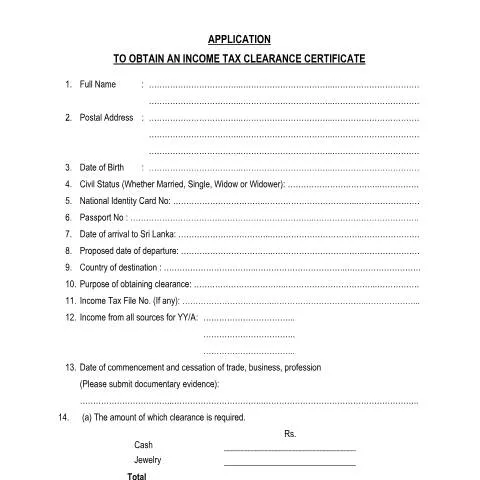
- Completion of Application Form: Fill out the 'Application for Income Tax Clearance Certificate for Migration Allowances' comprehensively, ensuring accurate details.
- Submission: Submit the application along with photocopies of all supporting documents to the designated office of the Department of Inland Revenue (DIR).
- Await Processing: The application will undergo verification, and additional information may be requested by the authorities.
- Issuance of the Certificate: Upon successful verification of your application, the ITCC will be issued, allowing you to proceed with your migration plans.
Essential Supporting Documents
To ensure a smooth application process, the following documents must accompany your application:
- National Identity Card and Passport photocopies
- Resignation acceptance letter from your employer
- T-10 forms for the last three assessment years
- Salary particulars for the last three months
- Documentary evidence relating to the funds you plan to transfer or use for migration purposes
Understanding the Validity and Renewal of the ITCC
The Income Tax Clearance Certificate is typically valid for a specific period, generally until the end of the fiscal year in which it is issued. However, if there are any significant changes in your financial situation or if the application is associated with ongoing migration processes, you may need to seek renewal or re-issuance of the certificate.
It is advisable to check with the Department of Inland Revenue for the specific validity period applicable at the time of your application, as it may vary based on individual circumstances and changes in tax law.
Withdrawal or Contestation of the ITCC
In instances where errors are identified in your ITCC post-issuance, or if you believe that the clearance has been unjustly denied, it is essential to follow a structured approach to contest or withdraw the application:
- Contact the Department: Reach out to the relevant authority at the Department of Inland Revenue to clarify the issue.
- Provide Evidence: If contesting an erroneous claim, be prepared to present supporting documentation that substantiates your case.
- Follow Formal Procedures: Complete any required forms or documentation necessary for the appeal process.
Practical Applications and Organizations Requiring the ITCC
Various organizations and entities may demand proof of an ITCC when dealing with international transactions or applications for residency abroad. These include:
- Financial Institutions: Banks may require an ITCC when processing significant transfers or loans.
- Immigration Authorities: Many countries require proof of tax compliance as part of their immigration processes.
- Employers: Certain employers abroad may request this certificate as part of the hiring process, ensuring that the prospective employee is in good standing with tax obligations.
The Legal Implications of the ITCC
From a legal standpoint, the Income Tax Clearance Certificate carries substantial weight. It acts as evidence that the applicant has been compliant with tax regulations and has settled all dues with the Sri Lankan tax authorities. This aspect is particularly important for individuals who might face scrutiny upon migrating to a new jurisdiction.
In addition, the certificate is recognized as a formal legal document, and any discrepancies or failures to present it when required can result in complications regarding one’s migration status or financial dealings in the new country.
Conclusion: The Path Forward with Your ITCC
Obtaining an Income Tax Clearance Certificate for Migration Allowances is an essential step for anyone planning to leave Sri Lanka. Not only does it ensure a smooth transition of financial assets, but it also upholds your legal standing as a compliant taxpayer. By understanding the specific requirements and procedures involved in acquiring this certificate, you can facilitate your migration process and mitigate potential challenges in the future.
Always stay informed about the latest regulations from the Department of Inland Revenue and seek assistance if you encounter any difficulties during your application process. Adhering to these guidelines will pave the way for a successful transition to your new country.
Understanding the Income Tax Clearance Certificate (ITCC)
The Income Tax Clearance Certificate (ITCC) is a critical document for Sri Lankans who intend to migrate, particularly for those who are eligible for migration allowances. This certificate serves as proof that an individual has settled all tax obligations with the Inland Revenue Department (IRD). In the context of migration, the ITCC ensures adherence to both local tax laws and the regulations of the destination country. Applicants are advised to initiate the application process early, as the clearance may take time depending on the individual's tax situation and any outstanding obligations.
Eligibility Criteria for ITCC Application for Migration Allowances
Not every applicant is automatically eligible for an Income Tax Clearance Certificate. The eligibility criteria are established to ensure that all tax requirements have been fulfilled prior to migration. This section highlights the key factors that determine eligibility:
- Tax Compliance: Applicants must have submitted all relevant income tax returns for the years preceding the application. This includes verifying that any additional assessments have been cleared and that no arrears exist.
- National Identity Card (NIC): The NIC is paramount in authenticating the applicant's identity. A valid NIC must accompany the application, ensuring that the applicant is recognized within the national tax system.
- Outstanding Tax Liabilities: It is essential that all tax dues are settled before applying for the ITCC. The IRD may require evidence of payment and may not issue the clearance if there are pending payments.
- Application Purpose: Applicants must clearly state their intention for the ITCC, specifically indicating that it is for migration allowances. This helps the IRD tailor the clearance process to the needs of the applicant.
Steps to Expedite the ITCC Process
The application process for an Income Tax Clearance Certificate can be lengthy, but applicants can undertake several strategic steps to expedite the procedure:
- Gather Required Documentation: Before submitting the application, ensure all necessary documents are in order. This may include tax returns, proof of tax payments, NIC, and any migration-related documentation that details the allowances.
- Online Application Submission: Utilize the digital government services provided by the ICTA. Completing and submitting your application through forms.gov.lk can enhance processing speed, given that the online system is designed for efficiency.
- Consult with a Tax Professional: Prior to application, consulting with a tax advisor knowledgeable about the IRD requirements can provide insights into any potential issues that might arise during the review process. Such an advisor can assist in ensuring that the application is complete and compliant with tax laws.
- Track Application Progress: After submission, applicants should be proactive in following up on their application status. The IRD offers channels through which applicants can inquire about the progress of their clearance certificates.