Understanding the Context: Tax Obligations and Their Implications
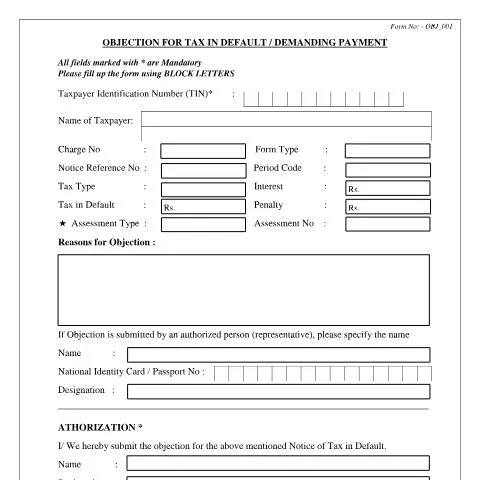
In Sri Lanka, compliance with tax obligations is a critical aspect of public finance management. The government relies on tax revenue to fund essential services and infrastructure. However, there are instances where taxpayers may find themselves unable to meet their tax obligations due to various reasons. This can lead to the issuance of a Notice of Tax in Default, prompting a taxpayer to respond through the Application Form Objection for Tax in Default / Demanding Payment (Reference Code: OBJ_001). This form serves as the official medium through which taxpayers can formally contest such notices.
The Taxpayer Profile: Who Should Pay Attention
Understanding the specific profile of those who may need to fill out this form is essential. Taxpayers can be individuals or entities, and the circumstances leading to their receipt of a tax default notice can vary widely.
- Individual Taxpayers: Individuals who have received a notice for personal income tax, particularly if they believe the assessment is incorrect.
- Small Business Owners: Small enterprises may face challenges in tax assessments due to fluctuations in revenue or misunderstandings about tax liabilities.
- Corporate Taxpayers: Companies receiving notices for corporate tax, especially during audits or assessments involving complex financial structures.
- Authorized Representatives: Cases where a representative, such as an accountant or legal advisor, submits the objection on behalf of the taxpayer must also be considered.
Why Submitting the Application Form Matters
Filing the Application Form Objection for Tax in Default is not merely a procedural step; it is a critical defense mechanism for taxpayers. Failure to submit this form can lead to:
- Financial Penalties: Ongoing penalties may accrue if the taxpayer does not respond adequately to a tax default notice.
- Legal Action: Non-compliance could result in the initiation of legal proceedings by the tax authorities to recover owed taxes.
- Impact on Credit Rating: Tax defaults might affect the taxpayer’s creditworthiness, making it difficult to secure loans or financial support in the future.
The Timeline of Submitting the Application Form
When a Notice of Tax in Default is received, the clock starts ticking. It is imperative for the taxpayer to be aware of the timeframe in which they must act:
- Notification Period: The Notice will specify a period within which the objection must be lodged. Typically, this is within 30 days of receiving the notice.
- Review Period: After submission, the tax authorities will review the objection. This generally takes up to 60 days, although this can vary based on the complexity of the case.
- Resolution and Notification: Once the review is completed, the taxpayer will receive a notification regarding the decision on their objection.
Factors Influencing Deadlines
It is important to note that there are some factors which can influence the deadlines associated with this process, including:
- Holidays and Weekends: If the last day of the objection period falls on a public holiday or weekend, the deadline may be extended to the next business day.
- Complexity of the Case: For more complex objections, the tax authorities may require additional time to conduct a thorough investigation.
Completing the Application Form: Key Sections and Considerations
Filling out the application form accurately is essential for a successful objection. Each section of the form has specific requirements that must be met:
- Taxpayer Identification Number (TIN): This unique identifier is critical for the processing of the objection. Ensure that the TIN is correctly entered.
- Name of Taxpayer: Provide the full legal name as registered with the tax authorities.
- Charge No and Form Type: These details help to categorize and identify the nature of the objection.
- Reasons for Objection: This section is particularly crucial. Be explicit and detailed. Clearly articulate why the taxpayer believes the notice is unwarranted.
Common Mistakes to Avoid
Inaccuracies or omissions can lead to delays or rejections of the objection. Here are common pitfalls to avoid:
- Incomplete Information: Ensure all mandatory fields are filled, especially those marked with an asterisk (*).
- Signature and Date: The form must be signed and dated to validate it. An unsigned form is not acceptable.
- Failing to Attach Supporting Documents: If there are any documents that support the objection, they should be attached as specified in the guidelines.
Understanding Assessment Types and Their Relevance
Different assessment types can lead to a Notice of Tax in Default. Understanding these types can help the taxpayer prepare a more focused objection:
| Assessment Type | Description |
|---|---|
| Default Assessment | Issued when a taxpayer has not submitted a return or has defaulted on tax payments. |
| Advance Assessment | Determined based on projected income, often used for self-assessed tax instances. |
| Additional Assessment | Conducted when discrepancies are found in previously filed returns. |
| Amended Assessment | Issued after the taxpayer or the tax authority identifies the need to amend a previous assessment. |
What Happens After Submission?
Upon submission of the objection form, a few critical steps take place:
- Review Process: The relevant department will review the objection, which may involve contacting the taxpayer for additional clarification or documentation.
- Decision Making: After thorough examination, the tax authorities will determine whether to uphold the original assessment or amend it based on the objection.
- Notification of Outcome: The outcome will be communicated to the taxpayer via a formal notification letter, indicating the next steps if the objection is upheld or if further action is required.
Potential Outcomes of the Objection
Depending on the outcome of the review, the taxpayer may experience one of the following scenarios:
- Uphold of Original Assessment: If the objection is rejected, the taxpayer may have to pay the owed taxes with any penalties incurred.
- Amendment of Assessment: If the objection is accepted, the tax authorities may revise the tax owed, possibly providing a refund for overpayments.
Integrating the Application Form into Broader Administrative Processes
The Application Form Objection for Tax in Default is one element within a larger framework of tax administration in Sri Lanka. Understanding its relationship with other processes is vital for taxpayers.
- Appeal Processes: If a taxpayer is still dissatisfied after the objection review, they have the right to appeal the decision to the Administrative Review Board.
- Tax Counseling Services: Many taxpayers may benefit from consulting with tax professionals to understand their options before submitting objections.
- Compliance Education: The government provides resources and programs to educate taxpayers on their rights and responsibilities regarding tax compliance.
Final Thoughts on Effective Tax Management
Effective tax management requires vigilance and proactive measures. By understanding the intricacies of the Application Form Objection for Tax in Default, taxpayers can navigate the complexities of tax discrepancies more effectively, ensuring that their rights are protected while fulfilling their obligations.
Understanding the Grounds for Objection in Tax Default Cases
In Sri Lanka, a taxpayer may submit an Objection Form concerning tax assessments or demands if they believe that the assessment is incorrect. Understanding the specific grounds on which one can base their objection is crucial for a successful appeal. Below are common grounds for objections:
Inaccurate Income Assessment: Taxpayers may lodge an objection if they believe that their reported income does not match the assessment made by the Department of Inland Revenue (DIR). It is essential to provide supporting documentation, such as bank statements and financial records, to substantiate the claims.
Incorrect Application of Tax Rates: If a taxpayer believes that the tax rate applied to their income is incorrect or not in accordance with established guidelines, an objection may be filed. This includes misclassification of income which might fall under different tax brackets.
Failure to Account for Deductions or Allowances: Taxpayers are entitled to certain deductions which can substantially affect their taxable income. If these deductions have not been taken into account in the assessment, an objection can be raised. Documentation proving eligibility for such deductions must accompany the objection submission.
Procedural Errors: If there were any procedural mishaps in the assessment process, including lack of adequate notice about the tax obligations or failure to adhere to required timelines by the tax authorities, these can also serve as valid grounds for objection.
Corporate Tax Matters: For businesses, complex tax regulations often lead to disputes regarding allowable expenses, depreciation rates, and other financial practices. If a corporation believes its tax assessment fails to consider its specific operational characteristics or financial practices, an objection should be warranted, providing details of the operations and practices employed.
In each of these cases, taxpayers must ensure that their objections are clearly articulated, supported by appropriate documentation, and submitted within the stipulated timeframes as outlined by the DIR.
The Process of Filing an Objection: A Step-by-Step Guide
Navigating through the process of filing an Objection for Tax in Default requires attention to detail and compliance with local regulations. The steps outlined below serve as a comprehensive guide to assist taxpayers in this endeavor:
Preparation of Required Documentation: Before initiating the objection process, gather all pertinent documents, including tax returns, assessment notices, and any evidence supporting the objection such as bank statements or financial reports.
Completion of the Objection Form: Obtain the official Objection Form from the Department of Inland Revenue (DIR) or through the online portal. Ensure that all fields are filled out accurately. Incorrect information could lead to delays or rejection of the objection.
Submission of the Objection: The completed form, along with all supporting documents, must be submitted to the designated office of the DIR. Pay attention to submission methods, as electronic submissions are encouraged via forms.gov.lk, reducing processing time.
Follow-Up on Your Objection: After submission, it is advisable to follow up with the DIR to ensure that the objection is being processed. This can typically be done through a written inquiry or through their helpline.
Await the Review Outcome: The DIR will review the objection and communicate the outcome. Should the decision be unfavorable, further avenues for appeal exist, including lodging an appeal with the Tax Appeal Commission, which must also be pursued within a specified timeframe.
Maintain Records: Keep a copy of all submitted documents and correspondence with the DIR. This is essential not only for personal record-keeping but also if further legal action is necessary.
Each step is vital to ensure that objections are appropriately filed and have the best chance of being upheld by the tax authorities.
Key Deadlines and Timelines in the Objection Process
Understanding the key deadlines and timelines involved in the objection process is fundamental for taxpayers wishing to contest tax assessments in Sri Lanka. Failure to meet these deadlines may result in the forfeiture of the right to appeal. Here are the critical timelines to consider:
Initial Filing Deadline for Objections: Taxpayers must submit their objections within 30 days from the date they receive notice of the tax assessment. It is crucial to be vigilant about the receipt of such notices.
Submission of Supporting Documents: Accompanying documents must be prepared and submitted alongside the objection form within the same 30-day window. If additional documentation is necessary post-submission, taxpayers may be granted a short extension, but this is at the discretion of the DIR.
Timeframe for the DIR's Response: The Department of Inland Revenue is expected to respond to the objection within three months from the date of submission. However, delays can happen, so taxpayers should proactively check on their status.
Appeals Against DIR Decisions: If a taxpayer is dissatisfied with the outcome of their objection, they have the right to appeal to the Tax Appeal Commission. This appeal must be lodged within 30 days following the issuance of the DIR’s decision.
Fiscal Calendar Considerations: Taxpayers should be aware of the fiscal calendar, which runs from April 1 to March 31 in Sri Lanka. Compliance with reporting obligations must align with this calendar, and any objection or appeal related to tax assessments must take this into account.
Annual Tax Assessment Notifications: Taxpayers should also remain informed about the annual notifications regarding tax assessments which are typically communicated in May. Keeping track of these notifications allows taxpayers to prepare and respond timely regarding their obligations or any disputes.
By adhering to these critical deadlines and timelines, taxpayers can ensure that their objections are handled efficiently and effectively by the relevant authorities.