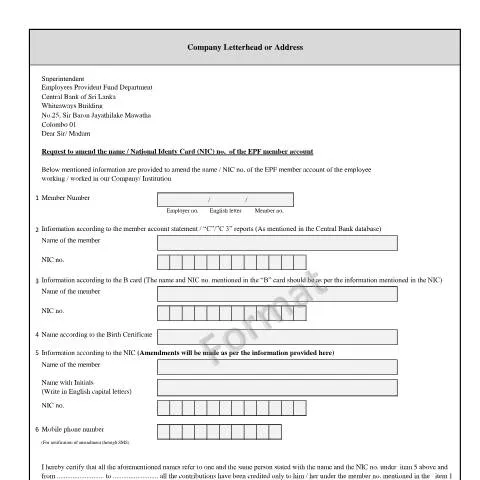
Understanding the Context of the Letter of Request
The Letter of Request is a critical document in Sri Lanka's administrative landscape, particularly concerning the Employees Provident Fund (EPF). This document plays a vital role in amending essential personal information related to EPF accounts, specifically the names and National Identity Card (NIC) numbers of members. Its significance cannot be understated, as it ensures that personal records are accurate, which is crucial for the integrity of the EPF system.
Who Initiates the Letter of Request?
This document is typically submitted by employers on behalf of their employees. The responsibility lies with the employer to ensure that all details provided are accurate and that the request complies with the regulations stipulated by the Employees Provident Fund Department.
Employer's Role and Responsibility
- Verification of Information: Employers must verify the personal details of employees before submitting the request.
- Documentation: The letter must include necessary supporting documents such as the NIC, birth certificate, and the employee's 'B' Card.
- Certification: Employers are required to certify that the information provided is authentic and relates to the same individual.
- Submission Procedure: Understanding the correct procedural steps is essential to avoid delays.
The Step-by-Step Process of Submitting the Request
Understanding the chronological flow from initiation to completion is crucial for a successful amendment request. The following steps outline this process:
- Preparation of the Letter: Employers should prepare a formal letter on company letterhead, including the necessary details outlined in the request.
- Gathering Supporting Documents: Collect required documents such as copies of the NIC, birth certificate, and the employee's 'B' Card.
- Review and Certification: The letter must be reviewed for accuracy and certified with the signature of the employer, along with the company stamp.
- Submission: The completed Letter of Request along with supporting documents should be submitted to the relevant EPF department.
- Follow-up: After submission, employers are advised to follow up to ensure the amendments are made timely.
The Intricacies of the Letter Content
Each section of the Letter of Request must be filled out meticulously to avoid errors that could delay the amendment process.
Decoding the Sections of the Form
| Field | Description | Common Pitfalls |
|---|---|---|
| Member Number | The unique identification number assigned to the EPF member. | Inaccurate number leading to processing delays. |
| Name of the Member | The full name as per the NIC. | Mismatch between NIC and request letter. |
| NIC Number | The official National Identity Card number of the member. | Incorrect digits or format errors. |
| Name according to Birth Certificate | The exact name as stated on the birth certificate. | Not matching the NIC can cause issues. |
| Mobile Phone Number | Contact number for SMS notifications. | Providing an incorrect number may lead to missed updates. |
The Necessity of Supporting Documents
Submitting the Letter of Request requires a set of supporting documents that validate the request. These documents are crucial for the processing of the amendment.
Essential Documents
- National Identity Card (NIC): A copy is mandatory for identification purposes.
- Birth Certificate: This document helps to confirm the legal name of the member.
- B Card: The 'B' Card provides additional identification information.
Each document must be a certified true copy, and employers must ensure that all signatures and stamps are correctly affixed to avoid complications.
Special Considerations for Different Scenarios
There are various circumstances that could arise which may necessitate special attention when submitting a Letter of Request. These include cases involving foreign employees, minors, or situations of urgency.
Foreign Employees
- For foreign employees, it is essential to provide additional documentation such as a work permit or visa.
- These employees may also need to present identification from their home country.
Minors
- Requests concerning minors must be submitted by a legal guardian.
- Proof of guardianship may be required along with the standard documents.
Urgent Cases
- In urgent cases, employers should include a statement indicating the urgency of the request.
- Following up through direct communication with the EPF office may expedite the process.
Follow-Up: Ensuring Successful Amendment
Once the Letter of Request has been submitted, it is essential for employers to maintain communication with the EPF Department.
Tracking the Request
- Phone Inquiries: Employers can call the EPF office at the numbers provided in the official correspondence for status updates.
- Documentation Confirmation: Ensuring that all documents were received and are being processed is key.
- Timeline Awareness: Employers must be aware of any estimated timelines for processing to manage expectations.
By diligently following up, employers can help ensure that the amendments are processed in a timely manner, minimizing any disruption to the employee’s EPF records.
The Significance of Accurate Record-Keeping
Accurate records are fundamental in maintaining the integrity of the Employees Provident Fund. Errors can lead to confusion and potential legal consequences for both employees and employers.
Long-Term Implications
- Inaccuracies could result in misallocation of funds, impacting an employee's retirement savings.
- Employers should be proactive in maintaining accurate records to foster trust and accountability within their organizations.
Handling the Letter of Request with the utmost care is essential for both employers and employees in Sri Lanka. It is a critical component of managing EPF records efficiently, and understanding its subtleties can lead to smoother administrative processes.
Final Thoughts on the Letter of Request
In summary, thorough understanding and adherence to the requirements of the Letter of Request can significantly streamline the amendment process for EPF accounts. From accurate data entry to diligent follow-ups, each step plays a vital role in ensuring that personal records remain valid and up-to-date.
Understanding the Purpose and Structure of a Letter of Request
In the context of administrative processes in Sri Lanka, a Letter of Request serves a critical function. It is typically employed when an individual or organization seeks specific information or action from a government entity or other relevant authority. This letter is not merely an informal correspondence; it requires a formal structure to ensure it is taken seriously and receives the appropriate attention.
A well-crafted Letter of Request generally follows a formal structure that includes:
Sender’s Information: Begin with your full name, address, and contact details at the top of the letter. If you are representing an organization, include the organization's name and registration details. This information is essential for the recipient to identify and respond to you appropriately.
Date: Following the sender's information, include the date on which you are writing the letter. This date is crucial as it establishes the context and timeline for your request.
Recipient’s Information: Clearly state the name, designation, and office address of the individual or department to whom you are addressing the Letter of Request. It is important to ensure that you direct your request to the correct authority to avoid delays in response.
Subject Heading: A brief subject line summarizing the request helps the recipient quickly ascertain the purpose of your letter.
Salutation: Use a formal greeting such as "Dear [Title] [Last Name]," to show respect and professionalism.
Body of the Letter: This is where you elaborate on your request. Start with a brief introduction about yourself and your purpose for writing. State your request clearly and concisely, providing any necessary context or background information. It may be beneficial to include relevant details such as deadlines or specific information you require to strengthen your case.
Conclusion: End your letter with a polite closing statement, expressing gratitude for the recipient's time and attention to your request. Offer to provide any additional information if necessary.
Signature: Sign your name, followed by your printed name. If applicable, include your position within your organization.
Understanding this structure and purpose will greatly enhance your ability to communicate effectively with Sri Lankan authorities through a Letter of Request.
Common Scenarios for Writing a Letter of Request in Sri Lanka
In Sri Lanka, there are several scenarios where an individual or organization may find it necessary to draft a Letter of Request. Recognizing these situations can help you navigate the administrative landscape more effectively.
Request for Information from Government Agencies: It is common for individuals or businesses to require specific data or clarification from government departments, such as the Department of Registration of Companies (DRC) or the Information and Communication Technology Agency (ICTA). For instance, a business might need a verification of its registration status or guidelines related to compliance with local laws.
Seeking Assistance for Permits or Licenses: When businesses or individuals need permits or licenses to operate legally—be it for construction, environmental clearance, or business operations—a Letter of Request can facilitate this process. Providing all necessary documentation alongside the request can increase the chances of a timely response.
Follow-up on Previous Correspondence: If there has been a lack of response to an earlier request or application, a follow-up Letter of Request can serve as a reminder. Clearly reference the previous correspondence and include any relevant dates or document numbers to streamline the process.
Requesting Tax Information or Clarification: Understanding tax liabilities or seeking clarifications from the Department of Inland Revenue is crucial for individuals and businesses alike. A formal letter can help in obtaining accurate information regarding tax regulations, deadlines, and obligations.
Requesting Policy Changes or Recommendations: Stakeholders who may wish to advocate for changes in local governance or public policy may find that a well-structured Letter of Request can be an effective tool in communicating their recommendations to the appropriate authorities.
Each of these scenarios necessitates a careful and formal approach to ensure that your request is clear, justified, and likely to receive a favorable response.
Best Practices for Submitting a Letter of Request in Sri Lanka
Once you have drafted your Letter of Request, the next essential step is submission. Adhering to best practices can ensure that your letter reaches the intended recipient and is processed efficiently.
Ensure Accurate Addressing: Double-check the recipient's name, title, and address to avoid any misdirection. This includes confirming that you are sending it to the correct department within the agency, which can often be found on official government websites.
Use Formal Language and Tone: Maintain a formal tone throughout your letter. Avoid colloquialisms and ensure that your language reflects professionalism. This not only enhances the clarity of your request but also reinforces the seriousness of your communication.
Include Supporting Documentation: Where applicable, attach any documents that support your request. This could include previous correspondence, identification documents like your NIC, or any relevant forms that may bolster your case. Clearly reference these documents in the body of your letter.
Choose the Appropriate Submission Method: Depending on the agency, submissions may be made via post, email, or through a designated online platform. For digital submissions, ensure that you follow the guidelines provided by the agency, such as file formats and size limitations. The ICTA promotes the use of digital forms via forms.gov.lk, which can streamline the submission process.
Maintain Copies for Record-Keeping: Always keep a copy of your Letter of Request and any accompanying documents for your records. This is vital for follow-up correspondence and as a reference for future requests.
Follow Up if Necessary: If you have not received a response within a reasonable timeframe, consider following up with the relevant department. A polite reminder can help prompt a response and demonstrate your continued interest in the matter.
By adhering to these best practices, you can significantly enhance the likelihood of a prompt and favorable response to your Letter of Request in Sri Lanka.