Navigating the Application Form for an Appeal in Sri Lanka: A Essential Guide
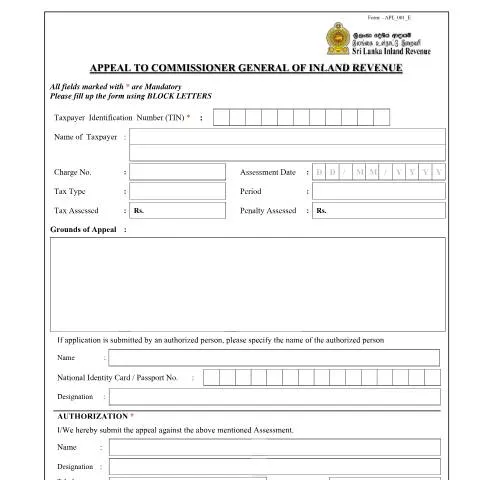
When faced with an unfavorable decision from the Administrative Review, Appeal and Objection department, understanding the nuances of the Application Form for an Appeal (Code: APL_001) becomes paramount. This document serves as the gateway for taxpayers seeking to contest assessments made by the Inland Revenue Department (IRD), allowing for a structured recourse against administrative judgments. The stakes are high, and a well-prepared appeal can significantly influence the outcome of your case.
The Journey Begins: Understanding the Context of Your Appeal
Before delving into the specifics of the APL_001 form, it is essential to acknowledge the broader context in which this appeal process operates. The administrative landscape in Sri Lanka is defined by the principles of English common law, which guides the interpretation of laws and procedural norms.
In a scenario where a taxpayer disputes an assessment, this form becomes a critical instrument in challenging the decision. The taxpayer, or an authorized representative, is required to submit this application to the Commissioner General of Inland Revenue. The form not only initiates the appeal process but is also a requisite part of the legal framework that governs tax administration in Sri Lanka.
Navigating Through the Form: Key Sections Explored
Completing the APL_001 form requires careful attention to detail. Each section is designed to capture essential information that supports the appeal. Below are the critical components of the form, elaborated for clarity:
- Taxpayer Identification: This initial section requests the Taxpayer Identification Number (TIN) and the taxpayer's name. This identification is crucial as it connects the appeal to the correct tax records.
- Assessment Details: Importantly, details regarding the charge number, assessment date, tax type, and the period being contested must be accurately filled in. This ensures that the appeal is directed to the relevant case.
- Financial Information: Here, the assessed tax amount and any penalties incurred should be specified. It provides a financial context to the appeal, highlighting any unjust penalties or excessive tax assessments.
- Grounds of Appeal: This section is perhaps the most critical. It requires the taxpayer to clearly articulate the reasons for the appeal. This narrative should be factual, concise, and ideally supported by documentation.
- Authorization Section: If the application is submitted by an authorized representative, it is imperative to include their details, alongside the taxpayer's signature. This section validates the submission and ensures that the correct individual is accountable for the appeal.
A Step-by-Step Guide to Filing Your Appeal
The process of filing an appeal can be straightforward if approached methodically. Here are the steps to ensure your application is appropriately submitted:
- Gather Supporting Documents: Before filling out the form, compile any documents that substantiate your grounds for appeal. This could include prior correspondence with the IRD, financial statements, or any relevant evidence.
- Complete the APL_001 Form: Using block letters, carefully fill in each section of the form. Ensure all mandatory fields are completed accurately to avoid delays.
- Submission: The completed application, along with any supporting documents, should be submitted at the Help Desk of the nearest IRD branch. It is advisable to retain copies of all submitted materials for your records.
- Follow-Up: Upon submission, it is prudent to inquire about your appeal status. A polite inquiry at the Help Desk can provide insights into the processing time and any further requirements.
Anticipating the Outcome: Understanding the Review Process
Once the appeal is filed, it enters the review phase, where it is assessed based on the merits of the case and the evidence provided. The timeline for this review can vary, but typically, it should be completed following the fiscal calendar set by the IRD.
During the review, the following factors will be considered:
- Evidence Provided: The strength of the grounds for appeal and the quality of supporting documents are instrumental in determining the outcome.
- Legal Compliance: Adherence to the regulations outlined in the relevant laws and tax codes will be scrutinized.
- Precedents: Previous rulings and decisions by the IRD can influence the final decision in your case.
Addressing Potential Challenges: What If Your Appeal is Denied?
In the unfortunate event that your appeal is rejected, understanding the subsequent steps is crucial. A denial does not signify the end of the road; rather, it opens additional avenues for recourse:
- Requesting a Re-Evaluation: If new evidence surfaces or if there are grounds to believe that the appeal was not adequately assessed, a request for re-evaluation can be submitted.
- Escalation to Higher Authorities: Depending on the nature of the case, you may have the option to escalate your appeal to a higher authority within the IRD or even seek judicial review if your rights were violated.
Ensuring Compliance: Common Pitfalls to Avoid
Throughout the appeal process, it is vital to maintain diligence and attention to detail. Here are some common pitfalls that can hinder your appeal:
- Incomplete Information: Failing to fill in every mandatory field can result in delays or outright rejection. Ensure that all required sections are duly completed.
- Lack of Supporting Documents: Submitting the form without adequate evidence to back your claims can weaken your case significantly.
- Ignoring Deadlines: Be mindful of the deadlines associated with submitting appeals. Timely submissions are crucial to maintain your claim.
Monitoring Your Appeal: Keeping Track of Progress
Staying informed about the status of your appeal is essential. After submission, consider the following methods to effectively track your case:
- Direct Communication: Regularly communicate with the Help Desk at the IRD branch where you submitted your appeal. They can provide updates on processing times and any actions required on your part.
- Document Management: Maintain organized records of all correspondence, submitted documents, and notes from conversations with IRD officials. This will assist in any future actions necessary regarding your appeal.
With a comprehensive understanding of the APL_001 form and the appeal process, taxpayers can navigate the complexities of administrative reviews with greater confidence. Proper preparation, vigilance, and adherence to procedural requirements will significantly enhance the likelihood of a favorable outcome.
Understanding the Appeal Process in Sri Lanka
The appeal process in Sri Lanka is a structured legal pathway that allows individuals to challenge decisions made by various governmental and administrative bodies. This process is crucial for ensuring that all citizens have the opportunity to contest decisions that may affect their rights or interests. The procedure can vary significantly based on the specific authority to which the appeal is being made, often governed by different laws and regulations. For example, appeals related to decisions from the Inland Revenue Department may follow different procedures compared to those related to educational authorities. It is essential to understand the hierarchy of these administrative bodies and the legal framework governing them, including the relevant time frames within which an appeal must be lodged.
When preparing to file an appeal, individuals should be aware that each authority has its designated procedures, which must be meticulously followed. For instance, appeals to the Administrative Review, Appeal and Objection Committee require the submission of a written notice of appeal in a specified format, including supporting documents outlining the basis for the appeal. Each appeal must typically be lodged within a set period from the date the decision was communicated. This timeline is crucial; failing to submit an appeal within the prescribed period may result in the appeal being dismissed on procedural grounds, even if the substantive issues are compelling. Thus, attention to detail and adherence to deadlines is vital.
Common Grounds for Appeal
Understanding the common grounds for filing an appeal is essential for crafting a compelling application. Grounds for appeal are essentially the reasons you are contesting the original decision, and they can vary widely depending on the context of the appeal. For instance, in tax-related appeals, grounds may include errors in the assessment of taxable income, improper application of tax laws, or failure to consider relevant evidence. In administrative appeals concerning employment decisions, grounds might involve procedural irregularities, discrimination, or failure to follow proper protocols in decision-making processes.
It is also critical to differentiate between factual and legal grounds for appeal. Factual grounds pertain to errors related to the facts of the case—such as incorrect data or misinterpretation of evidence—while legal grounds involve the application of law, where the applicant believes that the decision was legally wrong or unsupported by evidence. A well-drafted appeal will often intertwine both types of grounds, providing a robust argument for reconsideration of the initial decision. Supporting documentation, such as records, emails, or other evidence, is an important aspect of substantiating these claims. Therefore, claimants should meticulously gather and present all relevant information to strengthen their appeal.
Practical Tips for a Successful Appeal Submission
Filing an appeal can be a daunting process, but with careful preparation and attention to detail, it can be navigated successfully. Here are some practical tips for ensuring a smooth submission process:
- Understand the Requirements: Before submission, thoroughly read the guidelines provided by the relevant authority for the appeal process. Check for any specific forms that need to be filled and the required supporting documents.
- Clarity and Precision: The appeal letter should be clear and concise. Avoid jargon unless necessary, and ensure that your arguments are articulated logically. Each point should be easy to understand and followed by a reasonable explanation.
- Documentation: Collect all relevant documents that support your claim. This may include previous correspondence related to the decision, evidence that supports your case, and any other documents required by the governing authority. Always keep copies of what you submit.
- Seek Legal Guidance: If possible, consult with a legal professional who specializes in administrative law or appeal processes. Their expertise can help ensure that your appeal is properly formatted and that all necessary grounds and documentation are included.
- Follow Up: After submission, it is prudent to follow up with the authority to confirm that your appeal has been received and to inquire about the expected timeline for a decision. Keeping a record of all communications can be beneficial.
By adhering to these practical tips, individuals can enhance their chances of success in the appeal process, ensuring that their rights and interests are adequately represented.