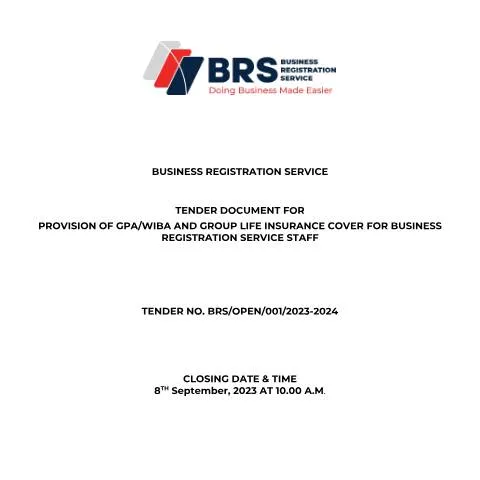
Navigating the BRS Insurance Tender Document: A Comprehensive Guide
In the complex landscape of public procurement in Kenya, understanding the nuances of official documents is crucial for potential bidders. The BRS INSURANCE TENDER BRS-OPEN-001-2023-2024 (1) provides a structured framework that guides interested parties in offering insurance services for the Business Registration Service (BRS). This document not only outlines procedural requirements but also establishes the foundational guidelines for tendering processes.
Understanding the Role of the BRS Insurance Tender Document
The BRS Insurance Tender Document is pivotal for both the BRS and the tendering entities. It serves as a formal request for proposals to provide Group Personal Accident (GPA) and Work Injury Benefits Act (WIBA) insurance coverage for BRS staff. This document is crucial as it ensures that the staff is adequately covered under comprehensive insurance policies, thereby enhancing employee welfare and security.
Key Objectives of the Tender
- To procure reliable insurance coverage for BRS staff.
- To promote transparency in the procurement process.
- To ensure that selected tenderers meet qualifications set forth in the document.
Participants in the Tendering Process
Eligibility to participate in the tendering process is restricted to registered entities capable of providing the required insurance services. Bidders must demonstrate compliance with several conditions as stipulated in the tender document, including:
- Possession of valid insurance licenses as per the Insurance Act.
- Submission of a complete set of required documents, including financial statements.
- A track record of reliability and capability in providing insurance services.
Entities engaged in the tendering process are expected not only to meet the minimum requirements but also to uphold ethical standards as outlined in the Code of Ethics referenced in the document.
Completing the BRS Insurance Tender Document
Filling out the BRS Insurance Tender Document requires meticulous attention to detail. Each section must be completed accurately, as errors or omissions may lead to disqualification. A systematic approach is recommended:
Section Breakdown for Submission
- Instructions to Tenderers: Understand the guidelines provided for submission.
- Tender Data Sheet (TDS): Fill in specifics regarding your company and proposed insurance products.
- Tendering Forms: Complete sections related to eligibility, financial standing, and conflict of interest disclosures.
Ensure that all supporting documents are attached according to the requirements listed in the individual sections.
The Submission Process: Steps and Protocols
Upon completion, the next step is to submit the tender in accordance with the outlined protocols. The closing date, which is 8th September 2023 at 10.00 A.M., is critical. Late submissions will not be considered.
Submission Steps
- Gather all completed forms and supporting documentation.
- Ensure documents are signed and dated where required.
- Submit your tender document to the designated BRS office or via the specified electronic method.
It is advisable to retain copies of all submitted documents for your records. Additionally, ensure to comply with any specific submission guidelines regarding the format, such as the use of envelopes or electronic submissions.
Following Up on Your Tender Submission
After submission, bidders must remain proactive in monitoring the status of their tender application. The BRS usually communicates updates through official channels. However, bidders can also take the initiative to verify the status of their submission.
Protocols for Follow-Up
- Contact the BRS procurement office after the submission deadline to inquire about the evaluation timeline.
- Ensure to have your tender number at hand for reference during follow-up communications.
- Be prepared to respond to any additional requests for information or clarification from the BRS.
Possible Outcomes: Understanding Tender Results
The outcome of the tender process can result in several scenarios:
- Award Notification: Successful bidders will receive a letter of award, initiating the contract process.
- Request for Review: Unsuccessful bidders have the right to request a review of the decision if there are grounds to believe the process was flawed.
- Feedback Mechanism: BRS may provide feedback on submissions, which can be invaluable for future tendering opportunities.
Handling Unsuccessful Bids
In the event of an unsuccessful bid, it is essential to analyze feedback provided, if any, and to use this as a learning opportunity for future tenders. Engaging in constructive reflection can significantly enhance the quality of future submissions.
Implications of Non-Compliance and Errors
Non-compliance with the requirements set out in the BRS Insurance Tender Document can have serious repercussions. Errors no matter how small could lead to disqualification of the tender proposal, affecting reputation and future opportunities.
Steps to Take in Case of Errors
- Contact the BRS immediately if an error is discovered in your submission.
- Document any communication regarding the error for future reference.
- Clarify whether any amendments can be made to the tender post-submission, if permissible.
Conclusion: The Importance of Diligence and Precision
Submitting a tender for BRS’s insurance needs is a multifaceted process that demands precision, clarity, and adherence to the prescribed guidelines. A successful bid not only facilitates the provision of essential services to the BRS staff but also enhances an entity's credibility and standing in the competitive landscape of public procurement.
As the tendering process evolves, staying informed about updates and best practices is vital. The journey from submission to award may be lengthy, but diligence in every step maximizes the potential for successful engagement with the BRS.
Understanding the BRS Insurance Tender Process in Kenya
The BRS Insurance Tender BRS-OPEN-001-2023-2024 represents an essential opportunity for qualifying insurance providers to secure government contracts related to insuring various public entities and projects. Engaging in the tendering process requires a thorough understanding of both the technical specifications outlined in the tender documents and the procedural requirements set forth by the Ministry of Finance and other relevant regulatory bodies. This section elucidates the critical steps involved in preparing a submission, including the key documents needed and specific criteria to meet.
Firstly, potential bidders must carefully review the tender notice published on the government’s procurement portal, ensuring they grasp the scope of services required, including specific types of coverage, limits, and any exclusions. The tender documents typically detail the prerequisites for participation, such as possession of valid licenses and certifications, evidence of prior experience in similar contracts, and financial stability reports. The submission must also include Form NT-001 (Bid Submission Form) and Form NT-002 (Price Schedule), both available on the government’s central catalogue.
Additionally, bidders must prepare a comprehensive bid proposal that not only addresses the technical aspects but also outlines the financial implications of their offer. This is where the competitive edge comes into play; firms need to ensure their premiums are aligned with market standards while still providing adequate coverage. It is often beneficial for bidders to outline value-added services they can offer, such as claims support or risk management consultations, to distinguish their proposals from others.
Eligibility Criteria and Evaluation Metrics for BRS Insurance Tender
The eligibility criteria for the BRS Insurance Tender BRS-OPEN-001-2023-2024 are meticulously designed to ensure that only the most competent and reliable insurance providers are considered for the contract. Bidders must adhere to a set of specific requirements that not only gauge their capability but also assess their compliance with regulatory standards. This section aims to clarify these criteria as well as the evaluation metrics used during the selection process.
To begin with, bidders must showcase their registration with the Insurance Regulatory Authority of Kenya, possessing a valid insurance license. Additionally, companies are required to demonstrate a history of at least five years in the insurance sector, along with satisfactory financial statements for the past three fiscal years to prove their fiscal responsibility and stability. It is also essential for bidders to provide evidence of successful prior engagements in similar government contracts to affirm their experience in handling large-scale insurance needs.
Once submissions are received, the evaluation committee will employ a scoring system based on predetermined metrics. These typically encompass the quality of the technical proposal, the competitiveness of the pricing, and the overall experience of the bidder. Each component of the proposal will be rated, allowing for a comprehensive comparison between various bidders. Transparency is crucial in this process, with the results being published post-evaluation, thus granting unsuccessful bidders the right to seek clarifications or raise concerns.
Impact of the BRS Insurance Tender on Public Entities and the Insurance Sector
The implications of the BRS Insurance Tender BRS-OPEN-001-2023-2024 extend beyond mere financial transactions between the government and insurance providers; they resonate throughout the public sector and the broader insurance marketplace. This section discusses how the tender influences public entities and the competitive landscape of the insurance industry in Kenya.
For public entities, successful procurement of insurance through the tender process ensures that they are adequately protected against various risks, ranging from property damage to liability claims. This, in turn, allows these entities to focus on their core mandate without the looming fear of unforeseen financial burdens from insurance-related liabilities. Moreover, the structured nature of the tendering process fosters a culture of accountability and transparency within public service operations, ultimately instilling public confidence in government institutions.
In the broader scope of the insurance industry, the BRS Insurance Tender stimulates competition among insurance providers, leading to improved service delivery and innovation in products. As firms vie for government contracts, they are prompted to enhance their offerings, whether through better coverage options, superior customer service, or more efficient claims processing. This competitive environment ultimately benefits consumers, as it sets higher standards for service across the sector, resulting in increased public trust in insurance products.