Understanding the Importance of the Tender Notice for Disposal of BRS Assets
The Tender Notice for Disposal of BRS Assets is a crucial document published by the Business Registration Service (BRS) in Kenya, reflecting the need for accountability and transparency in the disposal of governmental assets. Its implications stretch beyond mere asset liquidation; it embodies the principles of fiscal responsibility and efficient resource allocation within the public sector.
Who Should Pay Attention to This Tender Notice?
This notice is primarily directed at eligible bidders who possess the requisite qualifications and experience to participate in the tendering process. Various stakeholders, including businesses, entrepreneurs, and contractors engaged in asset acquisition, should be aware of this opportunity. The official document also serves as a guide for any entity wishing to engage with the government on asset procurement matters.
Content Breakdown: What the Tender Notice Covers
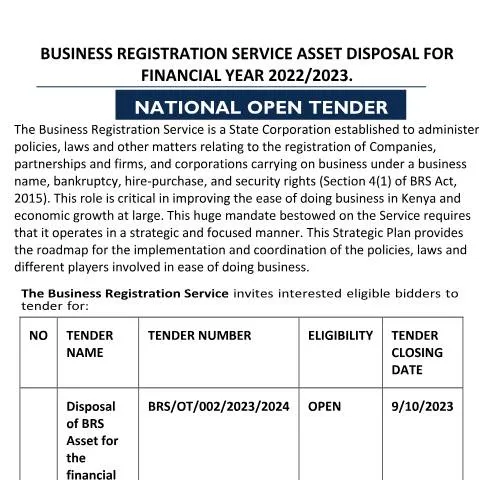
The Tender Notice for Disposal of BRS Assets encapsulates essential details that potential bidders need to comprehend. The specific sections of the notice include:
- Tender Number: BRS/OT/002/2023/2024, which uniquely identifies the bidding opportunity.
- Eligibility Criteria: Open to all eligible bidders, emphasizing inclusivity in the procurement process.
- Tender Closing Date: 9th October 2023, which marks the deadline for submission, demanding timely action from interested parties.
- Requirements for Submission: Complete tender documents must be submitted in a specified format, ensuring that all proposals adhere to the guidelines.
Reserved Prices and Financial Considerations
The tender documents outline reserved prices for the assets, which are critical for bidders to understand the financial commitments involved. It is imperative that prices are quoted in Kenya Shillings and inclusive of all applicable taxes. Bidders must also be aware that these prices are valid for a specified period of 120 days post the closing date.
Articulations with Other Related Documents
Understanding the Tender Notice for Disposal of BRS Assets also requires recognizing its link to other procurement documents and policies governed by the Public Procurement and Asset Disposal Act of 2015. This legislation outlines the frameworks for public procurement, ensuring fairness, competitiveness, and transparency across all government transactions.
Moreover, the tender notice operates in conjunction with various guidelines issued by the National Treasury and the Office of the Auditor General, which are designed to ensure that all disposals are in line with national objectives regarding asset management.
Procedure for Acquiring Tender Documents
Potential bidders can acquire the complete set of tender documents at no cost from designated government portals:
- Government Tender Portal: www.tenders.go.ke
- BRS Website: www.brs.go.ke
Downloading these documents is a prerequisite step in the tendering process, allowing bidders to prepare their submissions effectively.
Key Procedural Steps for Bidders
Engaging with the tender process involves several systematic steps, which can be outlined as follows:
- Document Acquisition: Download the tender documents from the specified portals.
- Preparation of Bid: Ensure that all required documents are completed, paginated serially, and are in compliance with the tender requirements.
- Submission: Enclose the documents in a plain sealed envelope, clearly marked with the tender number and name.
- Delivery: Deposit the sealed envelope in the designated BRS Tender Box located at 17th Floor, 316 Upper Hill Chambers, Nairobi.
- Attendance at Opening Ceremony: Bidders may choose to attend the tender opening, which occurs promptly after the closing time.
Common Misinterpretations and Clarifications
In navigating the tender process, bidders may face several common misinterpretations:
- Understanding Eligibility: The term 'open' eligibility might lead some to think that anyone can apply. However, compliance with specific qualifications is still essential.
- Deadline Awareness: It is crucial to note the closing date and time, as late submissions will not be entertained.
- Document Sealing: Failure to follow proper sealing and marking procedures could result in disqualification.
Clarifications and Communication with BRS
Should bidders require additional information or clarifications regarding the tender, they are encouraged to communicate directly with the BRS via email at [email protected]. This point of contact facilitates clear communication channels and ensures that all inquiries are addressed promptly.
Conclusion: Strategic Engagement with the Tender Process
The Tender Notice for Disposal of BRS Assets provides a significant opportunity for eligible bidders to engage in public procurement. By understanding the contents and procedural expectations outlined within the notice, stakeholders can effectively navigate the tendering process and contribute to a more transparent and accountable asset disposal environment in Kenya. Each step—from document acquisition to submission—is vital in ensuring compliance and fostering a competitive bidding landscape.
Understanding the Tender Process for Disposal of BRS Assets
The tender process in Kenya, particularly for the disposal of assets such as those handled by the Bureau of Resource Services (BRS), is a critical operation that requires adherence to specific guidelines and legislative frameworks. The procurement process is governed by the Public Procurement and Asset Disposal Act, 2015, which lays down detailed procedures for sourcing, evaluating, and awarding contracts for public assets disposal. Understanding this process is essential for potential bidders to successfully navigate the tender landscape.
Firstly, it’s important to note that the tender notice is typically published in local newspapers and on the eCitizen portal, where interested parties can access all relevant documentation. The notice includes essential details such as the nature of the assets being disposed of, the requirements for participation, submission deadlines, and the criteria for evaluation. Ensuring that you have a keen eye for these specifics can significantly enhance your chances of a successful bid.
Moreover, parties interested in bidding must comply with the eligibility criteria, which may include providing a valid tax compliance certificate from the Kenya Revenue Authority, proof of registration with relevant professional bodies, and a detailed company profile. Additionally, bidders may need to demonstrate financial capability, showcasing their ability to fulfill the terms of the contract.
During the evaluation phase, the tendering authority will assess bids based on a combination of financial proposals and technical qualifications. Understanding the weightage of these components is vital, as it can guide bidders on how to best structure their submissions. Typically, a successful bid will need to balance competitive pricing with robust technical and management capabilities, reflecting both value for money and assurance of quality service delivery.
Common Challenges Faced During the BRS Asset Disposal Tender Process
While the tender process for disposal of BRS assets is well-defined, bidders often encounter a range of challenges that can complicate their participation. One of the most significant challenges is ensuring compliance with all outlined requirements. Prospective bidders sometimes misinterpret eligibility criteria or overlook necessary documentation, which can lead to disqualification at the evaluation stage. It is advisable to conduct a thorough review of the tender documents and seek clarification from the tendering authority if any aspect is unclear.
Another common issue arises from the competitive nature of the bidding process itself. In a saturated market, bidders may find it increasingly difficult to submit competitive proposals without compromising on quality or service delivery. This issue underscores the importance of precise market research, allowing bidders to adjust their proposals to meet or exceed market expectations while still ensuring profitability.
Additionally, bidders must navigate the complexity of the local regulatory environment. The tender process is subject to scrutiny by various oversight bodies, including the Public Procurement Regulatory Authority (PPRA). Familiarity with the legal framework and compliance expectations is essential to mitigate risks of disputes or legal challenges that can arise from non-compliance. Bidders are encouraged to engage legal professionals or procurement specialists to better understand the existing regulatory landscape and its implications on the tender process.
Post-Award Considerations and Contract Management
Once a tender is awarded for the disposal of BRS assets, various considerations must be addressed to ensure successful contract execution. Effective contract management is paramount to achieving the desired outcomes and mitigating risks associated with non-compliance or substandard service delivery. The contract will typically outline performance standards, reporting requirements, and the payment schedule, which all parties must adhere to throughout the contract duration.
Moreover, it is crucial for the awarded bidder to maintain open lines of communication with the BRS and other relevant stakeholders. Regular updates on progress, challenges faced, and any changes to initial plans should be documented and reported in a timely manner. This proactive approach not only helps in fostering trust between parties but also assists in identifying and addressing potential issues before they escalate into major problems.
Furthermore, bidders must remain aware of their obligations regarding asset disposal under the terms of the contract. This involves adhering to environmentally friendly disposal practices and ensuring compliance with any applicable local regulations regarding waste management. Non-compliance can lead to penalties, reputational damage, and potential legal action from regulatory bodies or affected parties.
In conclusion, successful navigation of the post-award phase hinges on a thorough understanding of contract obligations, as well as the dedication to maintaining high service standards. Bidders who prioritize effective contract management and compliance will not only fulfill their obligations but also position themselves favorably for future procurement opportunities within the Kenyan public sector.