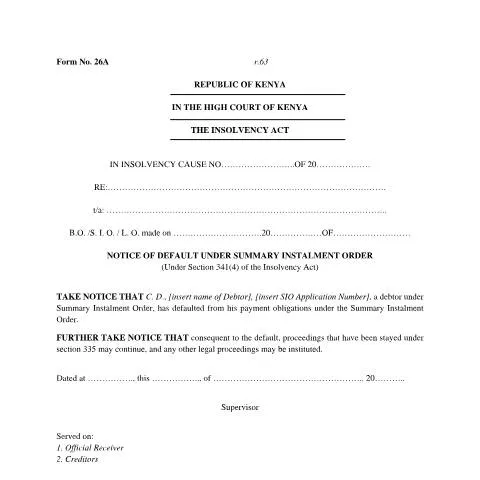
The Significance of Form F26A in Insolvency Proceedings
In the intricate realm of insolvency law in Kenya, Form F26A emerges as a critical document with profound implications. This official form serves as a Notice of Default under a Summary Instalment Order, a situation that arises when a debtor fails to meet their obligations as set forth in the Insolvency Act of 2015. Its role cannot be overstated; it triggers further legal proceedings and enables creditors to resume actions that may have been previously stayed, thus safeguarding their interests. Understanding how to navigate the complexities surrounding Form F26A is essential for all parties involved in insolvency matters.
The Legal Framework Governing Form F26A
The formulation and application of Form F26A are underpinned by the Insolvency Act, which was enacted to provide a coherent legal structure for dealing with insolvency issues in Kenya. Specifically, Section 341(4) of the Act outlines the procedures related to Summary Instalment Orders and defaults thereunder.
This legislative framework was established to ensure that debtors and creditors are treated fairly and justly during insolvency proceedings. Through Form F26A, the High Court of Kenya is empowered to monitor compliance with repayment plans, thereby fostering accountability among debtors. The form is a manifestation of both the rights of creditors to recover debts and the responsibilities of debtors to adhere to their repayment agreements.
Understanding the Summary Instalment Order
A Summary Instalment Order (SIO) is a court order that allows a debtor to repay their debts in manageable instalments rather than in a lump sum. This order is typically issued to individuals who may not have the financial capacity to repay their debts all at once, thus providing a lifeline while ensuring creditors receive their due. The SIO imposes specific obligations on the debtor, and any failure to comply with these obligations results in the need for Form F26A to be issued.
Who is Involved in the Process?
The application of Form F26A primarily involves:
- Debtors: Individuals or corporations who are unable to meet their financial obligations and have sought the protection of the insolvency framework.
- Creditors: Entities or individuals to whom the debtor owes money, who have a vested interest in ensuring compliance with repayment agreements.
- Official Receiver: A government official who oversees insolvency proceedings and ensures that they are conducted in accordance with the law.
- High Court: The body that adjudicates disputes arising from insolvency cases and issues relevant orders.
Specific Scenarios Impacting Debtors
Certain scenarios may complicate the debtor's capacity to remain compliant with the Summary Instalment Order. These include:
- Unforeseen Medical Expenses: Illness or injury may hinder one's ability to meet scheduled payments.
- Employment Loss: Sudden job loss can drastically affect the debtor’s financial situation.
- Unexpected Family Obligations: New responsibilities, such as caring for dependents, may divert funds originally allocated for debt repayment.
The Completion Process for Form F26A
Filling out Form F26A correctly is crucial for its acceptance by the court. The key components that must be included are:
- Debtor's Information: Full name and contact details of the debtor.
- SIO Application Number: This unique identifier links the Notice of Default to the original Summary Instalment Order.
- Date of Default: It is essential to specify the date on which the debtor defaulted on their obligations.
- Supervisor’s Signature: The form must be signed by the supervisor handling the insolvency case.
Precision in completing the form is vital. Inaccurate or incomplete submissions may result in delays or even rejection of the filing, impacting the rights of creditors to recover their dues.
Submission Pathways for Form F26A
Form F26A can be submitted through various channels, which may vary based on the circumstances of the case:
- Online Submission: Utilizing the eCitizen platform for electronic filing is encouraged, offering convenience and tracking capabilities.
- In-Person Filing: Alternatively, hard copies can be delivered directly to the High Court or through the Office of the Official Receiver.
One should note the differences in processing times and acknowledgement procedures when submitting online versus in person. Online submissions may offer faster processing due to automated workflows, while in-person submissions allow for immediate confirmation of receipt.
Tracking and Monitoring Your Filing
After submission, it is crucial for both debtors and creditors to monitor the status of Form F26A to ensure that appropriate actions are taken. Here are practical steps for tracking:
- eCitizen Dashboard: For online submissions, you can check the status of your filing through your eCitizen account.
- Official Communications: Keep an eye on any correspondence from the High Court or the Official Receiver regarding your filing.
- Follow Up Calls: If necessary, making a follow-up call to the relevant office can provide clarity on the status or any required actions.
The Implications of Defaulting on a Summary Instalment Order
Failing to comply with the conditions set by the Summary Instalment Order can lead to serious consequences. Once Form F26A has been issued, the following may occur:
- Resume of Legal Proceedings: Creditors may proceed with legal actions that were previously stayed, including the initiation of recovery procedures.
- Potential Bankruptcy: Continued defaults may lead to further legal implications, including bankruptcy proceedings against the debtor.
Understanding the gravity of these implications is essential for debtors who must recognize that their financial decisions carry long-term consequences that impact their creditworthiness and ability to secure future financing.
Preventive Measures for Debtors
Debtors can take proactive measures to avoid the issuance of Form F26A:
- Budgeting: Maintain a strict budget to ensure that debt repayments are prioritized.
- Communication with Creditors: Engage in open dialogue with creditors, especially if financial difficulties arise.
- Seek Financial Counseling: Consider consulting with financial advisors to devise strategies for managing debts effectively.
Final Thoughts on Navigating Form F26A
The complexity surrounding insolvency proceedings in Kenya necessitates a thorough understanding of the tools at one’s disposal, such as Form F26A. Recognizing its legal significance, ensuring accurate completion, and navigating the submission pathways are essential steps toward maintaining compliance with insolvency regulations.
By remaining informed and proactive, debtors can significantly reduce the risk of defaulting on their obligations, while creditors can effectively protect their interests in the insolvency landscape. This mutual understanding ultimately fosters a more balanced approach to debt recovery and insolvency management in Kenya.
Understanding the F26A Form: Purpose and Uses
The F26A form, officially known as the "Application for Registration of a Business Name," plays a crucial role in the Kenyan business environment. It is particularly significant for entrepreneurs wishing to establish sole proprietorships or partnerships. This form is essential for individuals and small groups aiming to formalize their business operations without delving into the complexities of corporate registration.
When filling out the F26A form, applicants must provide vital information such as the proposed business name, the nature of the business, the personal details of the applicants, and the physical location of the business. It is important to ensure that the proposed business name is unique and not already registered; a preliminary search can be conducted via the eCitizen platform or at the relevant Business Registration Service (BRS) offices.
Moreover, the F26A form can be beneficial for tax registration purposes, as it is often a prerequisite for obtaining a Personal Identification Number (PIN) from the Kenya Revenue Authority (KRA). This PIN is essential for tax compliance and is required for opening business bank accounts or applying for loans. As such, it is advisable for applicants to complete the F26A process promptly after establishing their business to avoid any legal or financial complications.
Common Challenges in Submitting the F26A Form
While the F26A form is a straightforward document, applicants often encounter several challenges during its submission process. Understanding these common hurdles can better prepare individuals for a smoother application experience.
One prevalent issue is the improper completion of the form. Many applicants fail to provide all required details or misinterpret the questions, leading to delays in processing. To mitigate this, applicants should thoroughly review the instruction manual provided with the form and consider consulting with more experienced business owners or legal advisors.
Another challenge arises from the requirement of supporting documents, such as identification copies and proof of residence. Applicants should ensure that all documents are valid and clear. Any discrepancies, even minor ones, can lead to the rejection of the application.
Additionally, familiarity with the eCitizen platform is crucial. Some applicants may struggle with the online submission process, especially those who are not tech-savvy. It is advisable to take advantage of available tutorials or seek assistance from friends or family experienced in using eCitizen. Furthermore, understanding the payment process through mobile money is essential, as failure to complete payment can result in application delays.
The Role of Local Authorities in F26A Registration
Local authorities play a significant role in the implementation and enforcement of business registration processes, including the F26A form. Understanding their functions can provide valuable insights for applicants and can significantly ease the registration journey.
At the county level, local government offices are responsible for overseeing business compliance and offering guidance to entrepreneurs. They can assist in verifying if a business name is available and help navigate the various local regulations that may apply. Engaging proactively with these offices can help applicants avoid potential pitfalls that may arise from local zoning laws or licensing requirements.
Additionally, local authorities often provide workshops and seminars aimed at educating prospective business owners about the registration process, tax obligations, and best business practices. Participating in these events can offer greater clarity on the F26A form's specifics and the overall business landscape in Kenya.
Furthermore, local authorities may also facilitate networking opportunities among business owners. Building relationships within the local business community can provide support and resources essential for the successful establishment and operation of a business.