Understanding the New GCT Treatment on Inedible Cane Molasses in Jamaica
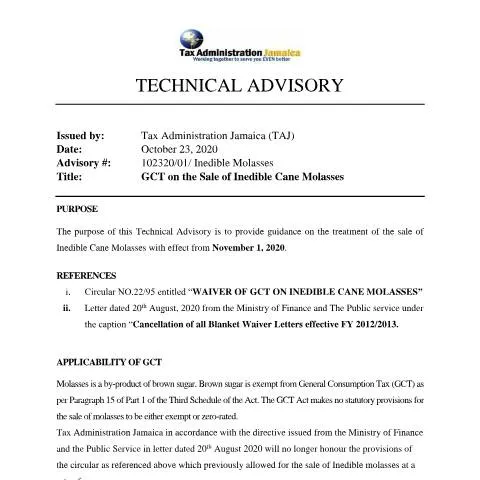
On October 23, 2020, the Tax Administration Jamaica (TAJ) issued a technical advisory concerning the application of the General Consumption Tax (GCT) on the sale of inedible cane molasses. This advisory is crucial for producers, suppliers, and traders involved in the sugar industry or those handling molasses as a by-product of brown sugar production. The document clarifies the changes in taxation policy effective from November 1, 2020, and provides guidance on compliance and procedural adjustments.
Objective of the Advisory
The primary purpose of this technical advisory is to inform stakeholders about the removal of the previous zero-rating exemption on the sale of inedible cane molasses. Historically, molasses, being a by-product of brown sugar, was exempt from GCT under certain conditions. However, recent legislative and administrative changes now mandate that the sale of inedible molasses be taxed at the standard rate of 15%, effective from November 1, 2020.
Legal and Regulatory Context
The sale of molasses is governed by Jamaica's Revenue Administration Act, alongside specific provisions related to sugar and its by-products. Previously, Circular No.22/95 provided a blanket waiver allowing the sale of inedible molasses without GCT. This waiver was based on the interpretation that molasses, as a sugar by-product, should be exempt from consumption tax.
However, following the Ministry of Finance and the Public Service's letter dated August 20, 2020, all blanket waivers, including the one for molasses, were canceled. Consequently, the GCT Act does not explicitly exempt molasses from taxation, and the sale now falls under the standard GCT rate of 15%.
Implications for Stakeholders
For Producers and Suppliers
- Tax Collection: All sales of inedible cane molasses must now include GCT at 15%. This applies to both domestic sales and exports, unless specific exemptions are legislated in the future.
- Pricing Adjustments: Businesses should adjust their pricing strategies to account for the increased tax burden, ensuring compliance and accurate invoicing.
- Record Keeping: Accurate records of sales, GCT collected, and remittances are essential to meet TAJ reporting requirements.
For Tax Authorities and Compliance
- Enforcement: TAJ will monitor compliance with the new GCT rate on molasses sales and enforce penalties for non-compliance.
- Guidance and Support: Stakeholders can seek assistance through TAJ’s customer service channels for clarification on invoicing and remittance procedures.
Procedural Guidance for Filing GCT
Businesses involved in the sale of inedible cane molasses must include the applicable GCT in their regular GCT returns. The standard rate of 15% applies, and the tax should be calculated based on the total sale price of the molasses. This process is integrated into the existing GCT filing system managed via the TAJ online portal or through paper submissions where applicable.
Important Dates and Compliance Deadlines
The new GCT treatment on inedible cane molasses took effect starting November 1, 2020. Taxpayers are expected to comply with this regulation in their upcoming GCT returns for the applicable reporting periods. It is advisable to review sales records from this date onward to ensure correct tax application and remittance.
Further Assistance and Clarifications
Stakeholders requiring additional guidance can contact the Tax Administration Jamaica directly through their official channels. The TAJ provides support for understanding the implications of the new policy, updating invoicing practices, and ensuring compliance with the revised GCT regulations.
In summary, the removal of the blanket waiver and the subsequent application of the standard 15% GCT rate on inedible cane molasses represent a significant change in Jamaica’s tax treatment of sugar by-products. Businesses must adapt their processes accordingly to remain compliant and avoid penalties.