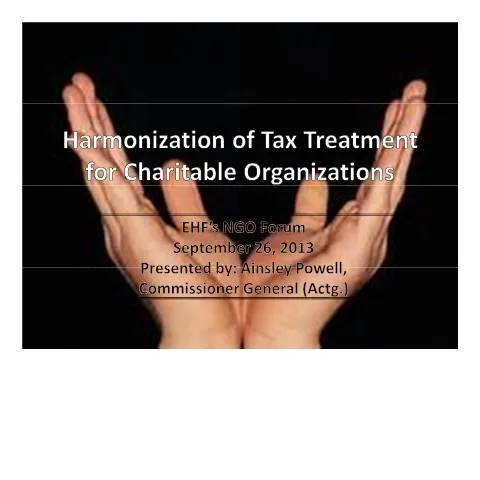
Understanding the Harmonization of Tax Treatment for Charitable Organizations in Jamaica
The Jamaican government, through the enactment of the Charitable Organizations (Tax Harmonization)(Miscellaneous Provisions) Act, 2013, has introduced a comprehensive framework to streamline and unify the tax regulations applicable to charitable organizations. This initiative aims to clarify the legal landscape, improve compliance, and facilitate the recognition of charities for tax purposes. This article provides an overview of the purpose of this legislation, who must comply, and how charitable entities can ensure their adherence to the new provisions.
Purpose of the Harmonization Act
The primary objective of the legislation is to consolidate various tax-related laws affecting charities into a single, coherent legal structure. Prior to this Act, multiple laws—such as the Income Tax Act, Customs Act, Stamp Duty Act, Transfer Tax Act, GCT Act, and Property Tax Act—contained provisions relating to charitable organizations, often leading to confusion and administrative inefficiencies.
Specifically, the Act aims to:
- Harmonize the tax treatment of charitable organizations across different revenue laws
- Provide clear criteria for the approval of charities
- Streamline grant of waivers and incentives relating to charities
- Support Jamaica’s compliance with international standards and IMF requirements
Who Must Comply with the Legislation?
This legislation applies to any organization seeking to be recognized as a charitable organization for tax purposes in Jamaica. To qualify, organizations must meet specific criteria outlined in the Act, particularly in relation to their purposes and activities.
An organization qualifies as an approved charity if it is:
- Recognized by the Commissioner General of the Tax Administration Jamaica (TAJ) under section 12(h) of the Act
- Engaged in activities that serve the public benefit, as defined under Section 2(4) of the Income Tax Act
It is important for organizations to understand that approval is not automatic. They must submit the necessary documentation and meet the criteria specified by TAJ to be officially recognized as a charitable organization eligible for tax benefits.
How to Apply for Recognition as a Charitable Organization
Step 1: Prepare Required Documentation
Applicants should gather comprehensive documentation demonstrating their charitable purpose, organizational structure, and activities. This typically includes:
- Constitution or bylaws of the organization
- Details of activities and beneficiaries
- Financial statements and records
- Proof of registration with relevant authorities (if applicable)
Step 2: Submit Application to TAJ
Applications for approval as a charitable organization should be submitted to the Tax Administration Jamaica (TAJ). The submission must include the completed application form, which may be a specific form designated for charitable organizations, along with all supporting documents.
Step 3: Review and Approval Process
TAJ reviews the application to ensure compliance with the criteria outlined in the legislation. The authority may request additional information or clarification during this process. Once approved, the organization will receive an official certification of recognition, which can be used to claim tax exemptions and benefits.
Where and How to Submit the Application
Applications should be submitted directly to the TAJ offices or through their official electronic channels via the gov.jm portal, if available. It is recommended to keep copies of all submissions and to obtain confirmation of receipt.
Important Considerations and Common Errors
Organizations often encounter challenges during the application process. Common errors include:
- Incomplete documentation or missing supporting evidence
- Failure to clearly demonstrate the public benefit purpose
- Submitting applications outside the prescribed timeframe
- Incorrectly completing the application forms or providing inaccurate information
To avoid delays, applicants should carefully review the requirements provided by TAJ and seek guidance if needed. Once recognized, organizations must maintain their compliance with the criteria to retain their charitable status and associated tax privileges.
Conclusion
The harmonization of tax treatment for charitable organizations under the 2013 Act simplifies the legal framework and enhances transparency. By understanding the process for application, submission, and approval, charities can better position themselves to benefit from tax exemptions and contribute effectively to the public good in Jamaica.