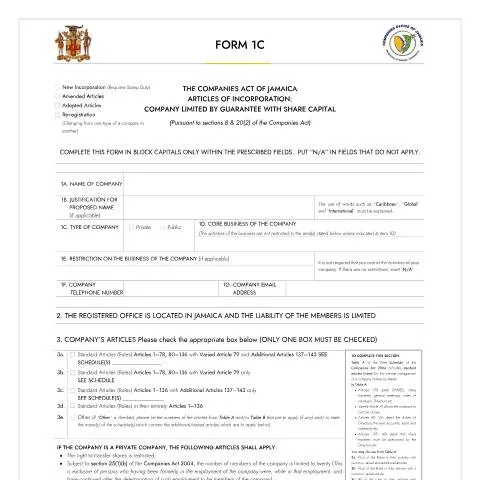
The Essential Role of Form 1C in Jamaican Company Incorporation
In the dynamic landscape of Jamaica’s business environment, Form 1C stands as a crucial document for individuals looking to establish a company limited by guarantee with share capital. This form plays an integral part in the incorporation process under the Companies Act of Jamaica, particularly pursuant to sections 8 and 20(2). By submitting this form, prospective business owners create a legal entity recognized by the Jamaican government, enabling them to engage in commercial activities under a structured corporate framework.Understanding the Incorporation Process
The incorporation process is a fundamental step for many entrepreneurs, as it provides limited liability protection to the owners and establishes the company as a separate legal entity. Form 1C facilitates this by requiring specific details about the proposed company, such as its name, business activities, and share structure.- Legal Identity: The form helps in creating a distinct legal identity for the company.
- Liability Limitation: It ensures that members' liabilities are limited, protecting personal assets.
- Regulatory Compliance: Submitting Form 1C ensures compliance with local laws, thereby averting potential legal issues.
Historical Context and Regulatory Framework
Understanding Form 1C requires a grasp of its historical and legal background. The Companies Act of Jamaica provides the statutory framework governing the incorporation and management of companies in Jamaica. Form 1C is designed to comply with the provisions outlined in this Act, ensuring that all companies adhere to standardized rules and regulations. The Companies Act was enacted to streamline the process of company registration and facilitate easier access to starting a business. Over the years, amendments have been made to enhance transparency, protect shareholders' interests, and promote good corporate governance. The introduction of Form 1C reflects these goals, making it indispensable for anyone aiming to start a company.Impact on Business Owners
For business owners, the incorporation process using Form 1C has several implications:- Access to Finance: Companies can raise capital through shares, thereby attracting investments.
- Enhanced Credibility: Being a registered entity enhances the company’s credibility with customers, suppliers, and financial institutions.
- Tax Benefits: Incorporated businesses may qualify for various tax advantages and incentives provided by the Jamaican government.
Sequential Steps in Submitting Form 1C
Filling out and submitting Form 1C involves a detailed, step-by-step approach. This process is divided into specific actions that must be undertaken meticulously.- Preparation: Gather necessary documentation, including proposed company name, core business activities, and details of shareholders.
- Completion of the Form: Fill in all required fields in block capitals, ensuring accuracy. Pay particular attention to sections detailing the company type and articles of incorporation.
- Verification: Review the completed form to ensure all information is correct. Any inaccuracies could lead to rejection.
- Submission to the Companies Office of Jamaica: Submit Form 1C along with any necessary supporting documents and payment of applicable fees.
Understanding the Timeline for Form 1C and Beyond
The timeline for submitting Form 1C and receiving confirmation of incorporation is structured yet variable, depending on the volume of applications being processed. Key dates to consider include:| Activity | Estimated Timeframe |
|---|---|
| Preparation of Form 1C | 1-2 weeks |
| Form Submission | Immediate |
| Processing by Companies Office | 3-4 weeks |
| Issuance of Certificate of Incorporation | 2-3 days post-processing |
Consequences of Non-compliance and Errors
Filling out Form 1C is an obligation that comes with significant responsibilities. Failure to submit this form correctly can result in serious implications:- Rejection of Application: Errors or omissions can lead to the rejection of the incorporation application, forcing the applicant to start the process over.
- Legal Complications: Operating a business without proper registration can expose individuals to legal liabilities and penalties.
- Financial Loss: Delayed incorporation may hinder access to funds, contracts, or business opportunities that require a registered entity.
Key Information Required in Form 1C
When completing Form 1C, applicants must provide critical information that defines the structure and purpose of the new company. This information encompasses various essential components:Company Name and Justification
One of the first elements is the name of the company, which should be unique and not identical to any registered entity. If the name includes terms like “Caribbean,” “Global,” or “International,” a justification must also be provided.Company Type and Core Business
Applicants must state the type of company—private or public—and outline the core business activities. This section is crucial as it delineates the scope of the company’s operations.Share Structure
Understanding the authorized number of shares and their classes is also vital. Form 1C allows the designation of different classes of shares with various rights and privileges.Restrictions on Share Transfers
For private companies, detailing restrictions on share transfers is mandatory, as it clarifies who can buy or sell shares, ensuring control over the company’s ownership.Best Practices for Completing Form 1C
To navigate the intricacies of Form 1C successfully, prospective business owners should adhere to several best practices:- Consult with Legal Professionals: Given the complexities involved, seeking advice from a legal expert can provide clarity and ensure compliance with all regulations.
- Use Clear and Concise Language: When filling out the form, clarity is essential. Avoid jargon and use straightforward terminology.
- Double-check All Entries: A thorough review of the completed form can prevent minor errors from becoming major setbacks.
Real-world Implications of Form 1C Submission
Submitting Form 1C has tangible effects on the individual's ability to operate a business in Jamaica. Once a company is successfully registered, various opportunities and obligations arise. Access to Business Networking: A registered company can engage in networking events, join business associations, and collaborate with other entities to enhance growth prospects. Legitimacy in Transactions: Being a recognized legal entity provides credibility in business transactions, making it easier to secure contracts and negotiate better terms with suppliers. Regulatory Responsibilities: Conversely, registered companies must comply with additional regulatory requirements, including annual returns and tax obligations under the Revenue Administration Act. Overall, the submission of Form 1C is a pivotal moment for any entrepreneur aiming to establish a business in Jamaica. Through meticulous preparation and adherence to regulatory standards, individuals can lay a solid foundation for their enterprises, fostering long-term success and sustainability within the Jamaican economy.Understanding Form 1C: Purpose and Significance
Form 1C, officially known as the “Income Tax Return for Individuals,” is an essential document for individuals who are assessed for income tax in Jamaica. This form is specifically designed for self-employed individuals or those earning income from sources other than employment, such as rental income, dividends, or investment returns. It is crucial for individuals to understand the purpose of Form 1C as it serves multiple functions in the tax administration process.
Firstly, submitting Form 1C is a means of declaring one’s income for the fiscal year, which runs from April 1 to March 31 in Jamaica. Accurate reporting on this form ensures compliance with the Revenue Administration Act and helps avoid penalties for underreporting income. Furthermore, this form aids the Tax Administration Jamaica (TAJ) in evaluating the overall tax landscape and making informed decisions regarding tax policy and revenue collection.
Secondly, Form 1C enables individuals to claim deductions and allowances that may reduce their taxable income. For instance, taxpayers can deduct expenses that are directly related to their income-generating activities. Understanding these deductions is vital for taxpayers as they can significantly impact the amount of tax owed or the refund received.
Lastly, Form 1C is pivotal in contributing to Jamaica’s overall economic health by ensuring that individuals contribute their fair share to the country's revenue. This document helps to fund essential services such as education, healthcare, and infrastructure, underscoring the significance of compliance and accuracy in tax reporting.
Filling Out Form 1C: Step-by-Step Guidance
Completing Form 1C requires careful attention to detail and an understanding of the relevant financial information. The following step-by-step guide will aid taxpayers in accurately filling out the form:
- Personal Information Section: Provide your name, address, and Taxpayer Registration Number (TRN). Ensure that this information matches the records held by the TAJ to avoid any discrepancies.
- Income Reporting: This section involves detailing all sources of income earned during the fiscal year. Clearly categorize your sources, such as self-employment income, rental income, or capital gains. It is advisable to keep detailed records of all income received to substantiate your claims.
- Claiming Deductions: Identify and list any allowable deductions related to your income. Common deductions may include business expenses, contributions to pension plans, and medical expenses. Be aware that proper documentation may be required to support these claims during audits or reviews.
- Tax Calculation: After reporting income and claiming deductions, calculate your taxable income. The income tax rates will apply here, which may vary depending on the total taxable income. Ensure you reference the most recent tax brackets published by the TAJ for accurate calculations.
- Submission: Once the form is completed, it must be submitted electronically through the TAJ’s e-services platform or in person at a TAJ office. Be mindful of the submission deadline, typically by July 15 for individuals, to avoid penalties.
Following these steps meticulously will help ensure that your Form 1C is filled out correctly, minimizing the risk of errors and potential issues with the TAJ.
Common Challenges and Solutions When Filing Form 1C
While filling out Form 1C is a straightforward process for some, many taxpayers face challenges that can complicate their tax filing experience. Here are some common issues and practical solutions to help navigate them:
- Inaccurate Income Reporting: One of the most frequent errors occurs when taxpayers fail to report all sources of income. To avoid this, maintain organized records throughout the year, including invoices, bank statements, and receipts. Regularly updating your income records can help ensure nothing is overlooked.
- Understanding Deductions: Many individuals are unsure about what qualifies as a deductible expense. To mitigate this confusion, refer to the TAJ's guidelines or consult a tax professional for clarity on allowable deductions. Additionally, attending tax workshops offered by the TAJ or local business associations can enhance your understanding.
- Technical Issues with Online Submission: Occasionally, taxpayers experience difficulties when attempting to file electronically via the TAJ’s e-services. If you encounter such issues, ensure that you are using a compatible browser and have a stable internet connection. If problems persist, reach out to the TAJ’s technical support for assistance.
- Missing the Deadline: Failing to submit Form 1C by the due date can result in penalties. To prevent this, mark the submission deadline on your calendar and set reminders well in advance. Consider filing early to avoid the last-minute rush and any unforeseen complications.
By being aware of these challenges and implementing the suggested solutions, taxpayers can enhance their filing experience and ensure compliance with Jamaica's tax regulations.