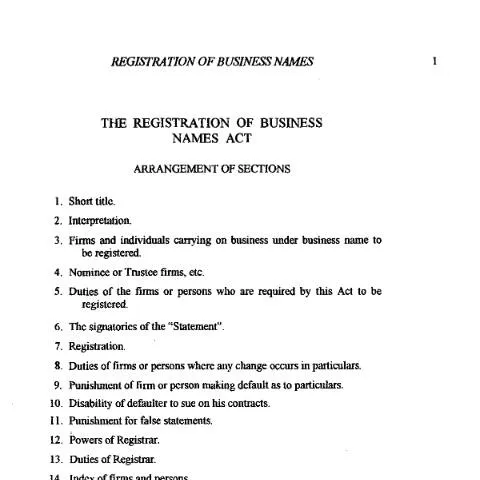
Understanding the Registration of Business Names in Jamaica
The Registration of Business Names Act in Jamaica provides a legal framework for the registration of business names used by firms and individuals conducting trade within the country. This legislation aims to promote transparency, protect consumers, and establish clear legal identities for businesses operating under names different from their legal or corporate titles.
Scope and Objects of the Act
The primary purpose of the Act is to regulate the use of business names by persons and entities engaged in commercial activities. It mandates that any firm or individual carrying on business under a name that does not include their true surname or the full legal name must register that business name with the Registrar of Companies. This requirement ensures that the public can identify the true owners behind a business and facilitates legal accountability.
Who Must Register a Business Name?
According to the Act, registration is mandatory for:
- Firms: Unincorporated bodies of two or more individuals, or individuals and corporations, that operate for profit under a name other than their legal or corporate name.
- Individuals: Natural persons conducting business under a name that does not include their full true surname or Christian names, unless they are using their full legal name.
This obligation applies to businesses operating within Jamaica, whether they are local or foreign firms with a branch or place of business in the country.
Legal Definitions and Key Terms
The Act defines several important terms:
- Business: Includes any profession or trade, such as selling goods or merchandise wholesale or retail, at any location within Jamaica.
- Business Name: The name or style under which a business is carried out, which may differ from the legal or corporate name.
- Firm: An unincorporated partnership of individuals or corporations operating for profit under a common name.
- Trader: An individual or firm engaged in trade activities within Jamaica.
These definitions clarify who is subject to registration and the scope of the legislation.
Registration Process and Requirements
While the detailed procedures are governed by the Registrar of Companies, the Act stipulates that:
- Businesses must submit a statement containing the proposed business name and relevant particulars for registration.
- The Registrar maintains an index of registered firms and individuals, facilitating public access and verification.
- Any changes to the registered particulars, such as address or business activity, must be promptly reported and updated with the Registrar.
Failure to register or to update registration details can lead to penalties and legal restrictions on the business’s ability to enforce contracts or sue in court.
Fill in your form directly online
No printing: type your details into the boxes of the official form, tick, then download the PDF ready to send.
- 1Type into the form boxes
- 2Tick in one click
- 3Save and download the PDF
Legal Implications of Non-Compliance
Businesses that neglect registration or provide false information may face penalties, including fines and restrictions on their legal capacity to operate or enforce contracts. The Act also provides that any false statement made during registration can lead to criminal penalties, including fines or imprisonment.
Post-Registration Responsibilities and Record-Keeping
Registered businesses are required to maintain accurate records, including any changes to their particulars, and to ensure that their registration remains current. When a business ceases operations, it must notify the Registrar and properly dispose of or store its records as per the regulations.
Conclusion
The Registration of Business Names Act serves as a vital legal instrument for maintaining transparency and accountability in Jamaica’s commercial environment. It ensures that consumers and authorities can identify the true owners of businesses operating under trade names, thereby fostering trust and legal certainty. Businesses operating within Jamaica should adhere to these registration requirements to avoid penalties and to operate within the bounds of the law.