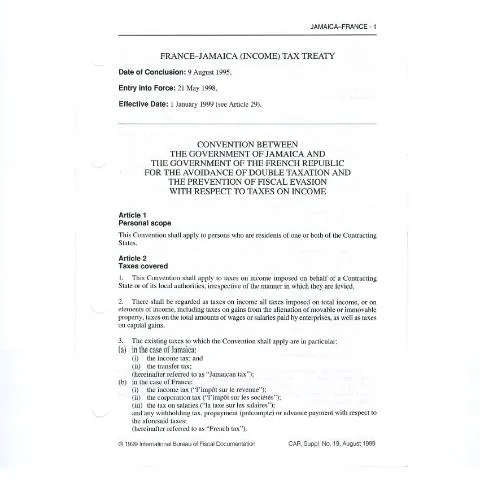
Understanding the Jamaica - France Income Tax Treaty: A Guide for Citizens and Businesses
The Jamaica - France Income Tax Treaty is an official international agreement designed to regulate taxation rights between the two countries, Jamaica and France. This treaty aims to prevent double taxation on income and to facilitate economic cooperation by clarifying tax obligations for residents, individuals, and corporations operating across both jurisdictions. This guide provides an overview of the treaty’s purpose, key provisions, and practical considerations for those affected.
Purpose and Scope of the Treaty
The primary objective of the Jamaica - France Income Tax Treaty is to avoid double taxation of income earned by residents of either country. It establishes clear rules to determine which country has the taxing rights over various types of income, such as income from employment, business activities, property, or investments. The treaty also aims to prevent tax evasion and promote mutual economic relations by providing a framework for cooperation between the tax authorities of Jamaica and France.
This treaty applies to individuals, companies, and other entities that are considered residents of either Jamaica or France, based on their domicile, place of management, or other criteria outlined in the agreement. It covers a broad range of taxes, including income tax, corporation tax, and other similar levies within the scope of each country's legal system.
Key Provisions and Definitions
Residency and Permanent Establishment
One of the fundamental concepts in the treaty is the definition of residency. A person or entity is considered a resident of Jamaica or France based on criteria such as domicile, place of management, or habitual abode. For companies, the concept of a "permanent establishment" is crucial, referring to a fixed place of business through which the enterprise conducts its activities, such as a branch, office, factory, or workshop.
Determining residency affects how income is taxed and which country has the primary taxing rights. For example, a person with a permanent home in both countries will be deemed a resident of the country where their vital interests are closer, considering factors like personal and economic ties.
Taxation of Income
The treaty specifies which country has the right to tax different types of income:
- Employment income: Generally taxed in the country of residence unless the employment is exercised in the other country.
- Business profits: Taxed only in the resident country unless the enterprise has a permanent establishment in the other country.
- Dividends, interest, and royalties: Usually taxed in both countries, but with limits on withholding taxes as specified in the treaty.
- Real property income: Taxed in the country where the property is located.
Practical Considerations for Citizens and Businesses
How to Use the Treaty
Individuals and companies should determine their residency status according to the definitions provided in the treaty. When earning income that could be taxed in both countries, they should consult the specific provisions to understand which country has primary rights and whether they qualify for relief or exemption.
For example, a Jamaican resident earning income from France should verify if their income falls under the treaty’s scope and whether they are eligible for a reduced withholding tax rate or exemption. Similarly, French entities operating in Jamaica need to assess their permanent establishment status to determine their tax obligations.
Transmission and Documentation
When claiming benefits under the treaty, taxpayers must typically provide documentation such as residency certificates and tax declarations to tax authorities. It is essential to keep detailed records of income earned, taxes paid, and relevant documentation to support claims for relief or exemption.
Points of Attention and Advice
- Legal and tax advice: Given the complexity of international tax law, consulting with tax professionals familiar with Jamaican and French regulations is advisable.
- Compliance: Ensure timely filing of tax returns and proper documentation to avoid penalties or disputes.
- Changes in law: Tax treaties can be amended or updated; stay informed about any modifications that could affect your tax obligations.
The Jamaica - France Income Tax Treaty provides a structured legal framework to facilitate cross-border economic activities while minimizing tax barriers. Proper understanding and application of its provisions can help individuals and businesses optimize their tax positions and ensure compliance with both jurisdictions' legal requirements.