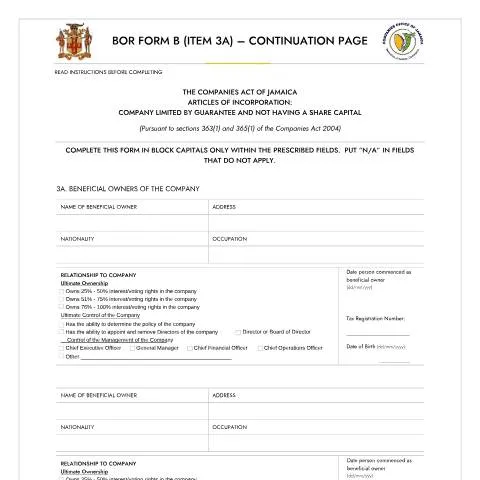
Navigating the Intricacies of the BOR Form B: An Essential Continuation Page
When it comes to corporate responsibility in Jamaica, understanding the BOR Form B - Beneficial Owner of the Company Continuation Page is paramount. This document serves as a critical piece within the framework of the Companies Act, showcasing the individuals who hold significant control and ownership of a company. It’s not just a mandatory formality; it encapsulates transparency and accountability at the core of business operations. Anyone involved in the management or ownership of a Jamaican company must grasp the implications and requirements that come with this form.
Who Should Submit the BOR Form B?
The submission of the BOR Form B is not limited to large corporations. Various profiles fall under the obligation to submit this continuation form:
- Directors: Those who serve on the board and guide company policies.
- Beneficial Owners: Individuals who own a significant portion of the company (at least 25%) or have influential power over its management.
- Senior Management: C-suite officers such as the CEO, CFO, or COO who have ultimate control over the company's operations.
Each of these roles contributes to the essence of the form, and understanding the nuances of the form's requirements is crucial for compliance with Jamaican law.
The Role of the BOR Form B in Corporate Governance
The BOR Form B is integral to the regulatory environment in Jamaica. It aligns with the objectives set forth in the Companies Act of Jamaica, enhancing the country’s commitment to curbing financial crimes such as money laundering and tax evasion. By requiring companies to disclose their beneficial owners, the government aims to create a transparent business landscape.
Importance of Transparency
Transparency is not merely an ethical obligation but a legal one. The BOR Form B allows the authorities to trace ownership structures, ensuring that all beneficial owners are identified and accountable. This is especially relevant in the context of complex corporate structures where ownership can often be obscured.
A Step-by-Step Guide to Completing the BOR Form B
Completing the BOR Form B requires meticulous attention to detail. Here’s a streamlined approach to navigate through the form:
Understanding the Sections
- Beneficial Owner Information: This section requires the names, addresses, nationality, and occupations of all beneficial owners. Accuracy is crucial. Ensure names match official identification documents.
- Ownership Interest: Here, you must indicate the percentage of control that each beneficial owner has in the company. Understanding the categories of ownership—25% to 50%, 51% to 75%, and 76% to 100%—is essential for correct reporting.
- Management Control: Identify whether the individual is merely an owner or possesses additional management control, such as the ability to appoint directors or influence company policies.
Common Pitfalls in Completing the Form
While filling out the form, be aware of potential errors:
- Inaccurate Dates: Always use the dd/mm/yyyy format for dates, especially when indicating the commencement date of ownership.
- Missing Fields: If a section does not apply, do not leave it blank; instead, write "N/A" to avoid assumptions by the reviewer.
Submitting the BOR Form B: Channels and Procedures
Once the form is completed, the next step is submission. There are several ways to lodge the BOR Form B:
Online Submission
Utilizing the e-services available through the Government of Jamaica website is highly recommended for efficiency. This method offers a streamlined process, allowing for quicker processing times compared to traditional methods.
In-Person Submission
If you prefer or are required to submit the form in person, you can visit the Companies Office of Jamaica (COJ). It is advisable to schedule an appointment beforehand to reduce wait times.
Mail Submission
For those opting to submit by mail, ensure that you send the completed form to the correct address provided on the COJ's official website. Include a cover letter detailing the purpose of the submission for clarity.
Tracking Your Submission: Staying Informed
After submission, tracking the status of your BOR Form B is crucial for ensuring compliance. Here’s how to stay informed:
Online Tracking
Through the e-services portal, users can log in to check the status of their submissions. This can help identify if further actions are needed or if additional documentation is required.
Follow-Up Inquiries
If you opt for in-person or mail submissions, consider following up with the COJ through phone or email. This not only displays diligence but may help expedite any pending processes.
Comparative Overview: BOR Form B vs Other Related Forms
Understanding how the BOR Form B fits within the broader spectrum of regulatory forms is key. Below is a comparison table highlighting its distinctions:
| Form Name | Purpose | Key Focus Areas |
|---|---|---|
| BOR Form B | Declaration of Beneficial Ownership | Identifies individuals with significant influence over a company |
| BOR Form A | Initial Registration of Beneficial Owners | Initial disclosure of beneficial owners for newly incorporated companies |
| TRN Registration Form | Tax Registration | Assigning a Tax Registration Number (TRN) to individuals and entities |
Key Takeaways: The Significance of Accurate Reporting
Filling out the BOR Form B correctly is more than just compliance; it reflects a company's integrity and commitment to ethical business practices. Companies that neglect to provide accurate information regarding their beneficial owners can face serious legal repercussions, including fines and sanctions.
Maintaining up-to-date records is also critical. As ownership structures change, so should the information in the BOR Form B. Staying proactive with these updates ensures that your company remains compliant and transparent.
Conclusion: The Path Forward for Companies in Jamaica
Successfully navigating the requirements of the BOR Form B is essential for any company operating in Jamaica. By understanding the ins and outs of this form, businesses can ensure not only compliance with local laws but also uphold the standards of corporate governance that are increasingly demanded by regulators and the public alike.
The journey doesn't end with submission; rather, it’s a continual process of transparency and accountability. Through diligent reporting and an understanding of the requirements, companies can foster an environment of trust, paving the way for sustainable business practices in Jamaica.
Understanding the BOR Form B: Key Guidelines and Requirements
The BOR Form B, pertaining to the Beneficial Owner of the Company in Jamaica, is a crucial document for companies to accurately report information about their beneficial owners. This form serves multiple purposes, primarily to promote transparency and ensure compliance with local laws governing corporate governance. Understanding the guidelines and requirements for completing this form is essential for any company, as failure to do so can result in penalties.
When filling out the BOR Form B, companies must provide detailed information regarding individuals who ultimately own or control the company, excluding those who hold shares solely for the purpose of being a nominee. This includes individuals who possess a significant percentage of ownership or have substantial control over the company’s operations. Specific fields in the form will require full names, addresses, and identification numbers for each beneficial owner. Accuracy is critical, and any discrepancies can lead to delays in processing or requests for additional documentation.
Moreover, it is imperative to understand the deadlines associated with submitting the BOR Form B. Under the current legislative framework, companies are required to submit this form within 30 days of any changes in their beneficial ownership structure. Additionally, a comprehensive annual submission is mandated to ensure that the registry remains up-to-date. Companies must remain vigilant about any shifts in ownership that could necessitate a new filing.
Navigating the Implementation of Beneficial Ownership Reporting in Jamaica
The implementation of beneficial ownership reporting, including the use of the BOR Form B, marks a significant shift in Jamaica’s approach to corporate transparency. The initiative aims to combat money laundering, tax evasion, and other forms of financial crime by providing a clearer view of who benefits from corporate entities. This shift is driven by international pressures to align with global standards, especially following recommendations from the Financial Action Task Force (FATF).
For Jamaican companies, adapting to these requirements means embracing a culture of compliance and transparency. Training sessions and workshops are being organized by various trade associations to educate business owners about their obligations under the new regulations. Companies are encouraged to establish internal controls and compliance frameworks to ensure that they are not only meeting their reporting obligations but also fostering a culture of ethical business practices.
A crucial aspect of navigating the implementation is understanding the potential impact on foreign investment. Transparency in beneficial ownership can enhance investor confidence, as it reduces the risks associated with hidden ownership structures. Companies looking to attract foreign investors should view compliance with the BOR Form B as not just a statutory requirement, but also a marketing tool that showcases their commitment to transparency and accountability.
Consequences of Non-Compliance with BOR Form B Submissions
The consequences of failing to comply with the requirements related to the BOR Form B can be severe. The Companies Office of Jamaica (COJ) has instituted a range of penalties that can apply to organizations that neglect their reporting duties. These penalties can take various forms, including monetary fines and, in more severe cases, restrictions on business operations.
For instance, companies that do not submit their BOR Form B or fail to disclose accurate information regarding their beneficial owners may face fines that accumulate daily until compliance is achieved. This underscores the importance of maintaining accurate records of beneficial ownership and being proactive in submitting any necessary updates. Furthermore, repeated offenses can lead to more stringent actions, including legal proceedings and potential revocation of business licenses.
In addition to financial penalties, non-compliance can damage a company’s reputation. Stakeholders, including investors, clients, and partners, increasingly prioritize transparency in business dealings. Companies that fail to adhere to beneficial ownership reporting obligations may find it challenging to maintain relationships with their stakeholders. Therefore, developing a robust compliance strategy around the BOR Form B is essential for safeguarding the company's reputation and ensuring long-term sustainability.