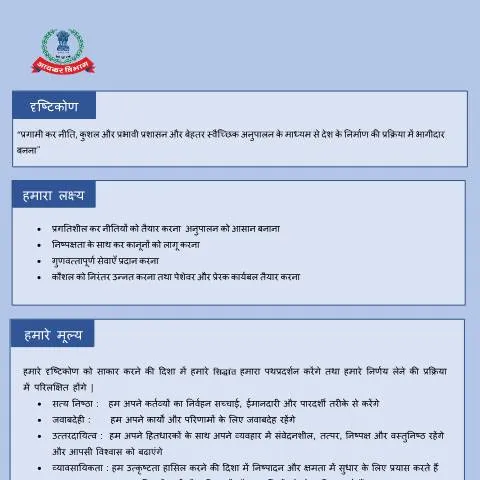
The Significance of the Vision Mission Document (Hindi)
In the realm of India’s evolving tax landscape, the Vision Mission Document (Hindi) serves as a pivotal tool for fostering a progressive tax regime. This document embodies the aspirations and strategic directions of the Income Tax Department, aligning with the overarching goals set forth under the National e-Governance Plan. It delineates the objectives and values that guide the tax administration's operations, playing a crucial role in enhancing compliance and promoting taxpayer welfare.
Understanding the Stakeholders Involved
When engaging with the Vision Mission Document, various stakeholders come into play, each with distinct roles and responsibilities.
- Tax Administrators: They are responsible for implementing the policies outlined in the document, ensuring transparency and accountability.
- Taxpayers: Individuals and businesses who are subject to income tax laws must understand this document, as it influences their rights and obligations.
- Consultants and Advisors: Tax professionals assist taxpayers in navigating the complexities of tax laws, often using insights from the Vision Mission Document to provide informed recommendations.
- Government Bodies: Other governmental institutions collaborate with the Income Tax Department to ensure that the vision and mission are met across various fiscal policies.
Key Components of the Document
The Vision Mission Document is structured to communicate several vital components effectively. Understanding these facets can enhance your comprehension of its relevance.
Objectives and Goals
At the heart of the document lies a clear set of objectives aimed at improving tax compliance and administrative efficiency:
- Formulating progressive tax policies that encourage compliance.
- Implementing tax laws with fairness and transparency.
- Delivering quality services that meet taxpayer needs.
- Fostering skill development among tax officials and taxpayers alike.
Values Guiding the Administration
The document also outlines core values that govern the functioning of the Income Tax Department:
- Integrity: Upholding transparency and honesty in all dealings.
- Accountability: Being answerable for actions and outcomes.
- Responsiveness: Staying sensitive to stakeholder concerns and needs.
- Innovation: Encouraging new ideas and methodologies to improve processes.
- Collaboration: Working together with stakeholders towards common goals.
Filling Out the Vision Mission Document: A Step-by-Step Guide
The process of engaging with the Vision Mission Document is straightforward yet essential for those interacting with the income tax framework.
- Understand the Context: Familiarize yourself with the document’s background and its implications on tax administration.
- Gather Necessary Information: Collect any relevant documentation or insights that reflect your understanding of the objectives and values highlighted.
- Complete Required Sections: Fill out any required sections that may pertain to your role as a stakeholder.
- Review for Accuracy: Ensure that all information is accurate and reflective of your position or understanding.
- Submit: Follow the specified submission process, typically through the Income Tax Department’s online portal.
Potential Challenges During Completion
While engaging with the Vision Mission Document, stakeholders may encounter certain challenges:
- Complex Terminology: The document may contain legal jargon that could be confusing. It is recommended to consult with a tax professional if needed.
- Ambiguity in Guidelines: Certain sections may appear vague. Seeking clarification from tax authorities can help address these uncertainties.
- Compliance Issues: Non-compliance with the outlined criteria can lead to complications. Always verify that you meet the document's expectations before submission.
Special Considerations for Unique Cases
Different stakeholders may have unique circumstances that require special attention when dealing with the Vision Mission Document.
For Non-Residents
Non-resident taxpayers must pay particular attention to how the Vision Mission Document influences their tax obligations in India. They might need to refer to additional guidelines that specify their responsibilities under Indian tax laws.
In Cases of Minors
For minors, legal guardians must ensure that any relevant tax documentation reflects the minor's information accurately. Guardians must be prepared to provide identification and proof of guardianship.
Urgent Situations
If you find yourself in an urgent situation regarding tax compliance or submission of forms, it’s advisable to reach out directly to the Income Tax Department through their dedicated helplines. Proper channels can often expedite responses.
The Broader Impact on Tax Administration
The Vision Mission Document is not merely a standalone guide; it is a linchpin in a larger framework aimed at reforming India’s tax structure.
- Establishment of Taxpayer Services: Initiatives derived from this document lead to better taxpayer services through innovative approaches.
- Awareness Programs: The principles set forth encourage the Income Tax Department to conduct awareness programs, helping citizens understand their rights and obligations.
- Policy Formulation: The insights from the document inform policy formulation, ensuring tax laws remain progressive and adaptable to changing economic conditions.
Tracking and Following Up on Your Submission
After you have engaged with the Vision Mission Document, understanding how to track your submission and follow up is crucial.
- Use the Income Tax Portal: The primary method for tracking your submission is through the official Income Tax e-filing portal.
- Document Reference Number: Make sure to retain your submission's unique document reference number, as it will be essential for any inquiries.
- Follow-Up Procedures: If you experience delays or require further clarification, use the contact information available on the income tax portal to reach out to relevant departments.
Conclusion: Beyond the Document
Engaging with the Vision Mission Document (Hindi) is an integral part of understanding the income tax framework in India. By recognizing its significance, stakeholders can navigate their obligations more effectively, contribute to transparency in tax administration, and play a role in shaping a progressive tax environment.
Understanding the Structure of a Vision Mission Document in Hindi
When drafting a Vision Mission Document in Hindi, it is essential to understand the structural components that make such documents effective and engaging. The structure typically includes the following sections:
- Introduction: This section outlines the purpose of the document and provides a brief background on the organization or initiative. It sets the tone for what follows, emphasizing the significance of the vision and mission.
- Vision Statement: The vision statement articulates the long-term aspirations of the organization. It should be succinct, inspirational, and forward-looking, often encapsulating the ultimate impact the organization aims to achieve in society.
- Mission Statement: The mission statement defines the organization's core purpose and primary objectives. It is typically more action-oriented than the vision statement, outlining what the organization does, whom it serves, and how it operates.
- Core Values: This section lists the guiding principles that inform the organization's culture and decision-making processes. Core values often reflect the organization's commitment to integrity, innovation, inclusivity, and excellence.
- Strategic Goals: Clearly defined strategic goals help operationalize the vision and mission. These goals should be specific, measurable, achievable, relevant, and time-bound (SMART), providing a roadmap for action.
- Implementation Plan: Detailing how the organization plans to achieve its strategic goals is crucial. This includes identifying key initiatives, resources required, timelines, and responsible parties.
- Monitoring and Evaluation: Establishing a framework to assess progress and impact is vital for ensuring accountability and continuous improvement. This section should outline the metrics and methods for evaluating the success of the initiatives.
Each of these components should be articulated in clear, concise Hindi, ensuring that the document is accessible to the intended audience. Additionally, it is vital to consider regional dialects and terminologies that resonate with the local population, fostering a sense of ownership and relevance.
Legal and Regulatory Considerations for Drafting Vision Mission Documents
In drafting a Vision Mission Document in Hindi, it’s important to be cognizant of the legal and regulatory frameworks that govern such documents, especially in the context of governmental and public sector organizations. Here are some critical considerations:
- Compliance with National Policies: Ensure that the document aligns with the guidelines laid out in the National e-Governance Plan under the IT Act, 2000. This may include ensuring the use of digital platforms for dissemination and reaching the target audience effectively.
- Incorporation of UIDAI and Aadhaar Regulations: If the organization engages in activities necessitating the use of Aadhaar, it is crucial to respect the regulations set forth by UIDAI. This includes data privacy and security protocols, especially when the Vision Mission Document involves initiatives aimed at social welfare and inclusion.
- Adherence to State-Specific Laws: Different states and Union Territories (UTs) in India may have their own regulations concerning the drafting and implementation of such documents. Be mindful of any particular requirements that may apply, including the necessity for public consultations or approvals.
- Legislative Framework for Funding and Support: If the vision and mission involve seeking funding or support from governmental or non-governmental sources, the document should reflect alignment with relevant legislation that governs funding for social initiatives.
By considering these legal and regulatory elements, organizations can ensure their Vision Mission Documents are not only impactful but also compliant and responsible. This can enhance legitimacy and foster greater trust among stakeholders and the community.
Engaging Stakeholders in the Vision Mission Development Process
Engaging stakeholders in the development of a Vision Mission Document is vital for ensuring that it is comprehensive, relevant, and widely accepted. Here are effective strategies to involve various stakeholders:
- Conducting Workshops and Focus Groups: Organizing workshops and focus groups can facilitate meaningful dialogue among stakeholders, including community members, employees, and subject matter experts. This collaborative approach helps gather diverse perspectives and insights, ensuring that the document resonates with the target audience.
- Online Surveys and Feedback Mechanisms: Leveraging digital platforms to conduct surveys allows for a broader reach, especially in regions with high internet penetration. This enables stakeholders to provide their input conveniently, which can be analyzed and incorporated into the document.
- Building Partnerships with Local Organizations: Collaborating with local NGOs or community organizations can help tap into their existing networks and knowledge. These organizations often have valuable insights into the needs and aspirations of the communities they serve.
- Public Presentations and Transparency: Hosting public presentations to share drafts of the Vision Mission Document encourages transparency and fosters trust. Allowing stakeholders to voice their opinions during these sessions can lead to constructive feedback and foster a sense of ownership.
By actively engaging stakeholders throughout the drafting process, organizations can ensure the Vision Mission Document is a true reflection of collective aspirations and can drive meaningful change within the community.