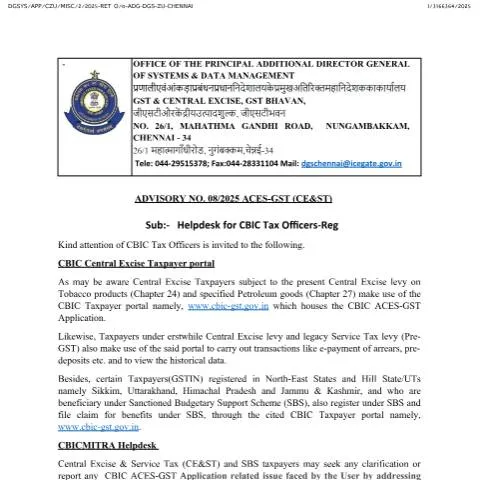
Navigating the GST Helpdesk Advisory 8 2025 29072025: A Comprehensive Guide
In an increasingly digital economy, understanding the intricacies of tax compliance is critical for individuals and businesses alike. The Helpdesk Advisory 8 2025 29072025 serves as an essential tool for stakeholders engaged with the Goods and Services Tax (GST) framework in India. Whether you are a new entrepreneur or an established business entity, grasping the nuances of this document can significantly impact your fiscal responsibilities and privileges.
Who Needs to Engage with the Helpdesk Advisory 8 2025 29072025?
This advisory is particularly important for:
- Small and Medium Enterprises (SMEs): Those navigating the compliance landscape for the first time.
- Business Owners: Existing proprietors who need to stay updated on regulatory changes affecting their GST obligations.
- Tax Professionals: Accountants and consultants tasked with advising clients on GST matters.
- Foreign Entities: Businesses operating or wishing to operate in India must understand GST compliance.
- Corporates: Large companies aiming for compliance in a rapidly changing regulatory environment.
Special Cases and Exceptions
While the advisory applies broadly, certain unique scenarios warrant special attention:
- Non-resident Taxpayers: Businesses based outside India planning to provide goods or services within the country.
- Startups: New businesses that might be eligible for exemptions or concessions under specific conditions.
- Importers and Exporters: Entities dealing with cross-border transactions may face distinct GST requirements.
The Implications of Proper Engagement with the Advisory
Fulfilling obligations outlined in the Helpdesk Advisory can open the door to various rights and privileges. Failing to comply, on the other hand, can lead to severe repercussions:
- Rights: You may gain access to input tax credits, which can significantly reduce your overall tax liability.
- Obligations: Regular filings and adherence to guidelines are expected.
- Consequences of Non-Compliance: Penal actions may include fines, interest on delayed payments, or even criminal charges for severe violations.
Understanding the Timeline: Key Dates and Milestones
It is crucial to be aware of the timing associated with the Helpdesk Advisory:
- Initiation: The advisory is active from the date of its issuance. Stakeholders should act promptly upon its release.
- Filing Deadlines: Specific deadlines for compliance will be outlined within the advisory.
- Subsequent Engagement: Following the initial compliance, ongoing obligations may arise, necessitating regular updates and consultations.
What Happens After Submission?
Once you have submitted the necessary documentation and engaged with the advisory, you may expect:
- Feedback: Possible queries from the GST authorities for clarification.
- Updates: You will be provided with notices regarding any further requirements or changes in compliance.
Historical Context: The Regulatory Framework Behind the Advisory
The Helpdesk Advisory is predicated on a robust legal and regulatory framework established under the Goods and Services Tax Act. This act aims to create a single unified market across India, eliminating the cascading effect of taxes and fostering ease of doing business. Understanding this context can help you navigate the complexities involved in GST compliance.
The Evolution of GST in India
Since its implementation, GST has continuously evolved:
- Initial Launch: The GST was rolled out on July 1, 2017, aiming to simplify the tax structure.
- Amendments: The law has seen numerous amendments and updates to accommodate the growing needs of stakeholders.
- Digital Integration: The rise of e-governance platforms like GST Portal has made compliance more accessible.
The Role of Helpdesk Advisory in the GST Compliance Process
Understanding your responsibilities under the GST regime is vital, and the Helpdesk Advisory acts as a guiding document:
- Clarification: It offers clarity on compliance measures and procedural requirements.
- Guidance: The advisory serves as a point of reference for taxpayers seeking insights into their obligations.
- Support: It aims to assist in navigating the complexities of the tax system, promoting adherence and reducing confusion.
Practical Steps to Follow
To ensure that you are correctly engaging with the Helpdesk Advisory, follow these steps:
- Review the advisory thoroughly upon its release.
- Identify specific obligations that pertain to your business or personal situation.
- Consult with tax professionals if necessary to clarify any doubts.
- Prepare and submit any required documentation accurately and on time.
- Stay updated on any communications from GST authorities regarding your submission.
Embracing Digital Tools for Enhanced Compliance
In a rapidly digitizing world, leveraging technology can streamline your GST compliance journey:
- DigiLocker: A secure platform for storing important documents electronically.
- Aadhaar e-Sign: Utilizing your Aadhaar for digital signatures can simplify the process.
- e-Governance Platforms: Use official services provided by the GST authorities for filing and queries.
Best Practices for Businesses
To enhance your compliance experience, consider adopting these best practices:
- Maintain Accurate Records: Proper documentation is key to avoiding disputes.
- Regular Training: Ensure that your team stays updated on GST regulations and changes.
- Seek Professional Guidance: Regular consultations with tax experts can alleviate compliance burdens.
Conclusion: Taking Action on the Helpdesk Advisory 8 2025 29072025
Engaging with the Helpdesk Advisory 8 2025 29072025 is not merely a regulatory formality; it is a critical component of ensuring your compliance within India's GST framework. From understanding your specific obligations to leveraging digital tools, being proactive can save you time, resources, and mitigate risks associated with non-compliance.
As you navigate the complexities of GST, remember that staying informed and seeking support when necessary can significantly ease the process and enhance your business's overall effectiveness.
Understanding the Helpdesk Services in India
The Helpdesk Advisory Service in India, particularly the one associated with the Helpdesk Advisory 8 2025, is designed to streamline communication and provide assistance to citizens facing challenges with various administrative processes. The objective is to ensure that users receive timely and accurate information regarding government services. Helpdesks operate at multiple levels, including central, state, and local administration, each tailored to address specific user concerns.
When utilizing a helpdesk service, it is crucial to have all necessary documentation at hand, such as Aadhaar number, PAN, and any relevant application numbers. This ensures that the helpdesk personnel can assist you more efficiently. For documentation related to fiscal matters, additional forms might be required, varying from Form 16 for salaried individuals to Form 26AS, which provides a consolidated view of tax deductions and payments. Make sure to check if online helpdesk options are available that might facilitate quicker resolution of your queries.
Additionally, be aware that helpdesk services may vary from one region to another. Some states have developed specific helplines dedicated to issues such as land records, GST registrations, or tax compliance. It is advisable to familiarize yourself with the specific helpdesk numbers and URLs for your state or union territory, as they might provide localized assistance and resources.
Leveraging E-Governance for Better Access
The National e-Governance Plan (NeGP) under the IT Act, 2000 has significantly transformed the way citizens interact with governmental services. Leveraging e-governance tools can greatly enhance the efficiency and accessibility of administrative processes. By utilizing digital platforms, you can access a plethora of services ranging from tax filings to Aadhaar-related services.
For instance, the NIC (National Informatics Centre) offers a multitude of online services aimed at simplifying the user experience. If you are dealing with tax-related issues, it is imperative to understand how e-filing systems work. The e-filing portal allows taxpayers to submit their returns electronically, which can expedite processing times and reduce errors. Make sure you are familiar with the different categories of tax returns, such as ITR-1 for individuals with income up to ₹50 lakh or ITR-3 for those with income from business or profession, to select the correct form for your situation.
Moreover, the integration of DigiLocker and Aadhaar e-Sign enables you to upload documents securely and sign them digitally. This not only saves time but also ensures the authenticity and integrity of your submissions. The use of DigiLocker for storing important documents such as PAN card, Aadhaar, and other essential certificates can be a game-changer in administrative efficiency. Familiarizing yourself with these platforms will allow you to navigate the complexities of Indian bureaucracy more effectively.
Compliance and Grievances: The Role of Helpdesks
Compliance with various regulations is a primary concern for both individuals and businesses in India. The Helpdesk Advisory 8 2025 initiative extends its support to assist users in understanding compliance requirements, such as GST filings, income tax submissions, and other regulatory obligations. It is important for businesses, especially small and medium enterprises (SMEs), to stay informed about changes in tax laws and compliance standards.
If you face challenges in meeting your compliance requirements, leveraging helpdesk services can prove invaluable. For example, the GST helpdesk provides specific guidelines on filing returns, input tax credit claims, and rectifying errors in previous submissions. You can reach out via their dedicated helpline or online chat support for real-time assistance.
In cases where grievances arise regarding governmental processes, helpdesks act as the first point of contact. Whether you are facing issues with tax assessments or delays in service delivery, it is essential to document your concerns accurately when reaching out to a helpdesk. Make sure you have all relevant details, such as application numbers or communication history, to facilitate a smoother resolution process. Additionally, be aware of the escalation protocols should initial queries not resolve your issues satisfactorily.