Understanding the Irish TR2 Form: A Guide for Resident Companies Registering for Tax
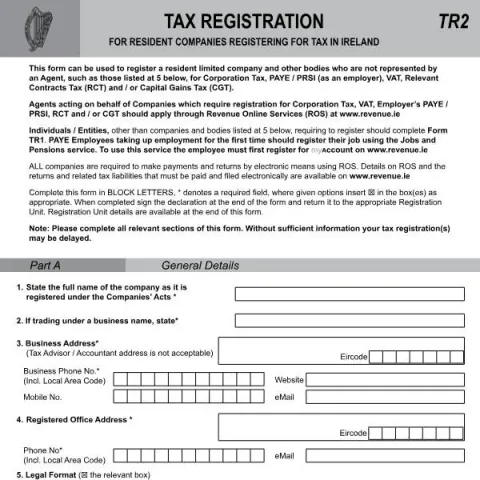
The TR2 form is an official document issued by the Revenue Commissioners of Ireland, designed specifically for resident limited companies and certain other bodies that need to register for various taxes. This comprehensive registration process ensures that companies are compliant with Irish tax laws and can fulfill their tax obligations electronically through the Revenue Online Service (ROS). Understanding when and how to complete this form is essential for companies seeking to establish their tax profile in Ireland.
Who Should Use the TR2 Form?
The TR2 form is intended for resident companies that are not represented by an agent and need to register for:
- Corporation Tax
- PAYE / PRSI (as an employer)
- VAT
- Relevant Contracts Tax (RCT)
- Capital Gains Tax (CGT)
It is important to note that companies requiring registration for these taxes through an agent should instead apply via the Revenue Online Services (ROS) platform. Additionally, individual employees or sole traders should complete different registration procedures, such as the TR1 form or register via the Jobs and Pensions service for PAYE registration.
Key Information Required for Completion
The TR2 form gathers essential details about the company to establish its tax profile in Ireland. These include:
- Official registered name and trading name (if applicable)
- Business and registered office addresses, including Eircodes
- Legal company structure (e.g., Private Limited, Public Limited, etc.)
- Date of registration with the Companies Registration Office (CRO)
- Commencement date of business activities
- Expected date for annual account preparation
- Previous tax references, if applicable
- Details of directors, secretaries, and shareholders holding at least 15% beneficial interest
- Details of the company's accountant or tax advisor, if involved
Additional details include the company's anticipated turnover, the nature of its business activities, and whether it plans to supply certain products such as plastic bags. Companies involved in property rental or acquisitions from previous owners must also provide relevant information.
Registration Process and Submission
Once completed, the TR2 form must be signed by an authorized representative of the company and sent to the appropriate Revenue Registration Unit. The form must be filled out clearly in BLOCK LETTERS, with all relevant sections completed to avoid delays in registration.
Fill in your form directly online
No printing: type your details into the boxes of the official form, tick, then download the PDF ready to send.
- 1Type into the form boxes
- 2Tick in one click
- 3Save and download the PDF
It is mandatory for all companies to make their tax returns and payments electronically via ROS. The form facilitates this transition by establishing the company's online tax profile, enabling seamless compliance with Irish tax obligations.
Points of Attention and Practical Tips
- Complete all sections: Incomplete forms can cause delays. Ensure that all required fields, especially those marked with an asterisk, are filled accurately.
- Use correct addresses and registration numbers: Precise addresses, Eircodes, and CRO numbers are vital for proper registration and correspondence.
- Register early: To avoid penalties or late filing issues, companies should submit the TR2 form promptly after incorporation or when commencing business activities.
- Keep digital records: Maintain copies of the completed form and any supporting documentation, such as lease agreements or previous tax references.
- Engage qualified professionals: Consider consulting with an accountant or tax advisor, especially for complex structures or property-related activities, to ensure accuracy and compliance.
Conclusion
The Irish TR2 form is a vital step for resident companies seeking to establish their tax registration profile in Ireland. By providing comprehensive company details and ensuring timely submission, companies can facilitate a smooth registration process and fulfill their tax obligations efficiently through the ROS platform. Proper understanding and careful completion of this form are essential for maintaining compliance and avoiding unnecessary delays or penalties in the Irish tax system.