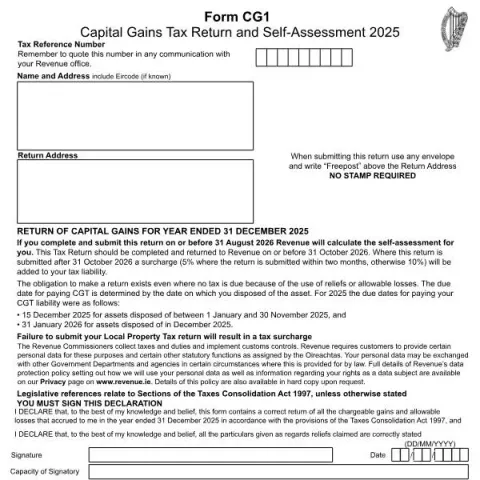
Understanding the Declaration of Irish Capital Gains from Property Sale
When it comes to selling property in Ireland, one of the most crucial documents you will need to prepare is the Declaration of Irish Capital Gains from Property Sale. This letter not only confirms the sale but also serves as a formal notification to the authorities about any potential capital gains tax obligations arising from that sale. Understanding how to properly draft and submit this declaration is essential for compliance with Irish tax laws.
Identifying the Right Recipient
When sending your declaration, addressing it to the correct department is vital. Typically, the declaration should be directed to:
- Revenue Commissioners - responsible for tax collection and administration.
- Department of Social Protection (DSP) - may be involved if the sale affects social welfare payments.
Each recipient may have specific sub-departments; therefore, ensuring that your letter reaches the right one will facilitate a smoother processing time. Consult the official Gov.ie website for the most current addresses and contact details.
Essential Components of the Letter
To ensure your declaration is complete and effective, adhere to the following structural components:
- Your Personal Information: Include your full name, address, and your PPSN (Personal Public Service Number).
- Property Details: Provide a detailed description of the property, including its address, the date of sale, and the sale price.
- Capital Gains Calculation: Indicate any capital gains you are reporting. It's advisable to include how these figures were calculated.
- Declaration Statement: Explicitly state that you are declaring the capital gains in compliance with Irish tax requirements.
Here is a generic template to assist you in drafting your letter:
[Your Name] [Your Address] [Your PPSN] [Date]
To Whom It May Concern, Revenue Commissioners [Recipient Address]
Subject: Declaration of Irish Capital Gains from Property Sale
Dear Sir/Madam,
I am writing to formally declare the capital gains accrued from the sale of my property located at [Property Address], which was sold on [Sale Date] for the amount of [Sale Price].
The calculated capital gain from this sale is [Capital Gain Amount] based on the [Calculation Method]. I am providing this information in adherence to my obligations under the Taxes Consolidation Act 1997.
Should you require any further information, please do not hesitate to contact me at [Your Contact Information].
Thank you for your attention to this matter.
Sincerely, [Your Signature] [Your Name]
The Importance of Accurate Reporting
Filing your declaration accurately is not just a legal requirement; it is also integral in avoiding potential penalties from Revenue. Here are some key obligations:
- Tax Compliance: Ensure that you report any capital gains correctly to avoid inquiries or audits.
- Record Keeping: Maintain copies of your declaration and any supporting documents, such as contracts of sale and valuations.
- Deadline Awareness: Be mindful of the deadlines for submitting your declaration to avoid late fees.
Understanding the ramifications of failing to report accurately may lead to financial penalties, additional tax assessments, or even legal consequences.
Post-Submission: What Happens Next?
Once you have sent your declaration, it's crucial to know the expected timeline for a response and the steps you might need to take thereafter:
- Processing Time: Generally, allow a minimum of 4-6 weeks for Revenue to process your declaration.
- Follow-Up: If you have not received confirmation or any communication within this time, it may be prudent to follow up with Revenue.
- Potential Audits: Be prepared for the possibility that your declaration may trigger an audit or request for further information, especially if there are discrepancies.
Late submissions may lead to additional scrutiny, so timely follow-ups are advisable.
Variations Based on Personal Situation
Your personal circumstances can significantly affect how you approach the declaration process. Consider the following scenarios:
- First-Time Seller: If this is your first property sale, ensure you understand the relevant tax allowances and exemptions available to you.
- Multiple Properties: If you have sold more than one property, you must declare each sale separately and keep accurate records for compliance.
- Joint Ownership: In cases of joint ownership, ensure that all parties agree on how gains and losses are reported.
Each of these situations may carry different tax implications, so it is advisable to consult a tax advisor if necessary.
Referencing Relevant Documentation
In drafting your declaration, referencing the necessary legal frameworks and documentation can strengthen your case:
- Taxation Laws: Familiarize yourself with the Taxes Consolidation Act 1997 and any relevant amendments.
- Property Sale Agreement: Keep a copy of the contract of sale, as you may need to reference it in your declaration.
- Market Valuation Reports: If applicable, attach any property valuation reports that substantiate your sale price and capital gains calculation.
Including these references not only supports your claims but can also facilitate quicker processing by Revenue.
Conclusion: Proactive Steps for Compliance
In conclusion, the Declaration of Irish Capital Gains from Property Sale is an essential document for any property seller in Ireland. By understanding the proper structure, the required components, and the process following submission, you can ensure compliance with tax regulations. Always keep accurate records and seek professional advice if you find yourself in a complex situation.
Fill in your form directly online
No printing: type your details into the boxes of the official form, tick, then download the PDF ready to send.
- 1Type into the form boxes
- 2Tick in one click
- 3Save and download the PDF
For any detailed queries or to keep updated on tax regulations, always refer to the official Gov.ie resources or consult directly with Revenue for tailored assistance based on your specific circumstances.
Understanding Capital Gains Tax (CGT) in Ireland
Capital Gains Tax (CGT) in Ireland is a crucial aspect for individuals and businesses involved in the sale of assets, particularly property. Defined under the Taxes Consolidation Act 1997, CGT is a tax on the profit (gain) made from the sale of an asset. It's essential to differentiate between the sale price and the original purchase price, as CGT is calculated on the gain rather than the total sale value.
In Ireland, the standard CGT rate is currently set at 33%. However, certain reliefs and exemptions can significantly impact the net tax liability. It’s imperative for property sellers to familiarize themselves with these provisions, as they can substantially reduce the overall capital gains tax owed. For instance, the principal private residence relief allows homeowners to exempt gains on the sale of their primary residence, provided certain conditions are met.
Additionally, CGT is applicable to various asset types, but specifics can change based on the asset class. For instance, assets held by individuals may differ in treatment compared to assets held by corporate entities. Understanding these nuances is vital for accurate reporting and compliance with Revenue.
Filing Your CGT Return: Key Processes and Deadlines
When it comes to filing your CGT return in Ireland, the process requires meticulous attention to detail, especially regarding deadlines. The tax year in Ireland operates on a calendar basis, running from January 1st to December 31st. Capital gains must typically be reported in the year they are realized. For example, if you sold a property in 2023, you would need to declare the gain on your tax return for that year.
The filing process itself is generally initiated through Revenue Online Service (ROS). Taxpayers must complete a CGT return using Form 1 or the relevant sections of their annual income tax return. It’s crucial to note the deadline for filing your CGT return: it must be submitted by October 31st of the year following the gain realization. However, if you are filing online through ROS, you may benefit from an extended deadline, allowing you to submit your return by mid-November.
Moreover, once you have completed your form, you must also pay any CGT owed to Revenue. Payments can be made electronically through ROS, ensuring a streamlined process. Make sure to keep detailed records of your calculations to substantiate your reported gains, as Revenue may request this documentation in the event of a review or audit.
Post-Sale Considerations: What Happens After You Declare Your Capital Gains?
After successfully completing your declaration of capital gains following a property sale, you're likely considering your next financial steps. One of the critical aspects to understand is the potential for adjustments in future tax liabilities. For instance, if you have incurred any losses from other asset sales during the same tax year, you may use these losses to offset your gains, which will reduce your overall taxable gain.
Additionally, if you are thinking about reinvesting the proceeds from the sale of your property, it's wise to consult a tax advisor on the implications of future transactions. Depending on the nature of your investments, different tax treatments may apply. For example, if you are planning to invest in other property or assets, understanding the rules surrounding rollover relief could be advantageous.
Moreover, staying informed about any changes in tax legislation is crucial. The Irish government periodically reviews tax laws, and new relief measures or amendments to CGT regulations could arise. Regularly checking updates from the Revenue website or consulting with a tax professional will ensure that you remain compliant and fully aware of any potential tax benefits or obligations.