Understanding the Regulations Governing Designated Centres for Older People in Ireland
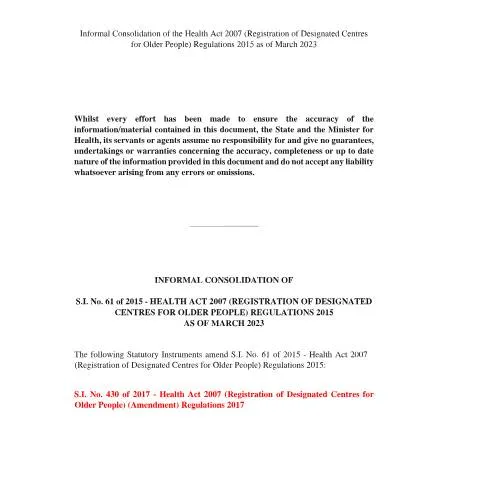
The Department of Health in Ireland has issued an official notice, identified as Code NO61, which consolidates the regulations related to the registration and oversight of designated centres for older people. These regulations are primarily aimed at ensuring the safety, quality, and proper management of residential care facilities for Ireland’s elderly population. This guide provides an overview of the key provisions, the scope of application, and what these regulations mean for providers and stakeholders involved in such care services.
Objectives and Scope of the Regulations
The primary objective of the regulations, as outlined in the official document, is to establish a clear legal framework for the registration, monitoring, and regulation of designated centres for older people. These centres include residential care homes, nursing homes, and other facilities that provide accommodation and care services to older individuals who require assistance with daily living activities.
The regulations apply to all persons or entities intending to operate, renew, or maintain registration of a designated centre for older people in Ireland. They set out the criteria for registration, the process of maintaining compliance, and the responsibilities of registered providers to ensure the safety and well-being of residents.
Key Provisions and Administrative Procedures
Registration and Renewal Processes
To operate a designated centre, a person or organization must submit an application to the Chief Inspector of Social Services, part of the Health Information and Quality Authority (HIQA). The application must include comprehensive information about the provider, the management team, and the operational details of the centre, as specified in Schedule 1 and Schedule 2 of the regulations.
Once registered, providers are required to renew their registration periodically. Renewal applications must be accompanied by full and satisfactory information demonstrating ongoing compliance with the regulations. The process ensures that centres continually meet the required standards for safety, staffing, and quality of care.
Registration Fees and Maintenance of the Register
The regulations specify that designated centres must pay a registration fee to HIQA, which covers the administrative costs associated with maintaining the register. The Chief Inspector maintains a publicly accessible register of all designated centres, which includes details such as registration status, conditions attached to registration, and any changes to the centre’s operational status.
Amendments and Changes to Registered Centres
Any significant change to a centre’s details—such as management, location, or services—must be reported to the Chief Inspector. The regulations stipulate that the register must be updated accordingly, and any variations or conditions attached to the registration are recorded. This process ensures transparency and accountability in the operation of these centres.
Implications for Providers and Stakeholders
For operators of designated centres, compliance with these regulations is mandatory to maintain legal registration and to continue providing care services. The regulations emphasize the importance of adhering to standards related to staffing, safety, and quality of life for residents. Failure to comply can result in penalties, including suspension or removal from the register.
Stakeholders, including residents, families, and regulatory bodies, benefit from these regulations through increased assurance of the quality and safety of care provided. The registration process and ongoing oversight aim to foster a culture of continuous improvement within the sector.
Conclusion
The consolidated regulations outlined in the official notice under Code NO61 form a comprehensive legal framework for the regulation of designated centres for older people in Ireland. They reinforce the responsibilities of providers, ensure transparency through the public register, and promote high standards of care for Ireland’s aging population. Understanding these regulations is essential for anyone involved in the operation or oversight of residential care facilities for older persons in Ireland.