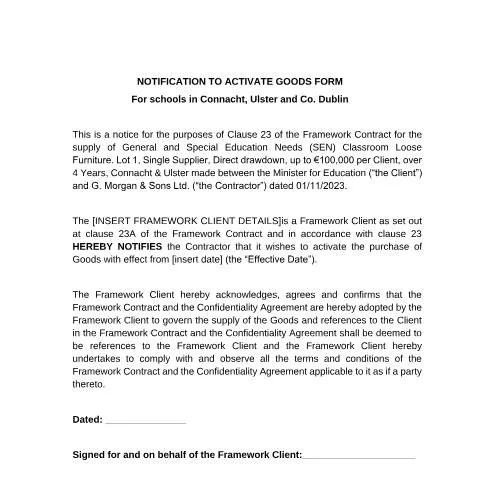
Understanding the Replacement of Loose Furniture Notification
The Replacement of Loose Furniture Notification to Activate Goods Form is a critical document for educational institutions in Ireland, particularly those in Connacht, Ulster, and parts of Dublin. This form plays a pivotal role in ensuring schools can procure necessary educational furniture under the framework contract established with G. Morgan & Sons Ltd. The completion and submission of this form mark the commencement of a formal purchasing process that directly impacts classroom environments and student experiences.
Triggering the Need for the Notification
Before diving into the intricacies of the form itself, it is essential to understand the circumstances that lead to its necessity. The need for this notification typically arises when a school identifies a requirement to replace loose furniture due to wear and tear, damage, or a change in educational needs, such as accommodating Special Education Needs (SEN) students.
The triggering event might include:
- Identifying that existing furniture no longer meets safety standards.
- Changes in classroom setup requiring different furniture configurations.
- Feedback from teachers or students highlighting inadequacies in current furniture.
Once the need is established, the school must act quickly to submit the notification form to avoid disruptions in the learning environment.
Navigating the Form: A Step-by-Step Breakdown
Completing the Replacement of Loose Furniture Notification is a straightforward yet essential task. Each section of the form is designed to capture specific information that will facilitate the procurement process.
Section 1: Framework Client Details
This section requires the school to insert its official name and relevant identifiers. Accuracy is crucial here, as incorrect information can lead to delays or complications in the procurement process.
Section 2: Effective Date
Here, the school must specify the desired effective date for the activation of the goods. This timeline should be realistic, allowing enough time for processing and delivery. Schools are advised to consider factors such as school terms and installation timelines when determining this date.
Section 3: Acknowledgment of Contracts
This section confirms that the school acknowledges and agrees to the framework contract and confidentiality agreement. It’s important to note that by signing this section, the school commits to adhering to all terms and conditions laid out in these documents. Any oversight could lead to breaches that may affect future procurements.
Section 4: Signature Requirements
Both the Framework Client and the Contractor must sign the document. Each signature signifies that both parties understand and agree to the terms outlined in the framework contract. Ensure that individuals authorized to make contractual agreements for the school sign this section to validate the document.
The Importance of Timeliness and Compliance
Submitting the notification in a timely manner is crucial. In the realm of educational procurement, delays can significantly affect classroom functionality and students' learning experiences. Schools must be aware of any internal deadlines they may have for processing these requests, often dictated by budget cycles or school governance rules.
Consequences of Delays or Errors
Failure to submit the form correctly or on time can lead to:
- Delays in receiving essential furniture.
- Potential financial repercussions if budget allocations expire.
- Negative impacts on the learning environment and student satisfaction.
Thus, schools should ensure the form is meticulously completed and submitted as soon as the need is identified.
Comparing Forms: What Sets This Notification Apart
This form is not to be confused with other procurement forms used in different contexts. Understanding its unique purpose is vital for compliance.
The Replacement of Loose Furniture Notification vs. Other Procurement Forms
| Type of Form | Purpose | Key Differences |
|---|---|---|
| Replacement of Loose Furniture Notification | Activate purchase of furniture for classrooms | Specific to loose furniture; follows a framework contract |
| General Procurement Request | Request for various supplies and services | Broader scope; not restricted to educational furniture |
| Special Education Needs Equipment Request | Request for specialized educational equipment | Focus on equipment rather than furniture |
Understanding these differences helps ensure that educational institutions submit the correct documentation for their specific needs, avoiding unnecessary complications.
Submission Channels: Where and How to Submit
Schools have multiple channels for submitting the Replacement of Loose Furniture Notification. Each channel has its own nuances and advantages.
Online Submission via MyGovID
The most efficient method is using MyGovID for online submissions. This digital method allows for quicker processing and easier tracking of the submission status. To submit online:
- Log in to your MyGovID account.
- Select the appropriate form for submission.
- Fill in the required details and attach any relevant documentation.
- Submit and await confirmation.
Paper Submission
For those who prefer traditional methods, submitting a paper form is still an option. This method may take longer due to postal times. When submitting via paper, ensure:
- The form is printed clearly and legibly.
- All necessary signatures are present.
- The form is sent to the correct address with adequate postage.
In-Person Submission
Some schools may choose to submit the form in person at their local Department of Education office. This can be beneficial for immediate feedback or clarification on any aspects of the form submission process. When submitting in person, bring:
- Completed form.
- Identification and authorization documents, if required.
- A copy of the form for your records.
Preparing Your Justifications: What You Need to Gather
In addition to filling out the notification form, schools may need to prepare justifications or supporting documents. This preparation can smooth the approval process and support the school's case for the furniture replacement.
Types of Justifications
Depending on the circumstances surrounding the request for new furniture, various types of justifications may be needed, including:
- Repair Reports: Documentation detailing the condition of existing furniture.
- Student Needs Assessments: Reports indicating specific requirements, especially for SEN students.
- Financial Estimates: Budget projections showing how the new purchase fits within school finances.
Having these documents prepared and readily available can significantly expedite the approval process and ensure that the school’s needs are met promptly.
Final Thoughts: The Path Ahead After Submission
Once the Replacement of Loose Furniture Notification has been submitted, schools should remain proactive in tracking the progress of their request. Communication with the contractor, G. Morgan & Sons Ltd., can clarify expectations regarding delivery times and installation processes.
Moreover, schools may wish to assess furniture once it arrives, ensuring it meets the agreed standards and specifications outlined in the framework contract. This proactive approach not only enhances the school environment but also fosters a culture of accountability and quality in educational settings.
Ultimately, completing the Replacement of Loose Furniture Notification is a necessary step in maintaining an effective learning environment for students. By understanding the nuances of this process, schools can better navigate the requirements and ensure they meet their educational goals smoothly and efficiently.
Understanding the Replacement Notification Process
The replacement of loose furniture, particularly in institutional settings like schools, hospitals, and public offices, requires compliance with specific regulatory standards in Ireland. The Notification to Activate Goods form serves as a crucial mechanism in this process, ensuring that all parties involved meet the necessary legal obligations. When initiating a replacement, it's vital to grasp the reasons behind these regulations. Primarily, they aim to promote safety and accountability. The replacement of loose furniture can often involve significant financial implications and potential liability issues, making the adherence to official protocols essential.
What to Include in Your Notification
Fill in your form directly online
No printing: type your details into the boxes of the official form, tick, then download the PDF ready to send.
- 1Type into the form boxes
- 2Tick in one click
- 3Save and download the PDF
- Item Description: Clearly outline what the furniture is (e.g., chairs, tables) along with their dimensions, material type, and any specific features.
- Condition of Existing Furniture: Document the state of the current loose furniture being replaced, detailing any safety concerns.
- Rationale for Replacement: Provide a succinct explanation of why the replacement is necessary - whether due to wear and tear, safety compliance, or aesthetic upgrades.
- Timeline for Activation: Include your proposed timeline for the replacement, ensuring compliance with any local regulations regarding procurement and installation.
- Environmental Considerations: If applicable, detail any eco-friendly practices you intend to implement during the disposal of the old furniture and the acquisition of new pieces.
Common Pitfalls in the Replacement Process
While the process of replacing loose furniture may seem straightforward, there are several common pitfalls that persons in charge should be aware of. Recognising these issues can prevent significant delays and complications.
1. Incomplete Documentation: One of the most frequent mistakes arises from failing to complete the Notification to Activate Goods form with all necessary documentation. Inadequate information can lead to processing delays, which may impact operational timelines.
2. Non-compliance with Local Standards: Each locality in Ireland may have specific requirements regarding furniture safety and compliance regulations. Ensure that you are familiar with local ordinances or institutional policies that govern furniture replacements. This can include adherence to fire safety standards, ergonomic assessments, or sustainability guidelines.
3. Ignoring Budget Constraints: Overspending or under-budgeting for the replacement process can lead to significant complications. Conduct a thorough financial assessment before initiating the replacement process, accounting for all costs associated with procurement, transportation, and installation.
4. Neglecting Stakeholder Communication: Engaging with stakeholders, including staff, students, or patients, is vital. Lack of communication can lead to dissatisfaction or misunderstanding concerning the replacement process. Make sure to keep all relevant parties informed about the timelines, changes, and reasons for the replacements.
5. Overlooking Warranty and Maintenance Issues: When acquiring new furniture, it is essential to consider warranties and long-term maintenance. Ensure that the new items come with adequate warranties to protect against defects and consider maintenance plans to prolong the life of the new furniture.
Post-Replacement Procedures and Follow-Up
Once the replacement of loose furniture has been completed and the Notification to Activate Goods form has been processed, there are several steps to undertake to ensure a smooth transition and compliance with ongoing regulations.
1. Conduct a Safety Audit: After the new furniture is installed, a safety audit should be conducted to ensure that everything is in place per safety regulations. This audit can also help identify any potential hazards that may arise from the new furniture setup.
2. Gather Feedback: It’s important to solicit feedback from users of the new furniture. This can provide valuable insights into the functionality and suitability of the items, helping inform future purchasing decisions. Surveys or informal discussions can be effective methods for gathering input.
3. Update Inventory Records: Ensure that your inventory management systems are updated to reflect the new furniture. This step is crucial for asset tracking and compliance reporting. Maintaining accurate records can also assist in future planning for further replacements or upgrades.
4. Plan for Future Replacements: With the completion of the current replacement, start planning for future needs. Establish a cycle for regular reviews of furniture condition and performance to ensure that replacements are conducted proactively rather than reactively.
5. Maintain Compliance Documentation: Retain all documentation related to the replacement process, including the completed Notification to Activate Goods form, invoices, safety audit records, and feedback summaries. This documentation can serve as a valuable resource for future audits or inquiries.