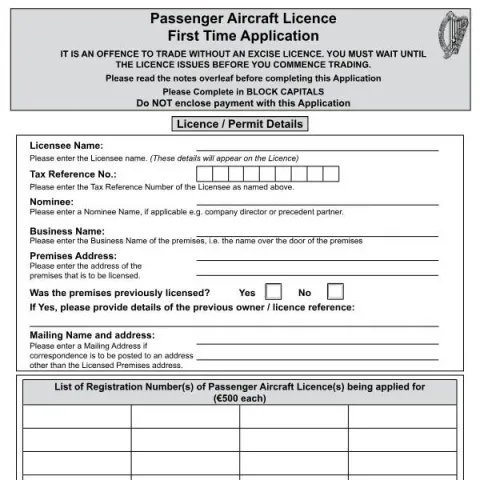
Understanding the Passenger Aircraft Licence First Time Application in Ireland
If you are planning to operate passenger aircraft in Ireland, obtaining a Passenger Aircraft Licence is a mandatory legal requirement. This official application form, titled Passenger Aircraft Licence First Time Application, is issued by the National Excise Licence Office within the Office of the Revenue Commissioners. This article provides a comprehensive overview of the purpose, eligibility, and procedural steps involved in completing and submitting this application form.
Purpose and Scope of the Application
The primary function of this form, identified by the code AirAp1, is to facilitate the initial registration of passenger aircraft operators who intend to trade within Ireland. It is crucial to understand that trading without an excise licence is an offence, and the licence must be issued before any trading activities commence. The application process ensures that operators meet the legal and fiscal requirements set by Irish authorities for passenger aircraft operations.
Who Needs to Complete This Form?
This application is intended for entities or individuals seeking their first Passenger Aircraft Licence. Applicants typically include airline companies, aircraft leasing firms, or other commercial operators involved in passenger flights. The form requires detailed information about the applicant, the aircraft, and the premises where operations are based.
Key Sections of the Application Form
Licence and Business Details
- Licensee Name: The legal name of the applicant, which will appear on the issued licence.
- Tax Reference No.: The applicant's Tax Reference Number, crucial for tax compliance verification.
- Nominee: If applicable, the name of a nominated individual such as a director or partner.
- Business Name: The trade or operating name of the business, if different from the legal name.
- Premises Address: The physical location where the licensed activities will take place.
- Previous Licensing Details: If the premises were previously licensed, details of the former licence or owner must be provided.
- Mailing Address: An alternative address for correspondence, if different from the premises address.
Aircraft Registration Details
Applicants must list the registration number(s) of each passenger aircraft they intend to operate. Each aircraft registration number incurs a fee, typically specified at €500 per aircraft.
Mandatory Declarations and Signatures
The application requires a declaration affirming that the information provided is accurate and that the applicant is authorized to make the application. The form must be signed by an authorized person, such as a director or secretary of the applicant organization, and dated accordingly.
Application Process and Submission
Step 1: Complete the Form
The applicant should fill out the form in BLOCK CAPITALS, ensuring all sections are accurately completed. It is important not to enclose any payment at this stage.
Step 2: Submit to the Revenue
The completed application must be sent to the National Excise Licence Office at the address below:
- Office of the Revenue Commissioners
- Anne Street, Wexford
- Y35 E29K
Processing times vary, but applicants will receive an Application Notice if the application is approved. This notice will include further instructions for applying for the actual passenger aircraft licence.
Step 3: Obtain the Licence
Upon receipt of the Application Notice, applicants can proceed with the licence application, which involves payment options such as the Revenue On-Line Service (ROS) or by cheque using the prepaid envelope provided. It is important to follow the instructions carefully to ensure timely processing.
Fill in your form directly online
No printing: type your details into the boxes of the official form, tick, then download the PDF ready to send.
- 1Type into the form boxes
- 2Tick in one click
- 3Save and download the PDF
Legal and Compliance Considerations
Applicants must hold valid documentation, including a Tax Clearance Certificate for individuals or companies, and relevant registration certificates if trading under a business name or as a limited company. These documents do not need to be submitted with the initial application but must be available upon request.
Additional Notes
This application form and process are governed by Irish legislation, including the Taxes Consolidation Act 1997 and relevant statutory regulations. It is recommended to consult the official Revenue website or contact the Revenue Helpline for detailed guidance or updates on procedures and fees.
In summary, completing and submitting the Passenger Aircraft Licence First Time Application form is a vital step for compliance and legal operation within Ireland’s aviation sector. Ensuring accuracy and timely submission will facilitate a smooth licensing process and enable lawful passenger aircraft operations.