Navigating the Operator Declaration for Canine Movements
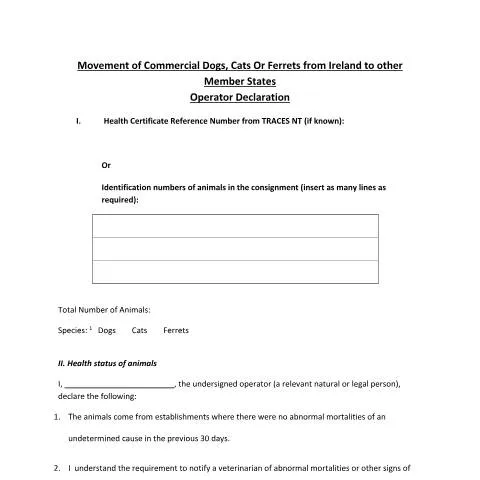
When exporting or importing dogs, cats, or ferrets in and out of Ireland, a crucial step involves the proper completion of the Operator Declaration form, designed specifically for unaccompanied or commercial movements. This document is not merely a bureaucratic requirement; it serves as a vital confirmation of the health and safety of these animals, ensuring compliance with the regulations outlined by the Department of Agriculture, Food and the Marine.
Who Needs to File the Operator Declaration?
The scope of individuals and businesses required to submit the Operator Declaration is broad. It primarily includes:
- Pet Exporters: Those engaged in the business of exporting animals for sale or other commercial purposes.
- Animal Shelters and Rescue Organizations: Groups that facilitate the rehoming of pets across borders.
- Individual Pet Owners: Those who may be relocating or taking their pets abroad for personal reasons.
Each of these categories has specific conditions and details to consider; for instance, commercial entities may have additional obligations compared to private individuals.
Understanding the Core Components of the Declaration
Each section of the Operator Declaration is designed to capture critical information regarding the health status and identification of the animals being moved. Let's dissect these components.
Identification of Animals
The form requests a health certificate reference number from the TRACES NT system, which facilitates tracking the health status of animals. If this isn’t available, you must provide identification numbers for the animals within the consignment. This can include microchip numbers or other registration details.
Health Status Confirmation
This section includes declarations that must be personally signed by the operator. Key points to be aware of include:
- The assurance that there have been no abnormal mortalities in the previous 30 days at the originating establishment.
- The operator's responsibility to notify a veterinarian of any abnormalities or signs of serious disease.
- The acknowledgement of the operator’s duty to monitor the health of animals in their care.
Each of these declarations is crucial for safeguarding animal welfare during transit.
Step-By-Step: The Process of Completing the Operator Declaration
Completing the Operator Declaration involves several steps which can typically be completed in a matter of minutes, provided that you have all the necessary information at hand. Below is a chronological guide to assist with the process.
- Gather Required Information:
- Health certificate reference number from TRACES NT (if known).
- Identification details of the animals.
- Any veterinary records or health assessments previously conducted.
- Complete the Form:
Fill out all relevant fields accurately, ensuring that species are marked correctly (dogs, cats, or ferrets) and that the total number of animals is accurately represented.
- Sign the Declaration:
By signing, you affirm that all information provided is true and accurate, taking responsibility for the welfare of the animals.
- Submit the Form:
This can typically be done electronically or via physical submission, depending on the requirements set forth by the Department.
What Happens Next? Understanding the Processing of Your Declaration
Once your Operator Declaration is submitted, it undergoes a review process. Here’s what to expect:
- Ensuring that all provided information is accurate and complete.
- Assessing the health declarations made, particularly any notes on abnormal mortality or health concerns.
- In cases where the declaration is accepted, you will receive a confirmation of compliance which you should keep for your records.
However, it’s important to be prepared for the possibility of requests for additional information or clarification. Make sure to monitor any correspondence from the Department after submission.
Addressing Common Challenges: Refusals and Missing Documents
As with any official process, there may be instances where your submission is met with complications or refusals. Understanding how to respond is crucial.
In Case of Refusal
If your Operator Declaration is rejected, the Department of Agriculture, Food and the Marine will typically provide a reason. Common reasons for refusals include:
- Inaccurate identification numbers.
- Missing health status declarations.
- Documentation not being in accordance with the latest health regulations.
Upon receiving a refusal notice, promptly review the feedback provided, rectify the issues, and submit a revised declaration as soon as possible to avoid delays in your import or export process.
What If Documents Are Missing?
Should you find that a required document is missing during the submission or review process, it's vital to act quickly:
- Contact relevant veterinary services or animal health authorities to retrieve necessary health certificates.
- Maintain communication with the Department, reporting any missing elements as soon as they are identified.
Being proactive can significantly assist in smoothing out any potential hiccups in the process.
Distinguishing the Operator Declaration from Similar Forms
It’s easy to confuse the Operator Declaration with other forms related to animal movements. Understanding the distinctions can help avoid errors.
Operator Declaration vs. Animal Health Certificates
| Feature | Operator Declaration | Animal Health Certificate |
|---|---|---|
| Purpose | Declaration of health status and responsibility | Official health check documentation for the animals |
| Who Completes It | Operators and exporters | Licensed veterinarians |
| Submission Timing | Prior to movement | Can be submitted at any time prior to export |
| Connection to TRACES NT | May include reference numbers | Must be issued and verified through TRACES NT |
This differentiation is crucial for ensuring that each form is filled out correctly and submitted at the appropriate time to comply with Irish regulations.
Planning Your Timeline: Key Dates and Deadlines
Timing is a critical aspect of the import/export process for pets. Understanding the timeline associated with the Operator Declaration can aid in planning your moves effectively.
Before Submission
- Begin the process well in advance of the planned travel date, ideally at least one month prior.
- Ensure that all veterinary checks and health certifications are obtained timely to avoid last-minute issues.
Submission and Review Duration
Upon submission, allow for a review period of up to two weeks. If additional documentation is requested, this may extend the timeframe.
Post-Submission Process
Once your Operator Declaration has been approved, keep the confirmation document accessible, as it may be required at checkpoints during the actual movement.
Practical Tips for a Smooth Declaration Process
To facilitate a hassle-free experience, consider the following practical pointers:
- Always double-check the accuracy of all identification numbers and health statuses before submission.
- Maintain a checklist of all required documents to streamline the gathering process.
- Engage a veterinarian familiar with export regulations to assist in the health certification process.
By following these tips, you can navigate the complexities of animal movement with confidence and clarity.