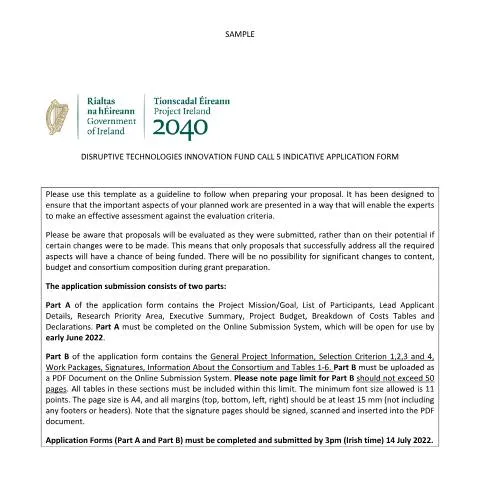
Understanding the Disruptive Technologies Innovation Fund Call 5
For businesses looking to innovate and embrace disruptive technologies within their operations, the Disruptive Technologies Innovation Fund Call 5 presents a unique opportunity. This initiative, overseen by the Department of Enterprise, Tourism and Employment, aims to encourage collaboration between industry and research organisations to enhance Ireland’s manufacturing capabilities. By completing the indicative application form, eligible entities can apply for funding to support their transformative projects.
Timeline and Key Deadlines
Managing timelines is crucial when applying for the Disruptive Technologies Innovation Fund. Application rounds are structured to ensure applicants have ample time to prepare their proposals while keeping the review process efficient.
Application Period
The application period for Call 5 is open until 3 PM (Irish time), 14 July 2022. It is essential for applicants to adhere strictly to this deadline, as late submissions will not be considered.
Post-Submission Process
Once applications are submitted, the evaluation process begins. Experts will assess proposals based on the criteria set forth in the guidelines. Feedback or decisions will typically be communicated within a specified timeframe, allowing successful applicants to commence their projects promptly.
The Application Form: A Crucial Component
The indicative application form is divided into two main parts: Part A and Part B. Each section serves distinct purposes and requires different types of information.
Part A: Essential Project Information
- Project Mission/Goal: Clearly outline the primary objectives of your project.
- Participants: Provide details about all organisations involved, ensuring that the lead applicant’s information is clearly indicated.
- Budget Overview: Include a summary of the total project costs and the funding requested from the DTIF.
Part A is submitted electronically via the Online Submission System when it opens, typically by early June 2022. It is critical that this part is completed accurately, as it lays the foundation for the evaluation process.
Part B: Detailed Proposal and Evaluation Criteria
Part B involves a more in-depth look at the project, covering the following areas:
- General Project Information: This includes specific details about the nature of the project and its relevance to the research priority areas.
- Selection Criteria 1-4: Address each criterion thoroughly, demonstrating how your project aligns with the funding goals.
- Work Packages and Signatures: Outline the planned work packages and ensure signatures from all consortium members are included.
Remember to convert Part B into a PDF document, keeping in mind the page limit of 50 pages and the minimum font size requirement of 11 points. The submission of this document is vital for a comprehensive assessment.
Distinguishing Features of Call 5 Documentation
It’s important to note how this documentation differs from other funding applications, particularly those that may seem similar at first glance. Call 5 specifically targets projects that integrate advanced and smart manufacturing processes, emphasising innovative technology applications over general business improvements.
Research Priority Area Focus
Applicants must focus on the Advanced and Smart Manufacturing theme, which encompasses the use of innovative technologies to create disruptive changes in traditional manufacturing operations. This specificity sets Call 5 apart from other funding initiatives that may not have such a focused mandate.
Form Submission Channels: Online vs. Traditional
In today’s digital age, the method of submitting applications can impact the efficiency of the process. The Disruptive Technologies Innovation Fund requires electronic submission, which offers numerous advantages over traditional paper methods.
Online Submission System
The Online Submission System allows for:
- Immediate Feedback: Applicants can receive instant notifications of submission status.
- Easier Document Management: Uploading documents electronically tends to reduce the risk of loss or misplacement.
- Streamlined Communication: All correspondence regarding the application can be managed through the platform.
Benefits of Electronic Submission
Utilising an online platform not only simplifies the process but also enhances collaboration among project partners, allowing for real-time updates and edits. This can be especially beneficial for larger consortiums where multiple stakeholders are involved.
Preparing Supporting Documents: A Strategic Approach
In addition to the application form, several supporting documents may be required to substantiate your proposal. These documents can vary based on the nature of the project and the specifics of the consortium involved.
Types of Supporting Documents
- Company Registration Proof: Ensure that the lead applicant’s company is registered with the Companies Registration Office (CRO) and provide the relevant registration number.
- Financial Statements: Recent financial statements may be requested to verify the applicant's economic viability.
- Letters of Support: Obtain letters from partners that demonstrate their commitment to the project.
Each supporting document should be well-organized and clearly referenced in the application to facilitate a smooth review process.
Navigating the Evaluation Process
Once submissions are received, the evaluation process is initiated, which is a critical stage in determining the success of an application. Understanding how proposals are assessed can prepare applicants for potential outcomes.
Evaluation Criteria Overview
Applications will be evaluated based on several criteria, including:
- Innovation Level: How novel is the approach being proposed?
- Project Feasibility: Is the project realistic, considering the budget and timeframe?
- Impact Potential: What is the potential impact of the project on the manufacturing sector and broader economy?
These criteria emphasize that submissions need to be meticulously crafted, addressing each point to ensure a compelling case for funding.
Common Pitfalls to Avoid When Completing the Form
While preparing the application, there are several pitfalls that applicants should be cautious about. Being aware of these can significantly enhance the quality of your submission.
Common Issues
- Incomplete Information: Ensure that all sections of both Part A and Part B are thoroughly completed.
- Ambiguous Language: Use clear and precise language to articulate project objectives and methodologies.
- Ignoring Guidelines: Adhere strictly to the guidelines regarding formatting, structure, and submission timelines.
Conclusion: Moving Forward with Confidence
Engaging with the Disruptive Technologies Innovation Fund Call 5 can be a transformative step for businesses aiming to push the boundaries of innovation. By thoroughly understanding the application process, adhering to timelines, and preparing comprehensive supporting documentation, applicants can position themselves favourably in a competitive funding environment.
The journey doesn’t end with submission. Be prepared for follow-up communications, and remain proactive about addressing any queries the evaluation panel may have. This diligence could very well be the key to securing the necessary funding to support groundbreaking advancements in technology and manufacturing.
Understanding Eligibility Criteria for DTIF Call 5 Applications
The Disruptive Technologies Innovation Fund (DTIF) is a key initiative aimed at fostering innovative projects that leverage advanced technologies. To navigate the application process successfully, it's crucial to understand the eligibility criteria set forth by the Department of Enterprise, Trade and Employment. Key aspects of eligibility include:
- Project Type: Applications should focus on disruptive technologies that significantly enhance existing processes or introduce novel solutions in fields such as artificial intelligence, data analytics, advanced manufacturing, and clean technology.
- Project Size: While there is no strict cap, projects typically require a minimum budget that reflects significant scope and impact, often necessitating collaborative efforts among multiple partners.
- Collaborative Nature: Applicants must demonstrate collaborative engagements, particularly involving research institutions, industry leaders, and SMEs, ensuring a well-rounded approach to innovation.
- Economic Impact: A clear outline of the anticipated economic benefits, including job creation and revenue growth, is essential. Projects should illustrate how they align with national strategic priorities, such as the Future Jobs Ireland framework.
Additionally, applicants are encouraged to familiarize themselves with the specific documentation required for the application process, which may include letters of support from partners, detailed project plans, and financial projections. The evaluation criteria often emphasize both innovative potential and practical implementation strategies, necessitating a robust project proposal.
Preparing a Comprehensive Application: Best Practices
Submitting an application for the DTIF Call 5 can be a complex process, requiring meticulous planning and documentation. Here are some best practices to ensure your application stands out:
- Define Clear Objectives: Clearly articulate the aims and objectives of your project. This includes outlining specific technological innovations, market needs, and how your project addresses these challenges.
- Detail the Innovation: Highlight what makes your technology disruptive. Provide comparative analyses with existing solutions and emphasize the uniqueness of your approach.
- Develop a Robust Project Plan: Your project plan should include timelines, milestones, and deliverables. Incorporate risk management strategies that address potential challenges and how your team plans to mitigate these.
- Engagement with Stakeholders: Actively engage with all stakeholders involved in your project. Collect letters of commitment or intent from partners that will enhance credibility. This is essential for demonstrating support for your project and its objectives.
- Financial Justification: Provide a detailed budget that justifies the funding you're requesting. Break down costs into categories—such as personnel, materials, and overhead—demonstrating a clear understanding of financial management.
- Seek Feedback: Before submission, consider seeking feedback from peers or mentors familiar with the DTIF process. They may provide invaluable insights or identify areas for improvement that you may have overlooked.
Ultimately, a well-prepared application reflects not only the potential of your project but also your commitment to making a substantial contribution to the technological landscape in Ireland.
Post-Application Process: What to Expect
Once you submit your application for the Disruptive Technologies Innovation Fund Call 5, it’s important to understand the post-application landscape. The evaluation process can be thorough and may involve several stages:
- Receipt Acknowledgment: After submission, you will receive an acknowledgment confirming that your application has been received. This typically occurs within a few days of the deadline.
- Eligibility Review: Your application will first undergo an eligibility check to ensure that it meets all specified criteria. Applications that fail this stage may be rejected without further evaluation.
- Evaluation by Experts: Eligible applications are sent for review by a panel of independent experts who evaluate them based on the criteria set out in the application guidelines. This may include assessments of innovation, feasibility, and potential economic impact.
- Interviews and Clarifications: In some cases, applicants may be invited for interviews or asked to provide clarifications on specific aspects of their proposals. Being prepared for this can significantly influence the final decision.
- Funding Decisions: The final decision regarding funding allocation is usually communicated via official correspondence. Successful applicants will receive detailed information on the next steps, including funding agreements and reporting obligations.
Post-application, it’s beneficial to stay engaged with the Department of Enterprise, Trade and Employment for updates on your project’s status or any potential opportunities for further collaboration or funding.