Navigating the Organic Farming Exemption Application
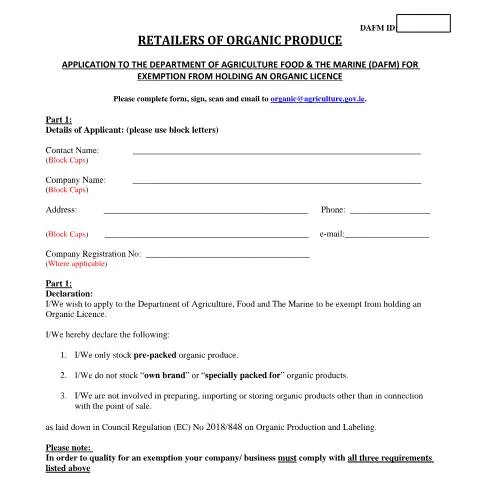
In the vibrant market of organic products in Ireland, clarity and compliance are paramount for retailers. The application for exemption from holding an organic licence, designated as the Organic Farming — 4218af69, is an essential document for businesses that exclusively stock pre-packed organic goods. Understanding the nuances of this application can significantly impact your operational capabilities and market positioning.
Understanding the Significance of the Organic Exemption
Applying for an exemption from the organic licence allows qualifying retailers to operate under specific conditions without the regulatory burden that typically accompanies broader organic certification. This exemption primarily serves those retailers who meet the stringent requirements outlined in the Council Regulation (EC) No 2018/848 on Organic Production and Labeling.
What This Means for Retailers
For retailers, this exemption can lead to:
- Reduced Compliance Costs: Avoiding the costs associated with full organic certification.
- Marketability: Maintaining the ability to sell organic products while adhering to simplified regulations.
- Consumer Trust: Providing assurance to consumers about the organic nature of the products sold without extensive certification.
By filing this application, businesses can streamline their operations while still aligning with organic principles—an increasingly important factor for consumers today.
The Framework Behind the Application
The Organic Farming — 4218af69 exemption application is nested within a broader regulatory framework established by the European Union and the Irish government. The foundation lies in the commitment to uphold organic integrity while allowing flexibility for retailers who do not engage in the more intensive aspects of organic processing.
Historical Context
Historically, the organic market's growth in Ireland has prompted the establishment of regulations to ensure credibility and consumer protection. The introduction and subsequent amendments to the Council Regulation (EC) No 2018/848 have facilitated a standardized approach across member states—encouraging organic farming while recognizing the unique needs of smaller retailers.
Steps to Complete the Application Smoothly
Completing the Organic Farming — 4218af69 application requires careful attention to detail. Each section of the application is designed to elicit critical information about your business operations as it pertains to organic produce.
Part 1: Applicant Details
This section demands clear and accurate information:
- Contact Name and Company Name: Use block letters to ensure legibility.
- Company Registration Number: Include this if applicable, as it helps in verifying your business identity.
- Contact Information: Provide a valid phone number and email for communication.
An accurate submission here helps to establish credibility and may prevent delays in processing.
Part 2: Declaration of Compliance
The declaration is crucial as it asserts your compliance with the three essential requirements:
- Only Stocking Pre-Packed Organic Produce: Ensure that your inventory aligns with this condition.
- No "Own Brand" Products: Confirm that you do not prepare or label organic goods under your own branding.
- Restrictions on Processing and Storage: Acknowledge that your involvement does not exceed point-of-sale activities.
Submission Channels: Maximizing Efficiency
When it comes to submitting your application, you can choose between various channels, namely email or traditional mail. Each channel presents distinct advantages.
Email Submission
For many, sending the application via email to
[email protected] may be the most efficient route. This method typically allows for:
- Faster Processing: Digital submissions are often reviewed more swiftly than paper applications.
- Convenience: You can complete the application from your office or home.
Paper Submission
Conversely, submitting by post may be beneficial for those less familiar with digital processes or who prefer physical documentation. When opting for paper, consider:
- Delivery Times: Allow ample time for your application to reach the Department of Agriculture, Food and the Marine (DAFM).
- Proof of Submission: Retain copies of submitted documents and any postal receipts as proof of application.
The Application's Role in Broader Compliance Procedures
Understanding where the Organic Farming — 4218af69 application fits within the landscape of organic compliance is critical. This form is not an isolated document; rather, it is part of a series of steps that a retailer must navigate to operate effectively within the organic sector.
Chain of Compliance
The exemption application is a stepping stone in the overall journey toward establishing a compliant organic retail business. It must be seen alongside other responsibilities, such as:
- Labelling Requirements: Adhering to the EU's labelling standards for organic products.
- Record-Keeping: Maintaining accurate records of organic goods sold.
- Regular Audits: Being prepared for any inspections or audits related to organic compliance.
While there are several forms related to organic certification, the Organic Farming — 4218af69 application is unique in its specific focus on exemptions for retailers. Understanding the nuances here can prevent confusion with other forms such as the full organic licence application.
Key Differences
Below is a comparative table outlining the distinctions between the exemption application and the full organic licence application:
| Aspect |
Exemption Application |
Full Organic Licence Application |
| Target Audience |
Retailers of pre-packed organic products |
Producers and processors of organic goods |
| Compliance Requirements |
Limited to stocking requirements |
Comprehensive compliance across production and handling |
| Application Complexity |
Simpler, streamlined process |
Detailed and extensive documentation required |
| Regulatory Oversight |
Less intensive regulatory scrutiny |
Subject to regular inspections and audits |
This table elucidates why understanding the specific application process is crucial for compliance and operational efficiency.
Real Implications of Non-Compliance
For retailers, the stakes are high regarding compliance with organic regulations. Failing to apply for the exemption or not adhering to the declared conditions can have significant repercussions.
Consequences of Oversight
The following implications could arise from neglecting this application:
- Legal Penalties: Potential fines or legal action for non-compliance.
- Loss of Market Trust: Damage to reputation as an organic retailer can impact sales and customer loyalty.
- Operational Disruptions: Being forced to cease sales of organic products until compliance is achieved.
Staying Proactive
It is essential for retailers to remain vigilant, ensuring that all conditions are met, and promptly notifying the DAFM of any changes in their business circumstances.
The Organic Farming — 4218af69 exemption application serves not merely as a form but as a gateway to operational integrity in the organic sector. By understanding its role, requirements, and implications, retailers can position themselves confidently in a competitive marketplace while adhering to the principles of organic farming.
Understanding Organic Farming Exemptions in Ireland
Organic farming in Ireland is governed by specific regulations that ensure compliance with EU standards and promote sustainable agricultural practices. One notable aspect of these regulations is the possibility for certain retailers to apply for an exemption from holding a formal organic licence. This exemption is particularly relevant for businesses that handle small quantities of organic products.
To qualify for this exemption, retailers must demonstrate that their engagement with organic products is limited to occasional sales or small-scale operations. The application process can be initiated through the Department of Agriculture, Food and the Marine (DAFM) via the 4218af69 form. It is crucial for applicants to provide comprehensive details regarding the nature of their business, the products they intend to sell, and their sourcing practices.
Retailers must also ensure they comply with specific labelling requirements for organic products, even if they are exempt from obtaining a full organic licence. This includes clear and transparent communication about the organic status of the products and proper traceability from the source to the consumer. It's advisable for retailers to maintain thorough records of their organic stock to facilitate inspections or inquiries from the DAFM.
In addition to the 4218af69 application, retailers may also need to consider local health and safety regulations that pertain to the sale of food products. It is essential to liaise with the local authority regarding any additional requirements that may apply to their specific situation, particularly if they are operating in a farmer's market or similar venue.
Compliance and Inspections for Organic Farmers and Retailers
Once an application for exemption, such as the 4218af69, has been approved, it does not mean that organic farmers and retailers can entirely disregard compliance with organic standards. The DAFM reserves the right to conduct inspections, even for those exempt from a full organic licence, to ensure that products sold as organic adhere to the stipulated guidelines.
Inspections are typically unannounced and may occur at any stage of the supply chain. Therefore, it’s critical for retailers to maintain a high level of awareness regarding organic practices. This includes sourcing from certified organic producers and keeping documentation that can verify the organic status of products sold.
For organic farmers, compliance involves adhering to practices outlined in the EU Organic Regulation (EU Regulation 2018/848) while recording all inputs and outputs meticulously. Familiarity with these regulations not only enhances the credibility of the business but also fortifies customer trust in the organic label.
Moreover, the DAFM encourages organic farmers and retailers to participate in training programs and workshops that provide insights into maintaining compliance and best practices. These programs can offer valuable information on market trends, consumer preferences, and legislative updates, which are imperative for staying competitive in the organic sector.
The Future of Organic Retailing in Ireland
The landscape for organic farming and retailing in Ireland is evolving, with increasing consumer demand for organic products. Retailers who apply for exemptions like the 4218af69 will find themselves in a competitive position if they can successfully navigate regulatory frameworks and maintain high standards of transparency and quality.
As sustainability becomes a major concern for consumers, retailers must also be prepared to adapt to changing regulations and market demands. The introduction of new policies aimed at encouraging organic production can create both challenges and opportunities within the market. Retailers should remain proactive in understanding these developments and how they could impact their business operations.
Furthermore, the rise of e-commerce presents a unique opportunity for organic retailers. Those who can leverage digital platforms while ensuring compliance with organic labelling and marketing practices could significantly expand their reach. This includes developing a robust online presence, utilizing social media for marketing organic products, and engaging with local communities to build a loyal customer base.
Networking with other organic producers and retailers can also foster collaboration, leading to innovative solutions and promotional efforts that highlight the benefits of organic farming. Participation in local organic food events, farmers' markets, and food festivals can help retailers create connections and advocate for organic principles while simultaneously boosting sales.
Overall, the future of organic retailing in Ireland is promising, but it requires commitment to quality, compliance, and continuous learning to thrive in this dynamic industry.