Understanding the Notice of Withdrawal from a Qualified Entity under the Representative Actions Act 2023
The Irish Department of Enterprise, Trade and Employment has introduced a new formal process through the Representative Actions for the Protection of the Collective Interests of Consumers Act 2023, specifically regulated by the Prescribed Forms Regulations 2024. Among these, Form 5 serves a vital role for consumers who wish to formally notify that they no longer want to be represented by a qualified entity in a collective legal action. This article provides a comprehensive overview of this process, its scope, and its implications for consumers in Ireland.
Scope and Purpose of Form 5
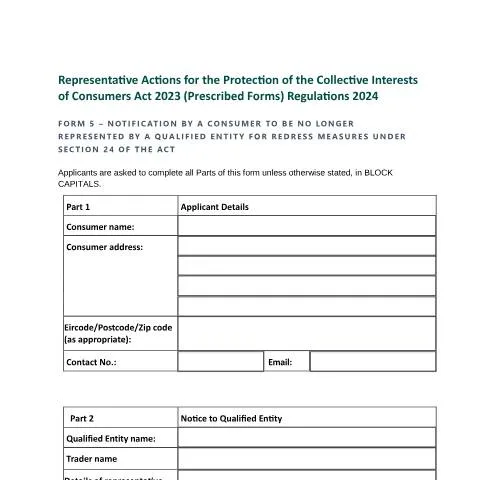
Form 5 is a standardized notification form designed to enable consumers to withdraw their consent from being represented by a qualified entity in a collective legal action initiated under the Representative Actions Act. It is part of a broader legal framework aimed at protecting consumers' rights while ensuring transparency and accountability in collective redress mechanisms.
This form is applicable when a consumer, initially involved in a collective legal action managed by a qualified entity, decides to cease their participation. The withdrawal of representation is formalized through this official notice, which is then communicated to the relevant parties, including the Court and the qualified entity involved.
Who Can Use Form 5?
Any consumer who has previously authorized a qualified entity to act on their behalf in a collective legal action can utilize Form 5 to withdraw their support. It is essential that the consumer completes all parts of the form in BLOCK CAPITALS, ensuring clarity and legal validity.
Consumers should note that submitting this form means they will no longer benefit from any redress measures or outcomes resulting from the collective action. Therefore, it is advisable to consider this decision carefully before proceeding.
Key Components of the Form
Part 1: Consumer Details
This section requires the consumer to provide personal information, including their full name, address, Eircode or postcode, contact number, and email address. Accurate details are crucial to ensure the proper processing of the withdrawal notice.
Part 2: Notice to Qualified Entity
The consumer must specify the name of the qualified entity and the trader involved in the legal action. They must also include any reference number associated with the case, if applicable. The core of this part is the consumer’s declaration, explicitly stating their wish not to be represented by the specified qualified entity in the ongoing or upcoming legal proceedings.
Part 3: Signature and Date
The consumer’s signature and the date of signing are required to authenticate the notice. This signature confirms the consumer's informed decision to withdraw their support.
Legal and Practical Considerations
- Implications of Withdrawal: Once a consumer submits Form 5, they forfeit any future benefits from the collective legal action, including potential redress measures granted by the Court.
- Communication of the Notice: The qualified entity is responsible for sending the completed form to the Court and all other relevant parties involved in the case.
- Availability and Submission: The form can be completed electronically or in paper format, depending on the preferences of the consumer and the procedures of the qualified entity.
Additional Resources and Contact Information
Consumers seeking further information about registered qualified entities or the process of withdrawing from a collective action can consult the Register of Qualified Entities available on the Department of Enterprise, Trade and Employment’s website. This resource provides updated contact details and legal information relevant to collective consumer actions.
In summary, Form 5 offers a clear, official pathway for consumers in Ireland to withdraw their support from a qualified entity involved in collective legal proceedings. Understanding the legal implications and ensuring accurate completion of the form are essential steps in exercising this right effectively.