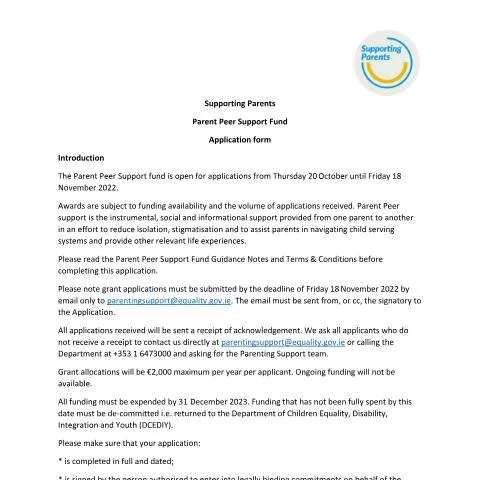
Understanding the Parent Peer Support Fund Application Form
When navigating the often overwhelming landscape of parenthood, the support of fellow parents can make a substantial difference. The Parent Peer Support Fund, administered by the Department of Children, Disability and Equality, is designed to provide financial support that fosters this community spirit. This application form is crucial for organizations seeking to establish or enhance peer support initiatives for parents. It is essential to comprehend the nuances of this fund and the application process to maximise your chances of success.
The Context Behind the Parent Peer Support Fund
The initiative aims to alleviate the isolation and stigma that many parents experience, particularly those engaging with child service systems. By providing funds to facilitate peer support, the programme recognises that shared experiences can serve as a powerful tool for emotional, social, and informational support. This initiative not only empowers parents but also creates a support network that benefits entire communities.
It's important to note that the Parent Peer Support Fund is competitive, with grants allocated up to a maximum of €2,000 per year for each applicant. Applicants need to ensure they are fully familiar with the Guidance Notes and Terms & Conditions before proceeding, as these documents outline the essential criteria and requirements for successful applications.
Eligibility Criteria: Who Can Apply?
Before diving into the complexities of filling out the form, understanding the eligibility criteria is paramount. The following points summarize the key aspects:
- Type of Organisation: The application is open to registered organisations that provide peer support for parents.
- Previous Funding: Applicants must disclose if they have previously received funding from the Department of Children, Disability and Equality. This includes specifying the amount and purpose of prior funding.
- Peer Support Description: Organizations must clearly define their peer support group, including the type of support offered and the intended audience.
Determining Your Organisation’s Readiness
Before applying, organizations should assess their capability to manage and implement the funded project effectively. This involves not only understanding the funding requirements but also having a clear vision of how the peer support will function:
- Support Type: Will the support be social, emotional, or a combination of both?
- Target Audience: Is the program open to a general group of parents or specific demographics, such as single parents or LGBTQI+ families?
- Facilitation Method: How will the support be delivered? Options include peer-led sessions, volunteer facilitators, or paid professionals.
Completing the Application Form: Essential Steps
Having established eligibility, the next crucial step is to complete the application form meticulously. The form is designed to capture all necessary information efficiently. Below are some vital sections and tips for completion:
Organisational Information
This section requires basic information about your organization, including:
- Name of Organisation: Clearly state the full name as registered with the Companies Registration Office (CRO).
- Location: Fill in the complete address using your Eircode for accuracy.
- Main Group Contact: Provide the name and contact details of a designated representative who can liaise with the Department.
Describing Your Peer Support Group
One of the most important parts of the application is accurately describing your peer support group. Use concise language and focus on the following:
- Group Purpose: Limit your description to 100 words, highlighting the core objective and unique characteristics of your group.
- Activities: Specify the types of activities you plan to offer, such as gardening, walking, or informational sessions.
Financial Breakdown and Future Planning
To secure funding, applicants must provide a detailed breakdown of expected costs associated with the peer support initiative:
- Facilitator Fee: If applicable, estimate the costs for employing a facilitator, whether that be a volunteer or paid professional.
- Venue Hire: Include costs associated with renting spaces for meetings or activities.
- Materials: Budget for any materials needed, such as informational brochures or activity supplies.
Ensure that this financial breakdown aligns with the objectives outlined in your application and is justifiable based on your planned activities.
Submission Specifications: Timing and Methods
The application submission process is straightforward but comes with its own set of guidelines:
- Email Submission: Applications must be submitted via email only to [email protected]. Ensure the email is sent from the address of the designated signatory.
- Deadline Awareness: Be mindful of the submission deadline, which in this case is Friday, 18 November 2022. Late applications will not be considered, so aim to submit well before the due date.
- Acknowledgment of Receipt: Upon submission, applicants will receive an acknowledgment receipt. If you do not receive this within a reasonable timeframe, contact the Department to confirm receipt.
Where to Seek Clarification
If you encounter uncertainties while completing your application, do not hesitate to reach out for assistance. The Department encourages queries via:
- Email: [email protected]
- Phone: Reach the Parenting Support team at +353 1 647 3000 for direct support.
Post-Submission: Tracking Progress and Funding Utilisation
Once your application has been submitted, it is crucial to remain engaged with the process. Here’s what to expect:
- Application Review: The Department will review applications based on the provided criteria. Grant allocations are dependent on available funding and the number of applications received.
- Funding Conditions: Should your application be successful, remember that funding must be fully expended by 31 December 2023. Any unspent funding must be returned to the department.
- Ongoing Communication: Maintain an open line of communication with the Department throughout the funding period to clarify any operational queries or amendments that may arise.
Understanding the Impact of Your Work
By securing funding through the Parent Peer Support Fund, your organization has the opportunity to improve the lives of parents in your community significantly. Consider implementing methods for evaluating the effectiveness of your peer support initiatives. This could include:
- Surveys: Gather feedback from participants to assess the impact of the support provided.
- Case Studies: Document individual success stories that illustrate the positive outcomes facilitated by your group.
Concluding Thoughts: The Importance of Peer Support
Engaging in this funding opportunity is more than a mere administrative task; it is a step towards creating a nurturing environment for parents facing similar challenges. The Parent Peer Support Fund embodies the spirit of community resilience and support, underscoring that no parent should navigate the complexities of raising children alone. By thoroughly understanding and accurately completing the application process, organizations can pave the way for impactful peer support initiatives that resonate deeply within their communities.
Understanding the Parent Peer Support Fund
The Parent Peer Support Fund is a vital initiative in Ireland aimed at providing assistance and resources to parents navigating the challenges of raising children, particularly those with disabilities or additional needs. Established under the auspices of the Department of Children, Equality, Disability, Integration and Youth, this fund is designed to facilitate peer support networks that empower parents through shared experiences and practical advice.
Eligibility for funding is primarily directed towards community and voluntary organisations that are dedicated to establishing peer support groups. These groups allow parents to connect, share their experiences, and access valuable resources that can aid in their parenting journey. The overarching goal of this Fund is to foster a sense of community among parents, reduce isolation, and enhance the overall well-being of both parents and children.
Application Process for the Parent Peer Support Fund
Applying for the Parent Peer Support Fund is a structured process that requires careful attention to detail. The application is overseen by the Department of Children, Equality, Disability, Integration and Youth, and interested parties must adhere to specific guidelines laid out in the application form. Here’s a comprehensive step-by-step guide to help navigate this process:
1. Identify the Objectives: Before applying, it's essential that your organisation clearly identifies the objectives of your proposed peer support programme. This means outlining how the programme will benefit parents, addressing the specific challenges they face and how peer support can provide solutions.
2. Complete the Application Form: The application form is critical to your submission. Typically, this would include sections such as organisational information, project details, and budgetary requirements. Be sure to fill in all required fields accurately.
3. Gather Supporting Documents: Along with the application form, you may be required to submit supporting documents. These could include proof of the organisation's registration, evidence of previous work with parent groups, and letters of support or testimonials from participants in previous programmes.
4. Submit the Application: Applications are usually submitted electronically through the MyGovID platform. Ensure that all documents are attached, and double-check for completeness before submission. Deadlines are strictly enforced, so it's advisable to submit well in advance of the closing date.
5. Await Response: After submission, the review process by the Department may take several weeks. During this time, they will assess the clarity of the objectives, the feasibility of the proposed plans, and the potential impact on the community.
Common Challenges and Considerations
While the Parent Peer Support Fund offers invaluable assistance, there are common challenges that applicants may encounter during the application process. Understanding these challenges can help organisations prepare better and enhance their chances of a successful application.
1. Clarity of Goals: One of the most significant hurdles is articulating the goals of the peer support initiative. Applicants should ensure that their project aims are clearly defined and measurable. This might involve setting specific targets such as the number of workshops held, expected participation rates, or the development of new support materials.
2. Budget Constraints: Preparing a realistic budget can be daunting. It is crucial to specify all potential expenses within the application, including facilitator fees, venue costs, and marketing materials. Providing a detailed budget demonstrates fiscal responsibility and can strengthen your application significantly.
3. Demonstrating Community Need: To assure the Department that there is a genuine need for support in the community, it is beneficial to include data or surveys that highlight the challenges faced by parents. This could involve anecdotal evidence or statistics from local child welfare organisations that underline the necessity for the proposed peer support programme.
4. Sustainability of Programmes: Applicants should also consider how their peer support group will sustain itself after the initial funding period. Proposals that include plans for long-term sustainability, such as partnerships with local businesses or the establishment of a membership scheme, may be viewed more favourably.
Success Stories and Impact Measurement
Once funding is secured and the peer support groups are operational, measuring the success of these initiatives becomes paramount. Success stories not only highlight the positive impact of the funding but also serve to encourage future applications. Here are some essential methods for evaluating the impact of your peer support programme:
1. Participant Feedback: Collecting feedback from participants can provide invaluable insights into the effectiveness of the programme. This can be done through surveys, interviews, or focus groups after each session, allowing parents to share their experiences and suggest improvements.
2. Attendance Records: Keeping detailed attendance records can help assess engagement levels. An increase in attendance over time can indicate that the programme is resonating with parents and fulfilling a community need.
3. Case Studies: Developing case studies of specific participants can provide qualitative data illustrating the personal impacts of the peer support group. Highlighting transformative experiences can showcase the value of the support network and offer powerful testimonials for future funding applications.
4. Long-term Outcomes: Consider the long-term outcomes of the programme on both parents and children, such as improved mental health, increased social connections, or enhanced parenting skills. Follow-up surveys conducted several months after completion can be beneficial in understanding the lasting impacts of the support received.