Understanding the Occupational Injuries Benefit: A Critical Resource
When an individual suffers a work-related injury or disease, navigating the administrative landscape can be daunting. The Operational Guidelines for Occupational Injuries Benefit and the Incapacity Supplement offer essential information for those affected, providing a clear pathway to receiving necessary support. This document, produced by the Department of Social Protection, outlines key points to help applicants understand their entitlements and the procedures they must follow.
Target Audience: Who Should Utilize These Guidelines?
The guidelines are aimed at workers who have sustained injuries or developed illnesses due to their employment. This includes both temporary and long-term incapacities. Whether you are a full-time employee, a part-time worker, or even a self-employed individual, understanding this document is essential for ensuring you receive the benefits you are entitled to. Some specific scenarios where these guidelines are particularly pertinent include:
- Injured Workers: Individuals who have suffered injuries during the course of their employment.
- Workers with Occupational Diseases: Those who have developed health issues as a direct result of their work environment.
- Employers: Managers and HR professionals who need to comprehend their obligations in assisting employees with claims.
Key Eligibility Criteria
To qualify for the Occupational Injuries Benefit, applicants must meet specific criteria:
- The injury or disease must have occurred as a direct result of work activities.
- Claims should typically be submitted within three months of the incident to avoid loss of benefits.
- A valid Personal Public Service Number (PPSN) is mandatory for processing claims.
Navigating the Application Process: Practical Steps
The guidelines serve as a roadmap for successfully applying for the Disablement Benefit and/or Incapacity Supplement under the Occupational Injuries Scheme. Here’s a breakdown of the essential steps:
Essential Parts of the Application
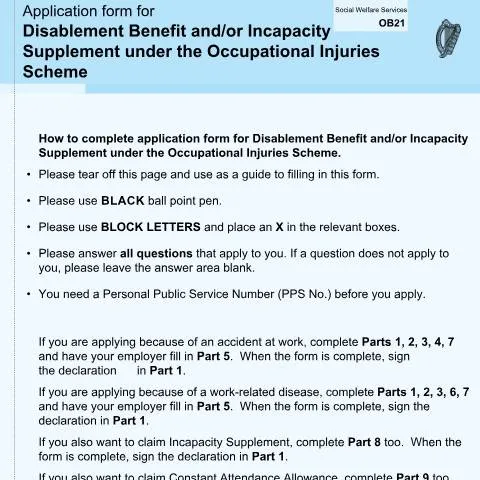
- Initial Information: Start by completing Parts 1, 2, 3, and 7. If you're filing due to a work-related accident, ensure your employer completes Part 5 of the application form.
- Medical Documentation: If you are claiming due to a work-related disease, complete Parts 1, 2, 3, 6, and 7, with Part 5 filled out by your employer.
- Supplement Claims: Should you wish to also claim the Incapacity Supplement, make sure to fill out Part 8. If applicable, Part 9 for the Constant Attendance Allowance should also be completed.
- Signature and Declaration: After all relevant parts are filled, sign the declaration in Part 1, confirming the accuracy of the provided information.
Key Definitions That Matter: Terms to Know
Understanding the terminology in the guidelines is essential for an effective application process. Here are some key terms that frequently appear:
| Term | Description |
|---|---|
| Disablement Benefit | Financial assistance provided to individuals who are incapacitated due to work-related injuries or diseases. |
| Incapacity Supplement | An additional financial benefit for those who experience long-term incapacity following a work-related incident. |
| Personal Public Service Number (PPSN) | A unique identifier assigned to individuals in Ireland for social welfare and tax purposes. |
Common Procedural Questions and Their Answers
As individuals begin to engage with the application process, numerous questions may arise. Here are some of the common queries and their insight:
What Should I Do If My Application is Delayed?
If you notice delays in processing your application, it’s crucial to contact your local Social Welfare Office. They can provide updates and may offer insights into any issues affecting your claim.
Can I Appeal a Decision?
Yes, if your application is denied, you have the right to appeal the decision. The guidelines include information on how to formally submit an appeal.
Integrating with Other Documents in the Process
Understanding how the Occupational Injuries Benefit guidelines interact with other related documents can be beneficial. For instance, the Injury Benefit is a critical component that may impact your eligibility for Disablement Benefit. If you have claimed Injury Benefit for the same incident, it must be disclosed during your application process.
Additional Documents That May Be Required
In certain cases, applicants may need to gather additional documentation to support their claims, such as:
- Medical reports and assessments from healthcare providers.
- Employer statements regarding the incident.
- Evidence of prior claims, if applicable.
Practical Considerations: What to Expect
When engaging with the system, it's essential to have realistic expectations about timelines and outcomes. The processing time can vary based on the complexity of your case and the completeness of the submitted documentation.
Anticipated Timeframes
While specific timelines can fluctuate, applicants should generally expect to wait several weeks for initial processing. It is advisable to keep copies of submitted documents and maintain clear records of any correspondence with the Department of Social Protection.
Utilizing Online Resources for Assistance
The Department of Social Protection provides an array of online resources that can assist in the application process. Accessing your MyGovID account can facilitate a smoother interaction with the department.
MyGovID: A Valuable Tool
Using MyGovID provides a secure method for accessing various government services, including social welfare benefits. It enables you to track your application status and communicate directly with officials.
Final Thoughts: Empowering Yourself Through Knowledge
The Operational Guidelines for the Occupational Injuries Benefit and the Incapacity Supplement are invaluable resources for individuals navigating the complexities of work-related injuries and diseases. Understanding the document, its implications, and the surrounding processes can significantly empower applicants. As you move forward, remain vigilant about deadlines, stay organized, and utilize available resources to ensure that you receive the support you need.
Understanding the Occupational Injuries Benefit Scheme
The Occupational Injuries Benefit (OIB) scheme is designed to support individuals who suffer from injuries or illnesses resulting from their employment. This support includes financial assistance for those who are unable to work due to these injuries or illnesses. The key to accessing this benefit lies in understanding the eligibility criteria, the types of injuries covered, and the correct procedures for application. The OIB scheme is administered by the Department of Social Protection, which provides clear guidelines on how to apply for the benefit.
To qualify for the OIB, the claimant must have suffered a personal injury due to an accident at work or a prescribed disease. The definition of a 'prescribed disease' is essential, as it encompasses specific conditions acknowledged officially as occupational hazards. It is also important to note that the injury or illness must be verified by a medical professional. Claimants need to provide medical evidence alongside their application to ensure the Department can make an informed decision regarding their entitlement.
The OIB offers two primary components: the Incapacity Supplement and the Disablement Benefit. While the Disablement Benefit is paid to individuals who have sustained injuries or illnesses leading to a disability, the Incapacity Supplement is for workers who are temporarily unable to work due to such injuries. Understanding these distinctions can significantly affect the application process, as the necessary documentation and assessment requirements may vary between the two types of benefits.
Navigating the Application Process for the Incapacity Supplement
Applying for the Incapacity Supplement under the Occupational Injuries Benefit scheme can be a detailed process. It’s critical that applicants understand the specific steps involved to avoid delays or potential rejections. First and foremost, claimants must ensure they complete the appropriate application form, known as the Incapacity Supplement Application Form. This form requires detailed personal information, including the individual’s PPSN, contact details, and a thorough account of the injury or illness sustained.
Once the form is completed, it is crucial to gather supporting documentation. This includes any medical certificates from healthcare providers that outline the nature of the injury, the treatment provided, and an assessment of how the injury impairs work capabilities. Additionally, claimants should provide any accident reports or witness statements that may support their case.
After compiling the necessary documents, applicants must submit their application to the relevant local office of the Department of Social Protection. It is advisable to keep copies of all submitted documents for personal records. The Department may take several weeks to process the application, during which they may request additional information or clarification. Claimants should respond to any inquiries promptly to facilitate a smoother process.
Once a decision is made, the claimant will receive a notification outlining the outcome of their application. If the application for the Incapacity Supplement is approved, the Department will detail the payment schedule and amount. In cases of denial, a clear explanation will be provided, along with guidance on how to appeal the decision if the claimant believes they are entitled to the benefit.
Key Considerations and Common Pitfalls in Claiming Benefits
While the application process for the Occupational Injuries Benefit scheme is designed to be accessible, claimants should be aware of common pitfalls that can lead to complications or denials. One of the most significant issues arises from incomplete or inaccurate information on the application form. Make sure to double-check that all sections of the form are filled out accurately and that no sections are left blank.
Another critical consideration is the timing of the application. There are specific time limits within which claims must be submitted following the injury or diagnosis of a prescribed disease. Generally, applications should be made as soon as possible after the injury occurs, ideally within six months. Delayed submissions can result in the loss of entitlement to benefits.
Furthermore, understanding the appeal process is essential. If an application is denied, claimants should not be disheartened; they have the right to appeal the decision. The appeal process involves submitting a formal request for a review, typically within 21 days of the initial decision. It is crucial to provide new evidence or clarify any misunderstandings in the original application when submitting the appeal.
Lastly, claimants should be transparent about any other sources of income they may have. This includes payments from employers, insurance claims, or other government benefits. Full disclosure is vital, as failing to report other income can lead to complications and potential penalties.