Navigating the IR6036C: A Comprehensive Overview for Employers
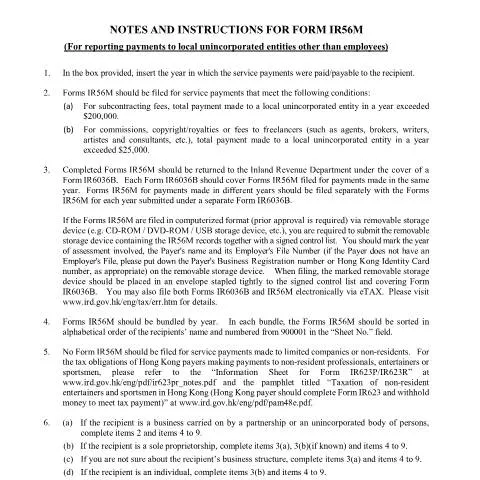
Employers operating in Hong Kong face a myriad of administrative requirements, particularly when it comes to reporting financial transactions. Among these is the Form IR56M, outlined in the Notes and Instructions for Form IR56M (IR6036C). This document is a crucial guide for companies utilizing local unincorporated entities for service payments, ensuring compliance with tax regulations set forth by the Inland Revenue Department (IRD). In this article, we'll delve into the intricacies of the IR6036C document, providing insight into its contents, practical application, and common challenges faced by employers.
Understanding the Core Components of the IR6036C
The IR6036C document serves as an essential resource for employers, detailing the conditions under which Form IR56M must be completed. The key elements include:
- Service Payments Reporting: The form is specifically for reporting payments made to local unincorporated entities for consultancy or subcontracting services.
- Thresholds for Reporting: Employers must report payments exceeding $200,000 for subcontracting and $25,000 for freelance services.
- Filing Procedures: Instructions are provided for how and when to submit the form, including bundling requirements and electronic filing options.
Service Payments Defined
Section two of the document clearly defines what constitutes service payments. Employers must be aware that payments made for services like consulting or subcontracting fall under specific thresholds, which, if exceeded, trigger the requirement to file Form IR56M. This includes payments to freelancers, artists, and other service providers.
Key Considerations for Accurate Reporting
To avoid common pitfalls when completing Form IR56M, employers must navigate specific considerations outlined in the IR6036C. Below are critical areas to focus on:
- Identification of Recipients: Properly categorizing the recipient—whether an individual, partnership, or sole proprietorship—is essential for accurate reporting.
- Understanding the Year of Assessment: Employers must correctly insert the year in which the service payments were made, a crucial detail that can lead to significant tax implications if reported incorrectly.
The Importance of Correct Categorization
Entities must accurately determine the nature of the payments and the business structure of the recipient to ensure compliance with tax obligations. Incorrect categorization could lead to filing errors, which may incur penalties or additional scrutiny from the IRD.
The Interplay Between Forms IR56M and IR6036B
Form IR6036B plays a crucial role in the filing process, as it serves as a cover sheet for submitting multiple Form IR56M filings. Understanding the relationship between these two documents is vital:
- Bundling Requirements: Each Form IR56M must be sorted and bundled according to the recipient’s name, and each bundle should be accompanied by a properly filled Form IR6036B.
- Separate Filings for Different Years: Employers should file separate Form IR56M for service payments made in different years, each submitted under its own Form IR6036B.
Filing Process Insights
Employers should prepare the submissions carefully, ensuring all forms are complete and accurate before sending them to the IRD. The IR6036C outlines specific instructions for filing electronically through eTax, presenting opportunities for streamlined submission processes.
Common Misinterpretations and How to Avoid Them
Employers may encounter several common misinterpretations regarding the IR56M and IR6036C. Here are some frequent misunderstandings and guidance on how to navigate them:
- Assuming IR56M is Only for Employees: Many employers mistakenly believe that this form only applies to employee wages. However, it is crucial to understand that it encompasses payments to various unincorporated entities as well.
- Misidentifying Payment Types: Employers often confuse the types of payments that need to be reported. Clear definitions in the IR6036C help distinguish between subcontracting fees and other payment types.
Clarifying the Confusion Around Payment Type Definitions
Understanding the specific payment classifications outlined in the document helps mitigate errors. The term “Subcontracting Fees” refers specifically to payments made to third parties fulfilling larger project roles, and misclassifying these can lead to non-compliance issues.
A Step-by-Step Approach to Utilizing the IR6036C
Employers looking to navigate the IR6036C effectively can benefit from a structured, step-by-step approach to implementation:
- Review the Document Thoroughly: Familiarize yourself with all sections of the IR6036C to understand the nuanced requirements.
- Identify Applicable Payments: Determine which payments made in the fiscal year qualify for reporting under Form IR56M.
- Gather Necessary Data: Compile all relevant information on recipients, including their business structures and total payments received.
- Complete Bundle Preparation: Ensure that each Form IR56M is accurately filled out, sorted, and bundled with a cover Form IR6036B as per guidelines.
- File Electronically or Physically: Choose the most appropriate filing method, ensuring compliance with submission deadlines.
Data Compilation Tips
Establishing a checklist for collecting recipient information can streamline the process. This checklist could include recipient names, business structures, payment details, and contact information, ensuring no critical data is overlooked.
Limits and Scope of the IR6036C
While the IR6036C provides extensive guidance, it also has defined limits that employers should be aware of:
- Non-Resident Payments: The guidelines do not apply to payments made to non-resident professionals or companies; different forms and instructions govern those transactions.
- Limited Company Payments: Payments made to limited companies are also excluded from the scope of the IR56M reporting requirements.
Understanding the Regulations for Non-Residents
For employers making payments to non-resident entities, it is essential to consult the "Information Sheet for Form IR623P/IR623R" and the guidelines for taxation of non-resident entertainers and sportsmen. These documents outline the specific obligations and forms required for non-resident transactions.
Final Thoughts on Utilizing the IR6036C Effectively
In conclusion, the IR6036C serves as a vital resource for employers in Hong Kong. By understanding its contents and carefully following the outlined instructions, businesses can ensure compliance with local tax regulations while efficiently managing their service payment reporting processes. Taking a proactive approach to familiarize oneself with the document can avoid common pitfalls and streamline the filing process, ultimately fostering a more efficient administrative operation.
Understanding the Purpose and Importance of Form IR56M (IR6036C)
Form IR56M (IR6036C) is a critical document in the Hong Kong tax landscape, primarily related to employers’ obligations in reporting the remuneration of employees. Specifically, it is a statutory requirement for employers to file this form for every employee who is leaving their employment, whether due to resignation, retirement, or termination. This ensures that the Hong Kong Inland Revenue Department (IRD) has accurate information about an employee's earnings up to the point of their departure.
The completion of Form IR56M serves several purposes:
- Tax Compliance: It allows the IRD to assess the employee’s income tax obligations accurately, helping ensure that the individual meets their tax responsibilities in accordance with the Basic Law of the Hong Kong Special Administrative Region.
- Employment Records: This form is crucial for maintaining accurate records, as it captures the cumulative income earned by the employee during their tenure, including any taxable benefits or allowances provided.
- Future Reference: Should the employee return to Hong Kong or apply for loans or mortgages, having accurate tax records is valuable for both personal and financial planning.
It is important to understand that failing to submit the IR56M form on time or providing incorrect information can result in penalties for the employer. Therefore, diligent adherence to the filing requirements is essential. Employers must ensure they are familiar with the timeline for submission—typically, this form should be submitted within one month of the employee's departure from the company.
Common Mistakes in Completing Form IR56M and How to Avoid Them
Filing Form IR56M (IR6036C) can be straightforward, but there are several common pitfalls that employers often encounter. Understanding these mistakes can not only streamline the completion process but also minimize the risk of penalties associated with incorrect filings.
Here are some common errors and tips on how to avoid them:
- Incomplete Information: One frequent error is failing to provide complete details regarding the employee’s remuneration package, including bonuses or other allowances. Ensure that all forms of compensation are included to avoid discrepancies that could raise concerns with the IRD.
- Incorrect Dates: Employers sometimes mistakenly enter the wrong dates for the employee's start date or termination date. Double-checking these dates against company records can prevent misreporting, which might lead to issues with the employee's tax assessment.
- Omitting the HKID Number: The HKID number is a crucial identifier for tax purposes. Omitting this or providing an incorrect number can delay the processing of the form or lead to confusion with the IRD. Always verify the accuracy of the HKID number before submission.
- Failure to Submit on Time: The timeline for submitting the IR56M is strict, and late submissions can incur fines. Setting reminders in advance of the departure date can help ensure timely filing.
- Not Providing Supporting Documents: If an employee has received significant benefits or allowances, it may be necessary to provide additional documentation to clarify their tax position. This could include pay slips, employment contracts, or records of any benefits received.
By being aware of these common mistakes and implementing measures to avoid them, employers can make the completion and submission of Form IR56M a more efficient process, ensuring that they remain in compliance with the IRD regulations.
Useful Tools and Resources for Employers in Completing Form IR56M
Completing Form IR56M (IR6036C) effectively requires not only a clear understanding of the form itself but also access to the right tools and resources. Fortunately, there are numerous resources available to assist employers in navigating this process.
Here are some useful tools and resources:
- Online Filing Services: The IRD offers an e-Tax service that allows employers to file their tax forms electronically, including Form IR56M. This can expedite the submission process and reduce the likelihood of errors associated with manual filing.
- Employer’s Guide from the IRD: The IRD publishes a detailed employer's guide that provides step-by-step instructions on how to complete Form IR56M. Accessing this guide can provide clarity on any particular concerns or questions regarding the form.
- Professional Tax Advisors: Engaging a tax advisor familiar with Hong Kong tax law can be invaluable, especially for businesses handling multiple employees' filings or those with complicated remuneration packages. These professionals can offer tailored advice and ensure compliance with all regulations.
- HR Software Solutions: Many businesses utilize Human Resources Management Systems (HRMS) that have integrated modules for tax reporting. These systems often streamline the collection of required information and can automatically generate forms, including IR56M, reducing the manual workload significantly.
- Workshops and Training Sessions: The Hong Kong government's Labour Department and various business associations often hold workshops or seminars on tax compliance. Participating in these sessions can help employers stay updated on any changes to tax regulations and improve their filing practices.
By leveraging these resources, employers can simplify the task of filing Form IR56M, ensuring they meet all requirements efficiently and accurately.