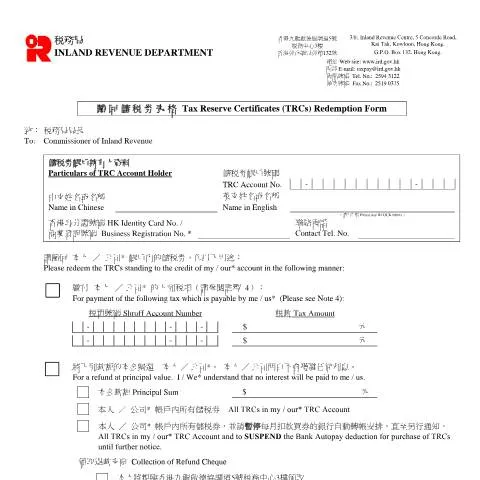
Understanding the Electronic TRCs Redemption Form: A Comprehensive Overview
In the bustling financial landscape of Hong Kong, navigating tax-related matters can often seem daunting, especially for individuals and businesses. One essential document in this realm is the Electronic Tax Reserve Certificates (TRCs) Redemption Form, known as IR 1333. This form plays a pivotal role for tax account holders seeking to redeem their Tax Reserve Certificates effectively. In this detailed discussion, we will unravel the intricacies surrounding this form, exploring its significance, utilization, and the procedural steps involved in its handling.
The Context of the IR 1333 Form in Hong Kong's Tax System
The Electronic TRCs Redemption Form (IR 1333) is a formal mechanism established under the jurisdiction of the Inland Revenue Department (IRD) of Hong Kong. It enables taxpayers to redeem their Tax Reserve Certificates, which are pre-paid tax credits linked to their tax accounts. The importance of this form cannot be understated, as it serves as a vital link in the tax payment process, allowing individuals and businesses to effectively manage their tax liabilities.
Historical Background and Legislative Framework
The introduction of Tax Reserve Certificates dates back several decades, steeped in the broader regulatory environment aimed at streamlining tax payments in Hong Kong. The legal basis for this system is anchored in the Basic Law of the Hong Kong Special Administrative Region, which governs tax regulations and ensures compliance among taxpayers. The TRCs serve as a mechanism to facilitate timely tax payments, thereby bolstering the overall efficiency of the tax collection system. Understanding this historical context aids in appreciating the role of the IR 1333 form within a larger framework of tax administration in Hong Kong.
Who Utilizes the Electronic TRCs Redemption Form?
The IR 1333 form is primarily designed for individuals or business entities that possess Tax Reserve Certificates. The following profiles illustrate who may be required to utilize this form:
- Individual Taxpayers: Individuals who have received Tax Reserve Certificates as part of their tax payments.
- Corporations: Businesses that have pre-paid taxes and hold TRCs in their accounts.
- Partnerships: Partnerships that may need to redeem TRCs in accordance with their tax liabilities.
Each of these profiles may be subject to different conditions and requirements, thereby necessitating a clear understanding of how to navigate the redemption process effectively.
Step-by-Step Process for Completing and Submitting the IR 1333 Form
Completing the Electronic TRCs Redemption Form involves several key steps, each critical to ensuring a smooth submission and processing experience. Below, you will find a chronological guide to efficiently manage this procedure:
1. Gathering Necessary Information
Before filling out the IR 1333 form, it’s important to gather all relevant information:
- Your TRC Account Number
- HKID Card Number or Business Registration Number
- Details of any applicable tax liabilities that the TRCs will be applied to.
2. Completing the Form
Once you have gathered the necessary information, proceed to fill out the form, ensuring to provide:
- Name and Contact Information: Enter your name in both English and Chinese, alongside your contact number.
- Tax Details: Indicate the tax type and amount that the TRCs will cover, ensuring accuracy to avoid delays.
- Signature: Ensure that the form is signed by an authorized individual, particularly for corporate entities.
3. Choosing the Method of Submission
The completed IR 1333 form can be submitted through various channels, each with different considerations:
| Method | Advantages | Disadvantages |
|---|---|---|
| In-Person Submission | Immediate confirmation and assistance available. | Time-consuming due to potential queues. |
| Postal Submission | Convenient; allows for submission from any location. | Risk of mail delays; no immediate confirmation. |
| Fax Submission | Quick way to submit without visiting in person. | Requires confirmation that the fax was received. |
4. Awaiting Processing
Upon submission, the IRD will process the form and handle the redemption. If the submission is complete and accurate, you can expect to receive a Redemption Statement detailing the outcome of your application. It is critical to keep track of your application, especially if you opted for postal submission.
5. Redeeming the TRCs
The redemption of TRCs will be executed based on the details provided in the form. If the TRCs are redeemed against tax liabilities, it's worth noting that no interest will be paid on the redeemed amount. Furthermore, for ongoing tax payments, it is advisable to monitor your TRC account to ensure that the Bank Autopay deductions are appropriately suspended if required.
Understanding the Broader Implications of IR 1333
The IR 1333 form is not an isolated document but a crucial component of a larger series of tax-related procedures. Understanding its implications can offer valuable insights into the operational landscape of tax management in Hong Kong.
The Role of TRCs in Tax Management
Tax Reserve Certificates serve multiple purposes beyond mere redemption:
- Facilitating Cash Flow: TRCs allow taxpayers to manage their cash flow by pre-paying tax liabilities.
- Streamlining Payments: They simplify tax payments by allowing taxpayers to hold credits against future liabilities.
- Encouraging Compliance: The system promotes timely tax compliance, bolstering the overall revenue collection framework.
Potential Challenges and Considerations
While the IR 1333 form simplifies the process of redeeming TRCs, certain challenges may arise:
- Documentation Errors: Incomplete or erroneous information can lead to delays in processing.
- Understanding Regulations: Taxpayers must stay informed about changes in tax regulations affecting TRCs.
- Pursuing Refunds: If TRCs are redeemed incorrectly, taxpayers may need to navigate additional processes to rectify issues.
Distinguishing the IR 1333 from Similar Forms
Within Hong Kong's regulatory framework, it is essential to differentiate the IR 1333 form from other forms that may appear similar, such as the Tax Return (Individuals) or the Property Tax Return. Each form serves distinct purposes and mandates:
| Form | Purpose | Associated Requirements |
|---|---|---|
| IR 1333 | Redemption of Tax Reserve Certificates | Must have TRCs in the account. |
| Tax Return (Individuals) | Reporting annual income for tax assessment | Must report all income and deductions. |
| Property Tax Return | Report property income for assessment | Must detail all relevant property earnings. |
Final Thoughts on Efficiently Managing the TRC Redemption Process
Effectively navigating the Electronic TRCs Redemption Form (IR 1333) is crucial for individuals and businesses managing their tax obligations in Hong Kong. By understanding its significance, the procedural steps for completion, and the broader tax landscape, taxpayers can ensure a more streamlined tax experience. Remember that despite the efficiencies provided by the IR 1333 form, diligence in completing and submitting the form is paramount, as any oversight could lead to unnecessary complications.
For those facing challenges or uncertainties regarding the TRC redemption process, consulting resources or experts in Hong Kong’s tax framework is advisable. With thorough preparation and awareness, taxpayers can leverage the benefits offered by the TRCs effectively while ensuring compliance with local regulations.
Understanding the Electronic TRCs Redemption Process
The Electronic Tax Refund Certificate (TRC) Redemption Process in Hong Kong is designed to streamline the claims for tax refunds, making it more efficient for individuals and businesses alike. This process is primarily facilitated through the Inland Revenue Department (IRD) and allows taxpayers to redeem their tax liabilities electronically as set forth in the Basic Law of the Hong Kong Special Administrative Region.
To initiate the redemption process, eligible taxpayers must first ensure that their applications for tax refunds are accompanied by the correct documentation. This includes, but is not limited to, the Tax Return (BIR60), a valid Hong Kong Identity Card (HKID), and any supporting documents that substantiate the claim. Utilization of the e-services platform is highly recommended, as it not only expedites the processing time but also reduces the risk of errors that can occur with paper submissions.
Eligibility Criteria for TRC Redemption
Eligibility for redeeming TRCs electronically is primarily determined by the taxpayer's compliance with tax regulations set forth by the IRD. Generally, taxpayers who have overpaid their taxes, or those eligible for various tax deductions, may apply for a TRC. Understanding the nuances of tax eligibility is crucial, as one must be aware of specific conditions that may apply.
For instance, individuals who have received tax exemptions under specific circumstances, such as charitable donations or dependent relief, must ensure that their claims meet the requirements outlined in the IRD's guidelines. Furthermore, businesses must maintain accurate financial records and tax returns to qualify for any potential refunds. It is advisable to consult the relevant sections of the IRD's website or the Government of Hong Kong for comprehensive eligibility guidelines.
Common Challenges and Solutions in TRC Redemption
While the electronic TRC redemption process is designed to be straightforward, taxpayers may encounter several challenges. One of the most common issues faced is the inaccurate submission of required documentation, which can lead to delays or rejection of the application. To mitigate this risk, taxpayers should double-check their submissions and ensure all required forms are filled out accurately before submission.
Another challenge is navigating the e-services platform, which can be overwhelming for some users, especially those who may not be tech-savvy. To address this, the IRD provides user guides and tutorials on its website, designed to assist taxpayers in understanding the process more thoroughly. Additionally, the option for personal assistance through IRD's helpline can be valuable for those needing extra support in navigating their TRC claims.
Lastly, strict adherence to submission deadlines is paramount. The tax year in Hong Kong runs from April 1 to March 31, and all TRC applications must be submitted within the stipulated time frame. Taxpayers should keep a close eye on their calendars and set reminders for key dates to ensure they do not miss their opportunity for refunds.