Navigating the Process: Stamp Duty Application for Incoming Talent
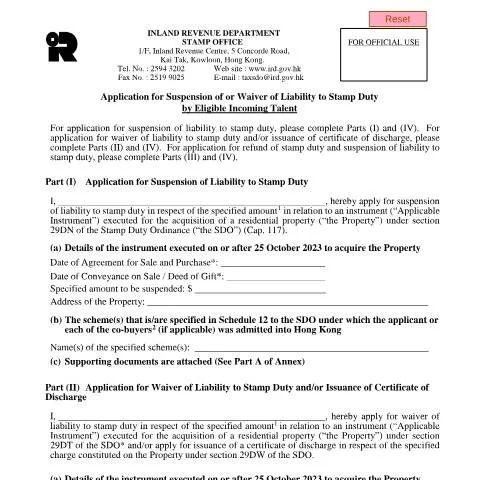
For eligible incoming talent settling in Hong Kong, understanding the Application for Suspension of or Waiver of Liability to Stamp Duty (IRSD 125E(E)) is crucial. This document paves the way for potential financial relief concerning stamp duty obligations related to property acquisitions. The process can be intricate, so let's delve into its nuances, requirements, and implications.
Understanding Your Eligibility and Application Scope
This application is specifically tailored for incoming talent who qualify under the relevant schemes outlined in Schedule 12 of the Stamp Duty Ordinance (SDO). Ensuring you meet the criteria is the first step. The application encompasses various scenarios:
- Suspension of Liability: Seeking a halt on stamp duty payments for a specified duration.
- Waiver of Liability: Requesting exemption from stamp duty altogether.
- Refund Applications: For individuals who may have overpaid stamp duty due to unique circumstances.
Who Should File This Application?
Primarily aimed at foreign nationals relocating to Hong Kong for work, the application is not merely a formality. It reflects a significant financial consideration that can influence one’s decision to invest in property. Additionally, individual co-buyers, who may not directly qualify but are close relatives of the primary applicant, can be included, provided they meet certain conditions.
Detailed Breakdown of the Application Sections
The IRSD 125E(E) form comprises four distinct parts, each serving a specific purpose. Understanding these parts is vital for a successful submission.
Part I: Application for Suspension of Liability
This section requires details about the instrument executed for property acquisition along with the relevant dates and amounts. This is the heart of your application, where you articulate your claim for a suspension.
- Date of Agreement: Specify when your sale or gift agreement was made.
- Details of the Property: Clearly mention the address and other pertinent details.
Part II: Application for Waiver of Liability
Here, applicants indicate their intention to seek a waiver from stamp duty altogether. The form requests similar property details as Part I but additionally asks for supporting documentation that justifies the waiver, including any agreements that may have been annulled or rescinded.
Part III: Application for Refund
This is focused on applicants who seek refunds for previously paid stamp duty. It is imperative to provide details of both the new property acquisition and any original properties disposed of. This section can become complicated, particularly when detailing transactions and ensuring all required supporting documents are attached.
Part IV: Finalization and Submission
This part finalizes the application, requires your signature, and collects pertinent personal details. Paying particular attention to ensure that all provided information is accurate will help facilitate a smoother process.
Submission Channels: Navigating Your Options
Once the application form is completed, applicants have multiple options for submission:
- Online Submission: The Inland Revenue Department (IRD) promotes e-services, allowing applicants to submit their forms digitally. This method often expedites processing times.
- Postal Submission: For those preferring a traditional approach, mailing the completed form is an option, albeit with potentially longer processing times.
- In-Person Submission: Visiting an IRD office might be ideal for questions or concerns about the application. It also permits immediate inquiries regarding the submission status.
Essential Documentation: Preparing Your Supporting Files
Alongside the application form, a comprehensive list of supporting documents is required to substantiate your claims and eligibility.
| Application Type | Required Documents |
|---|---|
| Suspension of Liability |
|
| Waiver of Liability |
|
| Refund Application |
|
Potential Outcomes: What to Expect After Submission
Once your application is submitted, it undergoes a review process at the IRD, which can take several weeks. Here’s what you might encounter:
- Approval: If all criteria are met, you will receive written confirmation of your suspension or waiver.
- Request for Clarification: Should your application lack clarity or supporting information, expect a request for additional documentation.
- Rejection: In some cases, applications may be denied. Understanding the rationale behind a rejection is crucial for a subsequent appeal or reapplication.
Handling Denials: Your Next Steps
Receiving a denial can be daunting. However, it’s essential to review the reasons provided by the IRD and consider:
- Clarifying Documents: Gathering additional documentation to fulfill any gaps noted in the response.
- Filing an Appeal: If you believe the rejection was unfounded, the IRD allows for an appeal process to contest their decision.
Consequences of Non-compliance: The Importance of Timeliness
Failing to submit the application within the specified timeframe can lead to significant financial liabilities. It is crucial to be aware of the deadlines associated with each type of application:
- Suspension requests must be filed within 2 months from the property acquisition date.
- Waivers and refunds typically have a 2-year window post-transaction.
Missing these deadlines can lead to automatic liabilities under the SDO, which can be avoided by diligent tracking of submission dates and ensuring that all documents are in order.
Final Insights: Empowering Your Application Experience
As you embark on the application process for the IRSD 125E(E), remember that meticulous attention to detail and thorough preparation are your best allies. The road to obtaining a suspension or waiver from stamp duty obligations may seem intricate, but with the correct guidance and proactive management of your documentation, you can navigate this administrative landscape with confidence.
Whether you are a newcomer to Hong Kong or a seasoned resident, understanding the nuances of the stamp duty application process can open the door to significant financial benefits. Stay informed, be organized, and engage with the relevant authorities as needed to enhance your chances of a successful application.
Understanding the Eligibility Criteria for Incoming Talent
To successfully apply for the Suspension of or Waiver of Liability to Stamp Duty in Hong Kong, it is essential to thoroughly understand the eligibility criteria set forth by the Hong Kong Special Administrative Region (HKSAR). This section delves deeper into specific conditions under which an applicant may qualify for this benefit, particularly focusing on the classification of "eligible incoming talent."
The primary aim of the waiver is to attract high-caliber professionals who can contribute significantly to Hong Kong’s economic growth and innovation landscape. Therefore, applicants must possess qualifications and skills that align with the HKSAR’s development goals. Generally, eligible incoming talent includes individuals with advanced degrees or specialized skills in areas such as finance, technology, and healthcare.
Furthermore, it is crucial to verify the employer’s status as a recognized entity in Hong Kong, as this can significantly impact the application. Employers must be able to demonstrate their commitment to promoting local employment and talent development. The Hong Kong Immigration Department often collaborates with the Commerce and Economic Development Bureau to assess the potential contributions of incoming talent, thereby ensuring that the policy aligns with the overall economic strategy.
Also, make sure to maintain clear documentation supporting your qualifications and employment position. This can include copies of your degree certificates, professional licenses, and any awards or recognitions that substantiate your expertise. Being organized and providing comprehensive evidence of your eligibility can facilitate a smoother application process.
Step-by-Step Guide to the Application Process
Navigating the application process for the Suspension of or Waiver of Liability to Stamp Duty can seem daunting. However, by following a structured step-by-step approach, applicants can enhance their chances of a successful submission. This guide outlines the necessary steps involved in the application process.
Gather Required Documentation: Before initiating the application, it is vital to assemble all necessary documentation. This includes the completed application form (refer to form number NNC2), proof of employment from a qualifying employer, and supporting documents showcasing your qualifications and professional background.
Complete the Application Form: Fill out the NNC2 form meticulously. Make sure to cross-check all entries, particularly concerning personal details and employment information. Incomplete or incorrect submissions can lead to delays or even rejection.
Submit the Application: Applications can be submitted online through the e-services portal provided by the Companies Registry, or in person at the designated offices. Ensure that you adhere to the stipulated submission deadlines to avoid any penalties.
Await Confirmation: After submission, monitor your application status. The Companies Registry typically reviews applications within a specified timeframe, but applicants are encouraged to follow up if they do not receive confirmation within the expected period.
Receive Decision: Upon approval of the application, you will receive a confirmation letter indicating the waiver of liability to stamp duty. Keep this document safe, as it is essential for your records and may be required for future reference.
Post-Approval Compliance: After receiving the approval, ensure that all related obligations are upheld, including any requirements laid out by your employer or the government authorities. Regularly check for any updates or additional requirements that may arise post-approval.
This structured approach not only streamlines the application process but also minimizes the risk of errors, thereby enhancing the likelihood of a favorable outcome.
Potential Challenges and Solutions in the Application Process
While the application for the Suspension of or Waiver of Liability to Stamp Duty may seem straightforward, applicants may encounter various challenges along the way. Understanding these potential obstacles and preparing solutions in advance can significantly ease the process.
1. Documentation Issues: One of the most common challenges is the gathering of appropriate documentation. Applicants may find it difficult to obtain necessary proof of qualifications or employment status, especially if they are transitioning from overseas.
Solution: Start the documentation process early; reach out to previous employers or educational institutions for transcripts or letters of verification well in advance. Utilize digital records whenever possible, as these can often be retrieved more quickly than physical documents.
2. Misunderstanding Eligibility Requirements: Many applicants misinterpret the eligibility criteria, leading to unnecessary rejections. Often, individuals may believe they qualify when their qualifications do not meet the specific standards set by the government.
Solution: Before commencing your application, consult with a professional advisor or the relevant authorities to clarify any eligibility concerns. This pre-emptive measure can save time and resources.
3. Delays in Processing: In some cases, applicants may experience delays in application processing, which can be frustrating.
Solution: Maintain a proactive approach by following up with the Companies Registry periodically. Be polite but assertive when inquiring about your application status, which can sometimes expedite the review process.
4. Language Barriers: For non-native English speakers, the language of the application forms and accompanying documentation can present a challenge.
Solution: Make use of translation services if needed, and ensure that all submitted documents are accurately translated into English and Traditional Chinese as required. Familiarizing yourself with the terminology used in the forms can also aid comprehension.
By anticipating these challenges and implementing effective solutions, applicants can navigate the application process more successfully, ensuring they meet the requirements for the Suspension of or Waiver of Liability to Stamp Duty.