Understanding the Employer's Return of Persons Employed in Guyana
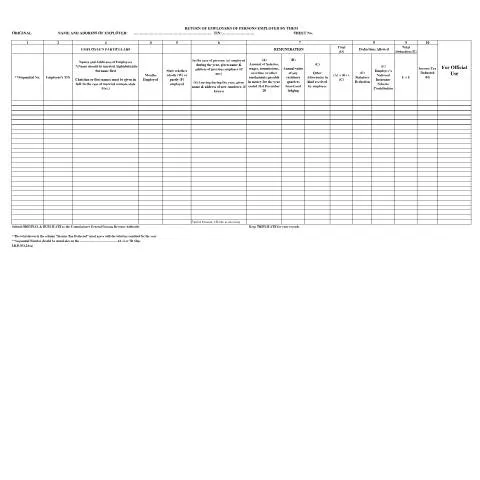
The "Return of Employers of Persons Employed" is an official form issued by the Guyana Revenue Authority (GRA), designed to facilitate the reporting of employee remuneration and related deductions for income tax purposes. This document serves as a comprehensive record that employers in Guyana must submit annually to ensure compliance with the country's income tax regulations.
Purpose and Importance of the Form
This form is essential for the accurate calculation and remittance of income tax deducted at source from employees' salaries and wages. It provides the GRA with detailed information about each employee's earnings, allowances, and statutory deductions, including contributions to the National Insurance Scheme. Proper completion of this return ensures that both the employer and employee meet their legal tax obligations and helps prevent penalties associated with non-compliance.
Who Must Complete the Return?
Employers registered with the Guyana Revenue Authority who employ persons during the tax year are mandated to complete and submit this return. This includes companies, partnerships, sole proprietors, and any other entities that pay salaries or wages to employees. Employers are required to report all employees, whether employed full-time or part-time, and regardless of the duration of employment within the year.
Key Sections and How to Fill Out the Form
1. Original Employer Details
Begin by providing the official name and address of the employer, along with the Tax Identification Number (TIN) and Social Security Scheme (SS) number. Accurate entry of these details is crucial for proper identification and processing of the return.
2. Employee Particulars
This section requires the listing of each employee's full name, address, TIN, and employment details. Names should be entered alphabetically, with the surname first, followed by the given names. For married women, it is customary to prefix "Mrs." before the name. The form also asks for employment start and end dates, and whether the employee was wholly (W) or partly (P) employed during the year.
3. Earnings and Allowances
- Column A: Enter the total amount payable in salaries, wages, commissions, overtime, or other monetary emoluments for the year ending December 31st.
- Column B: Record the annual value of any residence quarters, board, or lodging provided to the employee.
- Column C: Include other allowances received in kind, such as transport or meal allowances.
4. Deductions and Contributions
In this section, employers must specify the statutory deductions, including the employee's contribution to the National Insurance Scheme (NIS). The total deductions are then calculated and recorded.
5. Total and Final Calculations
The form requires the total of all employee earnings and deductions to be summarized. The total income tax deducted (shown in the relevant column) must match the amount remitted to the GRA for the year.
Fill in your form directly online
No printing: type your details into the boxes of the official form, tick, then download the PDF ready to send.
- 1Type into the form boxes
- 2Tick in one click
- 3Save and download the PDF
Supporting Documents and Submission Guidelines
Employers must submit the original and duplicate copies of the completed return to the Commissioner General of the Guyana Revenue Authority. The triplicate copy should be retained for the employer's records. It is important to attach any relevant supporting documents, such as TIN certificates or previous employer details, especially when reporting new or departing employees.
Common Errors to Avoid
- Incorrect or missing TINs and personal details of employees.
- Failure to list all employees employed during the year.
- Mismatched totals between the income tax deducted and remitted amounts.
- Omitting allowances or benefits in kind that should be reported.
Conclusion
Completing the "Return of Employers of Persons Employed" accurately and timely is a legal obligation for employers in Guyana. It ensures transparency, compliance with tax laws, and proper record-keeping for both the employer and employees. Employers are encouraged to consult the official GRA guidelines and use the designated forms available through the GRA's resources to facilitate correct submission.