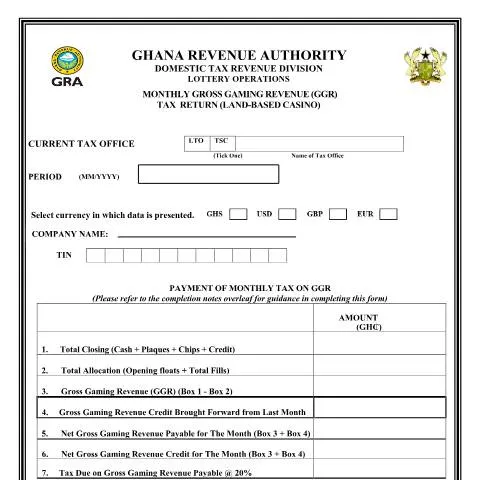
Understanding the Monthly GGR Tax Payment Return for Casinos
Operating a casino in Ghana entails various obligations, with taxation being one of the most significant. The Monthly Gross Gaming Revenue (GGR) Tax Payment Return is a critical document that casinos must complete to comply with the Ghana Revenue Authority (GRA) regulations. This return provides a structured way for casinos to report their gross gaming revenue and ensure they pay the correct amount of tax — currently set at 20%. This article explores the nuances of this form, its implications for casino operators, and how to navigate the process effectively.
The Importance of Timely Compliance
For casino operators, submitting the Monthly GGR Tax Payment Return is not just about fulfilling a legal requirement; it is a matter of financial prudence and operational integrity. A failure to submit this return on time can lead to several consequences:
- Penalties and Interest: The GRA imposes penalties for late submissions, which can increase the total tax obligation considerably.
- Operational Licenses: Continued non-compliance can jeopardize a casino's operating license, leading to severe business interruptions.
- Reputation Risks: Regular compliance reflects good corporate governance, which is crucial for maintaining public trust and attracting patrons.
A Step-by-Step Guide to Completing the Form
Completing the Monthly GGR Tax Payment Return accurately is essential for ensuring compliance and avoiding penalties. Below is a detailed breakdown of the steps involved in filling out this form:
1. Identify the Relevant Tax Office
The first step is to identify the current tax office assigned to your casino. This information must be correctly filled in the form to ensure that your submission reaches the appropriate authorities.
2. Specify the Reporting Period
Next, indicate the month and year for which the return is being submitted. This is crucial for aligning your financial records with the GRA's timelines.
3. Input Your Taxpayer Identification Number (TIN)
Enter your eleven-character Taxpayer Identification Number, which is essential for tracking your tax obligations correctly.
4. Calculate Total Closing Amount
In the section designated for total closing (cash + plaques + chips + credit), collate all relevant financial data. This should include:
- Total cash on hand at the end of the reporting month.
- Value of plaques and chips still in circulation.
- Any outstanding credits.
5. Determine Total Allocation
This section requires you to tally up the opening floats plus total fills for the month. Be meticulous in this computation, as it provides the basis for further calculations.
6. Calculate Gross Gaming Revenue (GGR)
Compute the Gross Gaming Revenue by subtracting the total allocation from the total closing. This figure is critical, as it forms the foundation for the tax calculation.
7. Account for Prior Month’s GGR Credit
If there was any unrelieved negative GGR from the last month, this needs to be added in the designated section.
8. Finalize Net GGR and Tax Due
Summarize your figures to arrive at the net gross gaming revenue payable for the current month. If the sum is positive, this will be the taxable GGR. Multiply this figure by the tax rate of 20% to determine the tax due.
Submitting the Monthly GGR Tax Payment Return
Once the Monthly GGR Tax Payment Return form is filled out, it must be submitted according to GRA's guidelines. Here’s how you can do it:
Online Submission
In an effort to streamline processes, the GRA offers digital submission options. This method is often the quickest and allows for immediate confirmation of receipt.
Paper Filing
If you prefer traditional methods, you can print the completed form and submit it physically at your assigned tax office. Ensure to keep a copy of the submission for your records.
Submission via Guichet
Another option is to deliver the form directly to a GRA office through a designated representative. This can be beneficial if you have questions or need clarification during the submission process.
Understanding the Impact of Non-compliance
Being aware of the risks associated with non-compliance can motivate accurate and timely submissions. Failure to comply with the regulations can lead to:
- Increased Tax Obligations: Back taxes, penalties, and interest can accumulate, creating a considerable financial burden.
- Legal Consequences: Persistent non-compliance can lead to legal repercussions, including fines or restrictions on operational licenses.
- Damaged Reputation: A casino's reputation can suffer significantly from non-compliance, affecting customer trust and loyalty.
The Regulatory Framework Surrounding the GGR Tax Return
The Monthly GGR Tax Payment Return is grounded in Ghana's legislative framework, particularly the 1992 Constitution and subsequent parliamentary enactments. Understanding this context is crucial for casino operators:
- Legal Basis: The requirement for this form comes from domestic tax laws that mandate the reporting of gaming revenue and payment of applicable taxes.
- Compliance Standards: The GRA has established guidelines that casinos must comply with, ensuring national revenue generation is maximized while maintaining fairness in taxation.
- Guidance Documents: Accompanying documents, such as the completion notes provided with the form, offer additional context and instructions for filling out the return properly.
Seasonal Considerations and Key Deadlines
Awareness of the tax calendar is vital for casino operators. The GRA sets specific deadlines for the submission of the Monthly GGR Tax Payment Return:
- Submission Deadline: Typically, the return must be submitted by the 15th of the month following the reporting period.
- Tax Payment Deadline: The tax payment is often due simultaneously with the submission, requiring careful financial planning to ensure funds are available.
- Year-End Considerations: At the end of each fiscal year, operators should prepare for potential audits and ensure that all returns are complete and accurate.
Conclusion: Best Practices for Casino Operators
Having an efficient process for completing and submitting the Monthly GGR Tax Payment Return can significantly enhance operational efficiency for casino operators. Here are some best practices:
- Maintain Accurate Records: Keeping detailed and organized financial records will simplify the process of filling out the return.
- Engage Tax Professionals: Consulting with tax advisors or accountants familiar with local legislation can provide insights and ensure compliance.
- Use Digital Tools: Consider leveraging accounting software that integrates with tax filing systems to streamline the process and reduce errors.
Ultimately, understanding the Multi GGR Tax Payment Return, its implications, and ensuring timely compliance will help casino operators in Ghana navigate the complex landscape of taxation effectively.
Understanding the Monthly GGR Tax Payment for Casinos in Ghana
The gaming industry in Ghana, particularly casinos, is subject to the Gaming Act, 2006 (Act 721) and the subsequent regulations established by the Ghana Revenue Authority (GRA). One of the critical compliance requirements for casino operators is the Monthly Gross Gaming Revenue (GGR) Tax Payment Return. Understanding how this process operates is essential for casino owners and operators to ensure compliance with local laws and avoid penalties.
The GGR tax is calculated based on the total revenue generated from gaming activities, less any winnings that are paid out to players. This net figure is what casino operators must report monthly. To facilitate accurate reporting, casinos must maintain comprehensive records of all transactions, ensuring that all revenues and payouts are meticulously logged.
It is crucial for casinos to submit their GGR Tax Payment Return by the prescribed deadline, which is typically the 15th of each month following the reporting period. Failure to comply with this deadline can lead to fines and interest on unpaid taxes, as stipulated by the GRA. Additionally, casinos should prepare for audits by the GRA, which can occur without prior notice, to ensure that they are accurately reporting their revenue and paying the appropriate taxes.
Navigating Compliance: Best Practices for Casino Operators
Compliance with the GGR tax regulations involves more than just timely submission of the Monthly GGR Tax Payment Return. Casino operators should implement best practices to streamline their tax processes and ensure they remain compliant with the GRA’s requirements. Here are several best practices to consider:
- Maintain Accurate Records: Casinos must utilize a robust accounting system to track all revenue and expenses accurately. This includes logging daily takings, processing transactions, and documenting payouts. Maintaining these records will simplify the reporting process and support the accuracy of the return.
- Training Staff: Ensure that all staff members involved in revenue processing and reporting are well-trained in the relevant tax laws and reporting requirements. Regular training sessions can help keep staff updated on any changes in legislation or GRA requirements.
- Engage Tax Professionals: Consulting with tax professionals who specialize in the gaming industry can prove invaluable. They can provide insights on tax optimization strategies, help with the preparation of tax returns, and represent the casino during audits.
- Implement Internal Controls: Establishing internal controls can help prevent errors and fraud. This includes regular reconciliation of accounts, segregation of duties, and periodic internal audits to ensure compliance and accuracy.
By adhering to these best practices, casino operators can significantly reduce the risk of non-compliance and ensure a smooth reporting process.
Implications of Non-Compliance: Penalties and Legal Repercussions
Non-compliance with the Monthly GGR Tax Payment Return requirements can have serious implications for casino operators in Ghana. The GRA imposes penalties for various infractions, which can range from financial penalties to legal actions. Understanding the potential repercussions of non-compliance is crucial for casino owners.
Firstly, late submissions of the GGR tax return can incur penalty fees. The GRA typically imposes a fixed percentage of the unpaid tax amount as a penalty. Additionally, if a casino fails to submit its return after repeated notices, the GRA has the authority to suspend the casino’s license, effectively halting operations until compliance is achieved.
Moreover, tax evasion or fraudulent reporting can lead to criminal charges against the casino operators. This not only results in severe financial penalties but can also tarnish the reputation of the business within the community and the industry at large.
To mitigate these risks, casino operators should establish a proactive compliance strategy, regularly review their tax obligations, and promptly address any discrepancies or concerns that arise during the reporting process. This approach not only protects the business but also fosters transparency and trust with regulatory authorities.