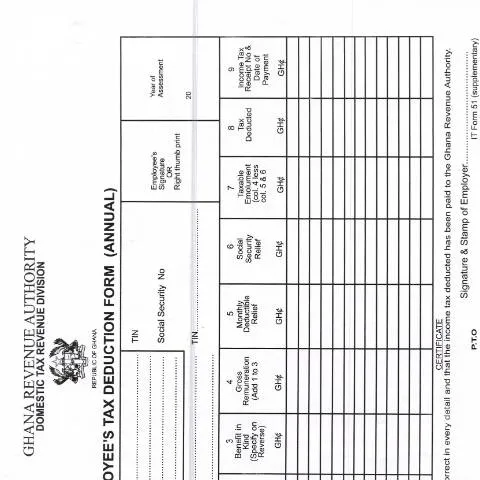
Navigating the Employees Tax Deduction Form: An Essential Guide for Ghanaian Workers
The Employees Tax Deduction Form, officially designated as Form 51, serves a critical role in the tax compliance landscape for workers in Ghana. This document acts as a means to report and validate the income tax deductions made from an employee’s salary throughout the fiscal year. Understanding this form is essential for both employees and employers to ensure accurate tax reporting and compliance with the Ghana Revenue Authority (GRA) regulations.
Understanding the Framework: The Legal Basis of Form 51
The foundation of the Employees Tax Deduction Form is rooted in Ghana's tax system, which is governed by the Income Tax Act, 2015 (Act 896). This law emphasizes the need for transparent and systematic tax reporting and underscores the responsibilities of employers in withholding and remitting taxes on behalf of their employees. The Act mandates that all forms of income, including salaries, are subject to taxation, and the Form 51 is a vital instrument in ensuring that both employees and employers adhere to these regulations.
Regulatory Context and Compliance
- Income Tax Act, 2015 (Act 896): Establishes the legal framework for income taxation in Ghana.
- Ghana Revenue Authority (GRA): The agency responsible for overseeing tax collection and compliance.
- Annual Assessment: The form is submitted annually to report the total tax liabilities for a given year.
By requiring this form, the GRA ensures that tax obligations are systematically tracked and that any discrepancies can be addressed promptly, fostering a culture of accountability and responsibility.
Who is Required to Submit Form 51?
Form 51 is not merely a bureaucratic formality; it is essential for various stakeholders within the employment ecosystem in Ghana. Here’s a breakdown of who needs to complete and submit this form.
Employers' Obligations
Every employer registered with the GRA is mandated to file Form 51 for their employees. This encompasses both public and private sector organizations, ensuring that all workers, regardless of their industry, contribute their fair share to the national tax pool.
Employee Responsibilities
Employees should be aware of their tax obligations and must collaborate with their employers to ensure that the information provided in Form 51 accurately reflects their earnings and deductions. Mistakes on this form can lead to tax discrepancies, so diligence is key.
A Step-by-Step Guide to Completing Form 51
Filling out Form 51 may appear daunting at first glance, but a systematic approach can simplify the process considerably. The form comprises several sections tailored to capture specific information about the employee's earnings and tax deductions.
Section Breakdown
| Section Number | Description | Required Information |
|---|---|---|
| 1 | Employee Identification | Name, Social Security Number, TIN |
| 2 | Consolidated Basic Salary | Monthly earnings for the year |
| 3 | Benefits in Kind | Value of non-monetary compensation |
| 4 | Gross Remuneration | Total income before tax |
| 5 | Taxable Amount | Income subject to tax deductions |
| 6 | Social Security Relief | Any applicable deductions |
| 7 | Tax Deducted | Total tax withheld throughout the year |
Each section of the form has specific fields requiring detailed input, such as months of earnings, any allowances, and total deductions. Accuracy in these entries is paramount, as they directly influence the tax calculation and potential refunds.
Submission Guidelines for Form 51
Once completed, submitting Form 51 involves a specific process designed to ensure that all tax declarations are properly recorded. The timely submission of this form is critical to avoid penalties or complications with the GRA.
Where and How to Submit
- Submission Point: Form 51 should be submitted to the local GRA office or through the GRA’s online portal if applicable.
- Deadline: The submission of Form 51 typically coincides with the annual tax return period, which is usually set by the GRA.
Employers must ensure that they submit this form by the specified deadline to avoid penalties and maintain compliance with tax regulations. It is also advisable for employees to keep a copy of the submitted form for personal records.
What Happens After Submission?
Upon submission, the GRA will process the information provided in Form 51. Depending on the details furnished, several outcomes may arise.
Assessment and Reconciliation
The GRA will assess the submitted information, reconciling the reported tax deductions with its records. This evaluation helps ensure that the taxes collected align with national revenue expectations. If discrepancies are noted, the GRA may follow up with both the employer and employee for clarification.
Possible Outcomes
- No Issues: If everything is in order, the employee's tax records will be updated, and the GRA will confirm the deductions.
- Refunds: If too much tax was deducted, the employee may be eligible for a tax refund.
- Penalties: Incomplete or incorrect submissions may incur penalties or further inquiries from the GRA.
Handling Issues: What to Do in Case of Errors or Complaints
Tax-related matters can be sensitive, and errors on Form 51 can lead to significant complications for both the employer and employee. Therefore, understanding the process for rectifying errors is essential.
Error Rectification Process
If an error is detected in the submitted Form 51, immediate action is recommended. The following steps should be taken:
- Notify the GRA: Contact the local GRA office as soon as possible to report the discrepancy.
- Provide Corrections: Submit a corrected Form 51 along with an explanation for the changes.
- Follow Up: Keep communication open with the GRA to monitor the status of the rectification process.
Employers should maintain thorough records of all submissions and communications with the GRA. This diligence can safeguard against potential disputes regarding tax liabilities.
Understanding Special Cases: Unique Situations Affecting Form 51
There are instances where the completion and submission of Form 51 may involve additional considerations based on specific circumstances affecting the employee.
Foreign Employees
For expatriates working in Ghana, tax obligations can differ from those of local employees. Foreign workers must ensure they submit Form 51 while also providing documentation related to their residency status and tax treaties that may apply.
Temporary Workers and Interns
Temporary employees and interns should also complete Form 51 if their earnings exceed the tax threshold. It is crucial for these workers to confirm their eligibility for any tax exemptions or deductions that may apply to their situation.
The Importance of Timeliness: Deadlines and Planning
Adhering to deadlines is a critical aspect of the tax process in Ghana. Understanding the timeline for completing and submitting Form 51 is essential for compliance.
Annual Tax Timeline
- Fiscal Year: The fiscal year in Ghana typically runs from January 1 to December 31.
- Submission Deadline: Form 51 must be submitted by the deadline indicated by the GRA, which usually falls early in the following year.
Planning ahead and maintaining accurate records throughout the year can help streamline the process of completing Form 51 and reduce stress around tax season.
Conclusion: Empowering Employees Through Knowledge
Understanding the Employees Tax Deduction Form (Form 51) is essential for both employees and employers in Ghana. By familiarizing themselves with the form's requirements, deadlines, and potential complications, all parties can play a proactive role in ensuring tax compliance. As the tax landscape continues to evolve, staying informed and prepared will empower individuals to navigate their tax obligations effectively.
Understanding the Tax Deduction Framework in Ghana
The Employees Tax Deduction Form Annual Form 51 Supplementary is part of a broader tax system in Ghana, designed to ensure compliance and transparency in income tax deductions for employees. The Ghana Revenue Authority (GRA) operates under the authority of the 1992 Constitution of Ghana, which mandates effective tax collection and administration. The tax deduction framework is primarily governed by the Income Tax Act, 2015 (Act 896), which sets the standards for the calculation, reporting, and submission of tax-related documents.
Employers are required to withhold a portion of their employees’ earnings as income tax, ensuring that these deductions are reported accurately to the GRA. This system not only facilitates tax revenue collection but also helps employees track their tax contributions over the fiscal year. Accurate submission of the Form 51 is critical, as any discrepancies can lead to penalties for employers, including fines and additional tax liabilities.
It is crucial for both employers and employees to understand the significance of maintaining accurate records, as the GRA conducts periodic audits to verify compliance. Employers should ensure that the details captured in Form 51 align with the data submitted in the monthly tax deductions (Form 1) to avoid inconsistencies that could trigger scrutiny from tax officials.
Step-by-Step Guide to Completing Form 51 Supplementary
Completing the Employees Tax Deduction Form Annual Form 51 Supplementary can be a straightforward process when approached methodically. Here’s a step-by-step guide tailored for employers to facilitate accurate and timely submissions.
- Gather Relevant Employee Data: Before filling out the form, compile all necessary information, including employees' Ghana Card details, Tax Identification Numbers (TIN), monthly gross salaries, and any tax exemptions or deductions applicable.
- Calculate Total Income for the Year: For each employee, calculate the total income they earned over the fiscal year. This should include bonuses, allowances, and any other forms of remuneration.
- Determine Tax Deductions: Based on the total annual income, determine the applicable tax rate using the progressive tax bands established by the GRA. Remember to factor in any available deductions or allowances that the employee is eligible for.
- Fill Out the Form: Using the gathered data, complete Form 51 Supplementary, ensuring that all sections are filled accurately. Pay special attention to the employee’s details and tax computations to avoid errors.
- Review for Accuracy: Once the form is filled, conduct a thorough review. This is a critical step to ensure that all information is correct, as errors can lead to penalties. Consider having a second person review the form for additional accuracy.
- Submit the Form: Submit the completed Form 51 to the GRA through the designated channels before the deadline. Ensure that you keep a copy of the submitted form for your records.
It is also worthwhile to stay updated on any changes in tax legislation that may affect the completion of Form 51. Regular training or workshops on tax compliance for human resource departments can enhance understanding and procedural accuracy.
Common Mistakes to Avoid When Submitting Form 51
While completing the Employees Tax Deduction Form Annual Form 51 Supplementary may seem straightforward, there are several common pitfalls that employers might encounter. Awareness of these issues can significantly enhance compliance efforts and reduce the risk of penalties.
- Incorrect Employee Information: A frequent issue arises from incorrect or mismatched employee information, including names, TINs, and Ghana Card numbers. Such discrepancies can lead to delayed processing or rejections by the GRA.
- Miscalculation of Tax Deductions: Employers sometimes miscalculate the tax deductions due to a misunderstanding of the progressive tax rates or ignoring applicable exemptions. It is essential to reference the latest tax bands provided by the GRA.
- Failure to Include All Income Sources: Employees often have various income sources, including overtime pay and bonuses. Failing to report these can lead to underreporting, which may trigger audits and penalties.
- Late Submission: Timeliness is critical in tax matters. Employers must ensure that Form 51 is submitted by the deadline, typically within the first quarter of the following year. Late submissions can incur fines and complicate compliance.
- Lack of Documentation: Employers should maintain accurate records to support the figures reported in Form 51. In the event of an audit, having detailed documentation can substantiate the reported data, protecting the employer from potential liabilities.
By being aware of these common mistakes and taking proactive measures to avoid them, employers can streamline their tax reporting process and maintain good standing with the GRA.