The Vital Role of the Supplemental Unemployment Benefit (SUB) Plan Registration
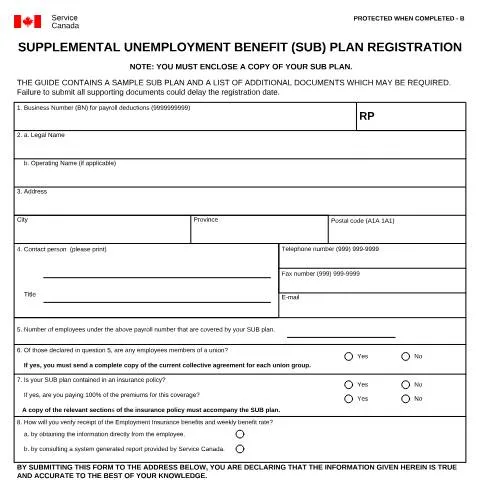
When navigating the complexities of employment benefits in Canada, the Supplemental Unemployment Benefit (SUB) Plan Registration (reference code NAS5036) plays a pivotal role. This document serves as a formal request for employers to register a SUB plan, enabling them to offer additional financial support to employees who are temporarily laid off. Understanding the importance of this registration is crucial for both employers and employees.
Who Needs to File the SUB Plan?
This form is specifically intended for employers who wish to supplement Employment Insurance (EI) benefits for employees during periods of unemployment. By submitting this registration, employers can ensure that their employees have access to additional financial support, which can be essential during periods of economic uncertainty.
The Impact on Employees
For employees, having a registered SUB plan means greater financial stability. When employers provide supplementary benefits, employees can receive a higher income during layoffs. This not only eases the stress of unemployment but also fosters a positive relationship between the employer and employees, demonstrating a commitment to their workforce.
Understanding the Registration Process: Steps to Follow
Completing and submitting the SUB Plan Registration involves several key steps. Each step is designed to ensure that the application is thorough and compliant with Canadian employment regulations.
Gathering Required Information
Before filling out the form, it’s essential to gather all necessary information. This includes:
- Business Number (BN): Required for payroll deductions.
- Legal and Operating Name: The name under which the business operates.
- Address: Complete postal address of the business.
- Contact Person: Designate someone who can answer queries regarding the SUB plan.
- Employee Count: Total number of employees covered by the SUB plan.
Filling Out the Form: Key Sections
The form is divided into several sections, each requiring specific information. Attention to detail is paramount to avoid delays in processing.
1. Business Identification
The first part of the form asks for your Business Number and the legal and operating names. Ensure that the information matches exactly with what is on file with the Canada Revenue Agency (CRA).
2. Address and Contact Information
Accurate contact information is crucial. This is where Service Canada will reach out if there are any questions regarding your application. Ensure the phone number and email address are current.
3. Employee Coverage
Clearly indicate the number of employees covered by the SUB plan. If any employees are union members, a copy of the collective agreement must be provided along with the registration.
4. Insurance Policy Verification
Indicating whether the SUB plan is included in an insurance policy is vital. If so, attaching sections of the relevant insurance policy is required. Failure to include this information may cause processing delays.
Documentation: What to Include
In addition to the completed form, several documents need to accompany the submission:
- A copy of the SUB plan you intend to implement.
- Collective agreements, if applicable.
- Relevant sections of insurance policies.
Submission Process: Where and How to Send Your Registration
Once the form is completed and all necessary documents are attached, the next step is submission. This can be done via mail or courier, depending on your preference.
Mailing Instructions
For standard mail, the form should be sent to:
Service Canada SUB Program PO Box 11000 Bathurst NB E2A 4T5
If you opt for a courier service, use the following address:
Service Canada SUB Program 120 Harbourview Blvd. Bathurst NB E2A 7R2
Following Up on Your Application
After submitting the registration, it's important to monitor the status of your application. You can contact Service Canada at 1-800-367-5693 for inquiries. Keeping records of your submission and any correspondence will aid in tracking the process.
The Timeline: Key Dates and What to Expect
The registration timeline can vary based on the completeness of your application and the current workload of Service Canada. Here's what you can generally expect:
Initial Processing
Once your application is received, it will undergo an initial review. If additional information or corrections are needed, you will be contacted. This is why ensuring completeness at the outset is crucial.
Final Approval
The final decision on your SUB plan registration is generally communicated within a few weeks of submission. If approved, you will receive confirmation, allowing you to implement your SUB plan.
What Happens if Your Application is Delayed?
If your application faces delays, reach out proactively to Service Canada. Ensure all documents are in order and check if any additional information is required.
Potential Pitfalls: What to Avoid During Registration
Though the registration process may seem straightforward, there are common pitfalls that can lead to application delays or denials.
Missing Information
Each section of the form must be completed thoroughly. Missing information or incorrect details can lead to significant delays. Double-check your entries against supporting documents.
Insufficient Documentation
Always attach all necessary documentation, especially when it comes to insurance policies and collective agreements. Missing documents can halt the registration process.
Failure to Notify Changes
If changes occur after registration (e.g., adjustments to the SUB plan or employee count), notify Service Canada immediately to avoid complications with your benefits.
Understanding Your Rights and Responsibilities
Once your SUB plan is registered, it's vital to be aware of both your rights and responsibilities.
Rights of Employers
As an employer, you have the right to implement a SUB plan that meets your business needs while complying with regulations set by Service Canada. You can modify the plan as necessary, provided you follow the proper channels for notification and approval.
Responsibilities Under the Plan
Employers must ensure that the SUB plan is administered fairly and in accordance with the submitted plan. Maintaining accurate records of disbursements to employees is also a critical responsibility.
Employee Obligations
Employees must understand the terms of the SUB plan and comply with any requirements set forth to receive benefits. This may include maintaining communication with their employer regarding their unemployment status.
Conclusion: The Importance of the SUB Plan in Employment Stability
Completing the Supplemental Unemployment Benefit (SUB) Plan Registration is a critical step for employers looking to support their employees during periods of economic uncertainty. By carefully preparing the application, submitting all necessary documentation, and following up as needed, employers can create a safety net that fosters workforce stability and enhances employee morale.
In a time where economic fluctuations can impact job security, the SUB plan provides an avenue for employers to stand by their employees, ensuring that temporary layoffs do not lead to permanent financial distress.
Understanding the Supplemental Unemployment Benefit (SUB) Plan
The Supplemental Unemployment Benefit (SUB) Plan is a government initiative designed to provide temporary financial assistance to workers who are temporarily laid off. The plan functions to supplement Employment Insurance (EI) benefits, offering a more stable income during periods of unemployment. It’s crucial to understand that the SUB Plan is not a standalone program; it complements existing EI benefits, which means that eligibility for the SUB Plan often hinges on your qualification for EI.
To qualify for the SUB Plan, your employer must establish a registered SUB Plan with Service Canada. This requires providing details such as the number of employees affected, the basis for the temporary layoff, and the additional financial assistance being provided. It’s also important to note that SUB Plans can be tailored to meet specific employer needs, as long as they adhere to the overarching guidelines provided by the government.
Employers can offer various types of support under a SUB Plan, including top-ups to EI benefits, which can significantly enhance the financial safety net for workers. The maximum financial assistance an employee can receive under a SUB Plan could make a considerable difference, particularly in industries that experience seasonal layoffs, such as construction or agriculture. Understanding how your employer's SUB Plan works can provide clarity on what to expect during times of economic uncertainty.
Key Steps in Registering a SUB Plan
Registering for a Supplemental Unemployment Benefit (SUB) Plan involves a series of steps that both employers and employees need to follow to ensure compliance with government regulations. The first step is for the employer to determine if they need to establish a SUB Plan and assess whether it aligns with their operational needs. Employers must gather required information, such as the intended duration of the layoff and the specific benefits to be provided, which could include percentage top-ups to EI benefits.
Once the employer has established that a SUB Plan is necessary, they need to complete and submit the appropriate application form to Service Canada, which could include forms such as the "Application for Approval of a SUB Plan" (available on the Service Canada website). Service Canada reviews the application to ensure it meets all legal requirements and may request additional information if necessary. Once approved, employers can then implement the plan and inform eligible employees of their registration and benefit details.
For employees, registering for the SUB Plan is straightforward. Once your employer has established the SUB Plan, you’ll need to apply for EI benefits if you haven’t already done so. Upon receiving your EI approval, the employer will provide the necessary documentation that you will need to submit to Service Canada to access SUB benefits. This documentation usually includes proof of your layoff, your EI benefit details, and information about the SUB benefits. Being proactive and ensuring that you submit all required documents promptly can help avoid delays in receiving your supplemental benefits.
Tax Implications of Receiving Supplemental Unemployment Benefits
Understanding the tax implications of receiving Supplemental Unemployment Benefits (SUB) is essential for financial planning and compliance with the Canada Revenue Agency (CRA) regulations. While SUB benefits are intended to supplement your income during unemployment, they are still considered taxable income. This means that you must report them on your tax return, just as you would with regular employment income.
When you receive SUB payments, your employer may withhold a portion for income tax, depending on the total amount you are receiving. This withholding is based on the estimated tax rate applicable to your overall annual income. However, it’s essential to note that the actual tax you owe may vary based on your total income for the year, other deductions, and credits you may be eligible for. Therefore, if the amount withheld does not cover your tax obligation, you may need to pay additional taxes when filing your return.
In terms of reporting, the employer will provide you with a T4 slip that details the total amount of SUB benefits received in a given tax year. It’s crucial to keep good records of this income, alongside any other sources of income, to ensure accurate reporting during tax season. If you anticipate that your income will fluctuate throughout the year, it might be advantageous to consult a tax professional who can assist you in estimating your tax liability and advise on any strategies for minimizing your tax burden.