Understanding the WEPP Subrogated Debt Form: An Essential Guide
In the complex landscape of employment obligations and financial responsibilities, navigating the administrative requirements can be challenging. The Employment Programs within Canada offers various forms and processes to handle employment-related debts, one of which is the WEPP – Intention to Repay Subrogated Debt Form for Third Parties (EMP5656). This document serves an important function in the context of the Wage Earner Protection Program (WEPP), helping facilitate repayments that might arise due to employer bankruptcy or insolvency. Whether you're a third party intending to repay a debt or simply looking to understand the implications, this guide is tailored for you.
A Timeline of Events: From Trigger to Submission
Understanding the timeline associated with the WEPP process is critical. This timeline usually starts when an employer files for bankruptcy, a situation that impacts employees’ wages. Here’s a breakdown of crucial stages:
- Employer Bankruptcy: An employer declares bankruptcy or enters receivership, affecting employees' wages.
- WEPP Activation: Employees may be eligible for payments through the WEPP to cover unpaid wages.
- Debt Subrogation: When the government pays the employees, it acquires the right to recover that amount from the employer, creating a subrogated debt.
- Form Submission: Third parties who intend to repay this subrogated debt must fill out and submit the EMP5656 form.
Understanding this timeline helps you recognize when your responsibilities kick in and how to stay compliant.
The Role of the WEPP Form in Addressing Subrogated Debt
The EMP5656 form is more than just paperwork; it is a critical instrument in the administrative chain that links employment, bankruptcy, and debt recovery.
When you submit this form, you indicate your intention to repay a debt that has been assumed by the government on behalf of aggrieved employees. It is of utmost importance to understand that the timely submission of this form can prevent further complications, such as additional financial penalties or legal issues.
Decoding the Form: Key Sections and Their Importance
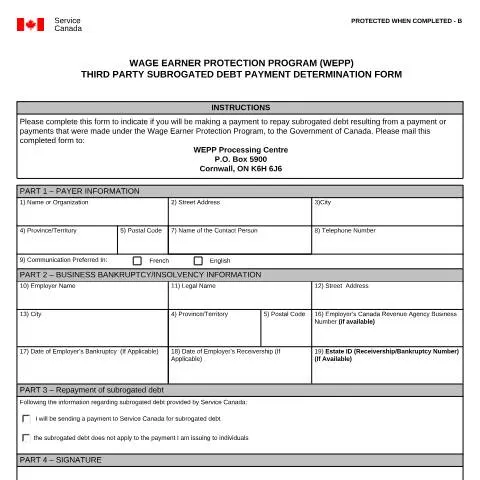
The EMP5656 form consists of several sections, each designed to capture specific information. Understanding these sections will enhance your ability to complete the form accurately and avoid common pitfalls.
Part 1: Payer Information
- Name or Organization: Clearly state the name of the entity responsible for the payment.
- Address: Ensure that you provide complete address details—this ensures that any correspondence regarding your submission reaches you.
- Contact Details: Providing a contact name and phone number allows for efficient communication from Employment Programs regarding your submission.
Ensure these details are accurate, as they form the basis of future communications.
Part 2: Business Bankruptcy/Insolvency Information
This section is particularly important as it pertains to the employer's financial status. You will need to provide details such as:
- Employer Name: Legal name of the bankrupt organization.
- Bankruptcy or Receivership Dates: Dates are crucial as they can affect the amount owed and the timeline for repayment.
Inaccurate information here can lead to delays or rejection of your submission.
Part 3: Repayment of Subrogated Debt
In this section, you're confirming your intention to repay the government for the amount advanced to employees. This is significant because it establishes your legal obligation to clear the debt. You’ll select one of the following options:
- I will be sending a payment to Service Canada for subrogated debt.
- The subrogated debt does not apply to the payment I am issuing to individuals.
Choosing the accurate option is vital to ensure your intentions are understood clearly.
Part 4: Signature and Date
The final part requires the signature of an authorized individual, confirming the validity of the information provided. It’s a simple step, but one that holds significant weight, as unsigned forms are automatically considered invalid.
Completing the Form: Best Practices to Avoid Common Pitfalls
Completing the EMP5656 form may seem straightforward, but there are pitfalls you should be aware of:
- Double-check Information: Errors in names, addresses, or dates can delay processing time. Always review the information before submitting.
- Stay Informed About Filing Deadlines: Make yourself aware of the timelines for submission to avoid unnecessary complications.
- Use Clear Formatting: If you’re submitting a hard copy, ensure legibility. Avoid cursive handwriting and use clear print.
These best practices can make a significant difference in the efficiency and outcome of your submission.
After Submission: What Happens Next?
Once you have submitted the EMP5656 form, the process does not stop there. Understanding what happens next is essential for effective follow-up.
- Initial Review: Your submission will first be reviewed for completeness and accuracy by Employment Programs.
- Confirmation of Receipt: You should receive a confirmation (via mail or email) indicating that your form has been received and is under review.
- Assessment of Payment: The government will assess your payment to ensure it aligns with the subrogated debt.
- Final Notification: After processing, you will receive a notification detailing the outcome of your submission.
Remaining proactive during this phase can help clarify any uncertainties and expedite your inquiry if needed.
What To Do If Your Submission Is Not Accepted
Even with careful preparation, there may be instances where your submission is not accepted. Here’s what you can do:
- Contact Employment Programs: Reach out to inquire about the specific reasons for the non-acceptance.
- Review and Correct: If there were errors, make the necessary corrections and resubmit.
- Provide Additional Documentation: Be prepared to submit any additional documents that may be requested.
Understanding how to address rejection can save time and reduce stress.
Special Cases: Unique Scenarios and Exceptions
In certain circumstances, the standard process may not apply. Here are some unique scenarios:
- Multiple Creditors: If there are multiple parties intending to repay a subrogated debt, coordination is crucial to avoid confusion.
- Change of Business Status: If the business situation changes after submitting the form, it’s vital to update Employment Programs promptly to reflect the new reality.
Familiarity with these exceptions can enhance your understanding of the process and reduce complications.
Following Up: Tracking Your Submission
Once you've submitted the EMP5656 form, it’s beneficial to have a system in place for tracking your submission:
- Keep Copies: Always retain a copy of the form and any correspondence related to your submission.
- Set Reminders: If you haven’t received a confirmation within a reasonable timeframe, set a reminder to follow up.
- Use Reference Numbers: If provided, always reference any submission ID or confirmation number when communicating with Employment Programs.
This systematic approach to tracking your submission will alleviate uncertainties and allow you to remain informed throughout the process.
Conclusion: The Importance of the EMP5656 Form in Debt Recovery
The WEPP – Intention to Repay Subrogated Debt Form for Third Parties is a critical component in Canada’s employment programs, especially in situations involving employer insolvency. Successfully navigating the intricacies of this form not only facilitates responsible debt repayment but also contributes to a smoother recovery process for affected employees. By understanding the steps, potential pitfalls, and the importance of accurate information, you position yourself to meet your obligations effectively and promptly.
Understanding the WEPP Process: A Comprehensive Guide
The Wage Earner Protection Program (WEPP) is designed to assist employees who have lost their jobs due to their employer's bankruptcy or receivership. Specifically, the Intention to Repay Subrogated Debt Form for Third Parties is crucial for facilitating the smooth processing of claims under this program.
When you fill out the Intention to Repay Subrogated Debt Form, you essentially acknowledge that you owe a debt that has been assumed by another entity, often a government body or an insurance company, after your employer has defaulted. This form is a vital document for ensuring that your claims for unpaid wages and other entitlements are prioritized and processed efficiently.
To navigate this process effectively, keep the following steps in mind:
- Gather Required Documentation: Before filling out the form, collect all necessary documentation that substantiates your employment history and the debt in question. This might include pay stubs, termination letters, and any correspondence from your employer or the entity assuming the debt.
- Fill Out the Form Accurately: Make sure that all the details you provide are accurate and match your official records. Inaccuracies can lead to delays in processing your application and may even result in denial of your claim.
- Review and Submit: Before submitting the form, review it thoroughly to ensure all information is correct. Submit the completed form to the designated office as instructed on the WEPP website. It’s advisable to keep a copy for your records.
By understanding the WEPP process, you can better navigate your rights and entitlements, ensuring that you receive the benefits you are owed as quickly as possible.
The Impact of Subrogation on Employee Claims
Subrogation is a legal principle that plays a critical role in the WEPP context. When an insurance company or a government agency pays out a claim on behalf of a claimant, they can pursue recovery from the party responsible for the loss—typically the employer. This can impact how and when you receive your wages or benefits under the WEPP.
Here's how subrogation might affect your claim:
- Pursuit of Claims: If your employer has declared bankruptcy, the entity that has paid for your claim may pursue recovery from the bankrupt estate. This means your claim might be subject to the recovery efforts of the third party, which can affect the timing and total amount paid out to you.
- Potential Delays: The process of subrogation can introduce delays. While you may be entitled to benefits under WEPP, if a third party is pursuing a claim, it could lengthen the overall process, as the entity may take time to assess and determine the amount recoverable.
- Documentation Requirements: Because of subrogation, you may be required to provide additional documentation to support your claim. It is crucial to maintain clear records and be prepared to submit anything that the WEPP program administrators might request.
Being aware of the implications of subrogation can help you make informed decisions and better prepare yourself for the claims process.
Frequently Asked Questions about the WEPP Intention to Repay Subrogated Debt Form
If you have further questions about the WEPP Intention to Repay Subrogated Debt Form, you’re not alone. Many individuals navigating this process have similar inquiries. Here are some frequently asked questions with clear, concise answers to help you:
- Who should complete the Intention to Repay Subrogated Debt Form? Any employee who has lost wages due to their employer's bankruptcy and has debts that have been assumed by a third party should complete this form. It's essential for determining eligibility for WEPP benefits.
- What happens if I don’t submit the form? Failing to submit the Intention to Repay Subrogated Debt Form may result in delayed processing of your WEPP claim, or in some cases, denial of benefits. It’s crucial to ensure this form is submitted alongside your claim.
- Can I fill out the form online? As of now, the WEPP forms can often be downloaded and printed. However, you should check the official WEPP website for the most current submission options, as the program may update its processes to improve accessibility.
- What if my circumstances change after submitting the form? If your employment or financial circumstances change after you have submitted the form, it is essential to notify WEPP immediately. This could affect your eligibility for benefits, and timely communication is key.
- Where can I get assistance with the form? Assistance is available through Service Canada. They have dedicated staff who can help you understand the form and the overall process. You can also visit the official WEPP webpage for additional resources and guidance.
These FAQs should help clarify your concerns, but always refer to the official WEPP channels for the most accurate and up-to-date information.