Navigating the Application for Funding: A Comprehensive Guide
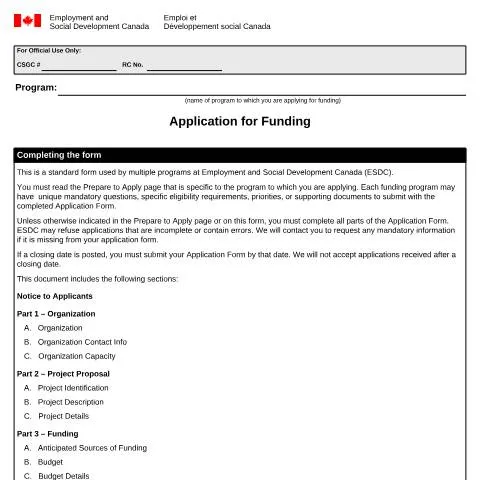
The Application for Funding form (EMP5523) from Employment and Social Development Canada (ESDC) plays a pivotal role in securing financial assistance for various programs. As such, understanding its nuances is crucial for organizations seeking funding. This article not only demystifies the application process but also highlights crucial considerations and tips for potential applicants.
Understanding the Context: Why Your Application Matters
When submitting the Application for Funding, you're not just filling out a form; you're embarking on a journey that could significantly impact your organization's ability to deliver essential services. This application is the key to accessing various funding opportunities offered by ESDC, aimed at stimulating employment, supporting marginalized communities, and fostering social development.
The Broader Purpose
The funding you apply for can help finance projects that align with the government's objectives, such as job creation, skill development, and community empowerment. Thus, it’s vital to present a compelling case that explicitly connects your project’s goals with those of ESDC.
Key Players in the Application Process
- Project Proponents: These are individuals or representatives authorized to submit proposals on behalf of their organizations.
- Funding Review Committee: Composed of ESDC officials, this group evaluates all applications based on predetermined criteria.
- Beneficiaries: Individuals or communities that will directly benefit from the funded projects.
Breaking Down the Application: Essential Sections Explained
The Application for Funding is segmented into several key parts, each designed to capture specific information about the applicant organization, the proposed project, and funding details.
1. Organization Details
This section requires comprehensive information about your organization. Make sure to include:
- Legal Name: Ensure this matches official records.
- Organization Contact Information: Provide current and valid contact details.
- Organization Capacity: Describe your ability to manage the proposed project effectively.
2. Crafting Your Project Proposal
Your project proposal is the heart of your application. It should include:
- Project Identification: Clearly state the project title and objectives.
- Project Description: Detail the activities involved and how they will be executed.
- Project Details: Include timelines, target populations, and expected outcomes.
3. Funding Insights
In this part, you must delineate:
- Anticipated Sources of Funding: Lay out potential co-funding partners or in-kind contributions.
- Budget: A granular budget breakdown is essential. Be transparent about all costs.
- Budget Details: Explain how the funds will be allocated across various project components.
Preparing for Submission: The Final Touches
Before submitting your application, review it meticulously. Here are some last-minute checks:
Double-Check for Completeness
- Ensure all mandatory fields are filled out.
- Attach any required supporting documents as specified.
- Verify calculations in your budget to prevent errors.
Keeping Track of Deadlines
Be acutely aware of submission deadlines. Late applications are typically not accepted, so plan ahead to avoid last-minute issues.
What Happens After Submission?
Once you submit your application, it's crucial to understand the next steps in the process:
Review Period
Applications undergo a rigorous review process where committees evaluate each proposal against established criteria. You may not receive immediate feedback, but patience is essential during this phase.
Possible Outcomes
- Approval: Congratulations! You will receive formal notification detailing the next steps.
- Request for More Information: If your application lacks clarity, you may be asked to provide further details.
- Denial: If your application is not approved, it's vital to seek feedback on why it was rejected to improve future submissions.
Handling Adversity: What If Things Don't Go as Planned?
Every applicant should be prepared for possible setbacks. If your application is denied or you encounter missing documents during submission, here’s what to do:
If Your Application is Denied
- Review the feedback provided or request it if it wasn't given.
- Identify any areas of weakness and refine your proposal accordingly.
- Consider reapplying in the next funding cycle or exploring alternative funding sources.
Addressing Missing Documentation
If you realize that you forgot to attach a required document, or if your application is marked incomplete, communicate with ESDC promptly. They might allow you to submit the missing piece post-deadline, but this is not guaranteed.
The Importance of Detailed Justification
When filling out the Application for Funding, it's essential to justify every request clearly. This includes:
Articulating Project Importance
Explain why your project is necessary and how it aligns with ESDC's objectives. Use data and statistics to support your case.
Identifying Target Groups
Be specific regarding the demographics your project aims to serve. This helps establish the project's relevance and urgency.
Understanding Your Rights and Obligations
Submitting an application also entails understanding your responsibilities and rights:
Rights Under Privacy Laws
Your personal information will be handled as outlined under the Privacy Act. You have the right to access and correct your data, and ESDC is committed to safeguarding your information.
Obligations as a Grant Recipient
Should your application be successful, it's crucial to adhere to all reporting requirements and project milestones as stipulated in the funding agreement.
Practical Insights for a Successful Application
While this guide provides a comprehensive overview, here are additional practical tips to enhance your application:
- Engage Stakeholders: Consult with key stakeholders to gather input and support for your proposal.
- Professional Formatting: Ensure your application is well-organized and free of errors. A polished look reflects professionalism.
- Utilize Templates: If available, use templates or past successful applications as a guide to format and structure your proposal effectively.
The Path Ahead: Maximizing Funding Opportunities
Securing funding through the ESDC’s Application for Funding can be transformative for your organization and the community it serves. By following this guide and meticulously preparing your application, you can increase your chances of success. Remember, the process is competitive, and clarity, justification, and alignment with ESDC's goals will strengthen your proposal.
Ultimately, successful funding is not merely about receiving money; it’s about creating lasting impacts in the lives of those you serve. Engage fully with the process, and be prepared to demonstrate how your project will contribute to Canada's social fabric.
Understanding the Different Types of Funding Available in Canada
When considering an application for funding in Canada, it's crucial to first understand the various types of funding available. Each category serves different purposes and may have specific eligibility requirements. Here are the primary types of funding you might explore:
Grants
Grants are non-repayable funds provided by government bodies, non-profits, or private organizations. They are typically awarded to support specific projects, initiatives, or research that align with the funder's goals. For instance, the Natural Sciences and Engineering Research Council of Canada (NSERC) offers grants for research projects. Generally, grants require a detailed proposal outlining the project's objectives, budget, and expected outcomes.
Loans
Unlike grants, loans require repayment over a specified period. Government-backed loan programs, such as those offered by Business Development Canada (BDC), cater to small and medium-sized enterprises. These loans aim to support innovation, expansion, or operational costs. Applicants typically need to demonstrate the viability of their business model and plans for repayment.
Tax Credits and Incentives
Tax credits are another form of funding available to businesses and individuals. For example, the Canada Media Fund provides tax credits to eligible Canadian productions. These credits can significantly reduce your tax burden, allowing you to allocate more resources toward your projects. Understanding the specific criteria and application process for these incentives can be beneficial, as they often require thorough documentation and compliance with industry standards.
Crowdfunding
Crowdfunding has gained traction in recent years as a viable funding source for startups and creative projects. Platforms allow individuals to present their ideas to the public, who can then contribute funds. While crowdfunding is not a traditional form of funding, successful campaigns often rely on effective marketing and community engagement. However, those applying for crowdfunding should be prepared to articulate their vision clearly and engage actively with potential backers.
Preparing a Comprehensive Funding Proposal
A well-prepared funding proposal is essential for increasing your chances of securing funding. Here’s a breakdown of the critical components to include:
Executive Summary
Start with an executive summary that succinctly outlines your project or initiative. This section should capture the essence of your proposal, including the problem you aim to solve, your proposed solution, and the anticipated outcomes. Make it engaging—this is your chance to hook the reader’s interest.
Project Description
In this section, you should provide a detailed description of your project. Clearly state your goals, objectives, and the need for your project. Include background information about your organization or yourself, highlighting your qualifications and experience related to the project. Make sure to define the target audience and how they will benefit from your project.
Budget Breakdown
A transparent and detailed budget breakdown is crucial. Outline all expected costs, including direct and indirect expenses, and provide justifications for each item. Funders want to see that you have thoroughly thought through your financial needs and that you can effectively manage funds. It’s advisable to categorize expenses into one-time costs and recurring expenses, which provides clarity to the funder.
Evaluation Plan
Funders often want to understand how the success of the project will be measured. Include an evaluation plan that outlines your methods for assessing the project’s impact and effectiveness. This can involve both qualitative and quantitative measures and should specify how you will gather data and analyze results. Providing timelines for evaluations can also be beneficial.
Sustainability Plan
Lastly, consider including a sustainability plan that outlines how you intend to continue the project after the funding period ends. Funders appreciate projects that demonstrate long-term viability and impact. Discuss potential partnerships, revenue streams, or ongoing support strategies that will help sustain your initiative beyond the initial funding.
Navigating the Application Process: Tips for Success
Once you have prepared your proposal, understanding the nuances of the application process is critical. Here’s how to navigate it successfully:
Research Funders Thoroughly
Spend time researching potential funders. Understand their priorities, mission statements, and areas of focus. Tailor your application to align with their objectives, demonstrating how your project supports their goals. This will help you create a more compelling case for funding.
Follow Guidelines Meticulously
Every funder will have specific guidelines and requirements for submissions. Pay close attention to details, such as formatting, length, and submission dates. Failure to adhere to these guidelines can result in immediate disqualification. Double-check your application for completeness and adherence to the required format.
Engage with Funders Early
If possible, reach out to funders before submitting your application. Many will welcome the opportunity to discuss your project or answer questions. This engagement can provide valuable insights and demonstrate your serious interest in collaboration. It also allows you to clarify expectations and gather feedback that may improve your proposal.
Seek Feedback and Revise
Before submitting, consider having peers or mentors review your proposal. They can offer constructive feedback and help identify areas for improvement. Revising your application based on this feedback can significantly bolster its quality and coherence.
Prepare for Follow-Up
Once you've submitted your application, be prepared for follow-up communication. Funders may have questions or need additional information. Respond promptly and thoroughly, ensuring you maintain a professional and courteous demeanor throughout the process.
Utilize Resources and Support Networks
Consider leveraging resources and support networks available at your disposal. Organizations such as Canada Business Network and local chambers of commerce offer guidance, workshops, and resources that can aid in the application process. Networking with other applicants or successful recipients can provide valuable insights and tips.