Navigating the Employment Equity Landscape with Form 6A
In the intricate web of Canada's employment regulations, the significance of Form 6A – Employees Terminated: Permanent Full-time cannot be overstated. This document serves as a critical component in the broader framework of employment equity, providing valuable insights into workforce demographics following terminations. It not only aids organizations in understanding their workforce composition but also supports the government in monitoring compliance with employment equity regulations aimed at promoting fairness.
Who Needs to Submit Form 6A and When?
Understanding the mandatory obligation to submit Form 6A begins with recognizing the obligations of employers. This form must be completed by any organization terminating permanent full-time employees, specifically those who fall under the purview of the Employment Equity Act (EEA). This includes:
- Private sector employers with 100 or more employees.
- Federal government departments and agencies.
- Organizations that are federally regulated.
Employers are required to submit this form annually, typically in conjunction with the reporting period which coincides with the end of the calendar year. Failure to comply can result in penalties and a lack of access to government contracts, so timely submission is crucial.
The Intricacies of the Form: A Breakdown of Sections
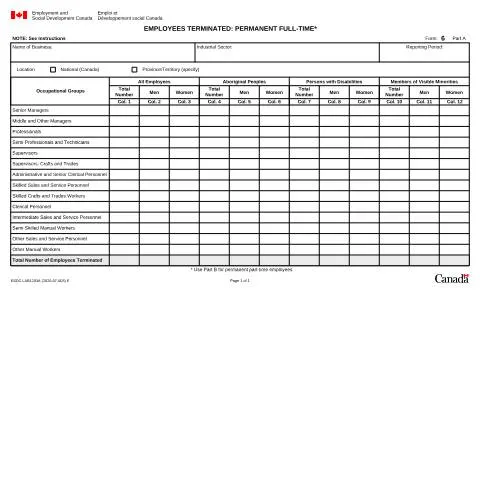
Form 6A includes various sections that gather essential data on terminated employees. Here’s a detailed look at what each section requires.
Occupational Groups and Employee Categories
The form is divided into occupational groups, allowing for a clear categorization of terminated employees. The key groups include:
- Senior Managers
- Professionals
- Skilled Crafts and Trades Workers
- Administrative and Clerical Personnel
For each group, the employer must specify:
- Total number of terminated employees
- Breakdown by gender (men and women)
- Specific demographics, such as Aboriginal Peoples, Persons with Disabilities, and Members of Visible Minorities
Attention to detail is paramount here, as inaccuracies can affect the overall compliance with employment equity objectives.
Completing the Form: Common Pitfalls
While filling out Form 6A, employers often encounter specific challenges. Here are some traps to avoid:
- Aggregating Data: Ensure each employee is recorded in the appropriate category. Mixing categories can lead to significant data integrity issues.
- Failure to Update Information: If an organization has undergone structural changes, it’s critical to reflect this accurately in the form.
- Incomplete Sections: Every section must be filled out, even if the answer is zero. Leaving sections blank can trigger follow-up queries from the reviewing agency.
Submission Channels and Their Nuances
Once completed, Form 6A must be submitted through the appropriate channels. Employers can choose to file either online or via traditional mail. Each method comes with its own set of advantages and challenges.
Online Submission
Filing online is often more efficient, providing immediate confirmation of submission. Employers will typically:
- Access the Government of Canada’s employment equity portal.
- Follow the prompts to upload the completed form.
- Receive a confirmation email for their records.
Mail Submission
For those who prefer the traditional route, submitting via mail requires careful consideration:
- Ensure the form is sent to the correct address as specified in the guidelines.
- Consider using a trackable mailing service to confirm delivery.
- Keep copies of all submitted documents for future reference.
The Role of Form 6A in Employment Equity Initiatives
Form 6A is not just a bureaucratic hurdle; it plays a significant role in advancing employment equity within Canada. By collecting detailed demographic data on terminated employees, it helps organizations identify patterns that could indicate systemic discrimination or barriers to employment.
Employers can leverage this data to:
- Adjust hiring strategies to improve diversity.
- Develop targeted training programs to enhance retention.
- Demonstrate compliance with the Employment Equity Act to secure government contracts.
Post-Submission: Awaiting Administrative Response
After submission, employers may wonder what to expect from the administrative process. The reviewing agency will typically assess the form to ensure compliance. Here’s what happens next:
Review Process
An initial review involves checking the accuracy of the submitted data. Employers may receive:
- Requests for clarification on specific entries.
- Notices of non-compliance if there are significant discrepancies.
Follow-Up Actions
It is advisable for employers to actively check the status of their submission. This can be done by:
- Contacting the Employment and Social Development Canada (ESDC) directly.
- Utilizing any tracking features provided during online submission.
Special Considerations: Complex Cases
Certain situations may complicate the submission of Form 6A. These may include:
- Termination of foreign workers: Additional documentation may be required to reflect their unique circumstances.
- Minors and young workers: Special considerations may apply concerning privacy and reporting requirements.
- Urgent submissions: In cases of unexpected mass layoffs, employers must act swiftly to ensure compliance.
Employers facing these situations are encouraged to seek guidance from legal or HR professionals well-versed in Canadian labor laws to navigate the complexities of form completion.
Final Thoughts: Best Practices for Employers
As organizations strive to comply with Canadian employment equity regulations, the meticulous completion of Form 6A becomes a cornerstone of their efforts. Here are some best practices to adopt:
- Regular Training: Ensure HR personnel are trained on the nuances of employment equity and the specifics of Form 6A completion.
- Data Management Systems: Implement robust HR management systems that facilitate easy data collection and reporting.
- Proactive Review: Regularly review workforce composition and internal practices to address potential disparities before they necessitate terminations.
By understanding the critical nature of Form 6A and engaging in best practices, organizations not only comply with legal obligations but also contribute to a more equitable workforce landscape in Canada.
Understanding Employment Equity and Form 6A
Form 6A, also known as the Employees Terminated: Permanent Full-time form, is a critical document under Canada's Employment Equity Act. This act aims to promote fairness in the workplace by ensuring that historically marginalized groups have equitable access to employment opportunities. The Employment Equity program requires employers in federally regulated sectors to report on the representation of designated groups, which include women, Indigenous peoples, persons with disabilities, and members of visible minorities.
When an employee is terminated, especially within the context of permanent full-time positions, the employer must complete Form 6A to report the circumstances surrounding the termination. This form is not merely a procedural requirement; it serves as a tool for monitoring compliance with the Employment Equity Act and assessing the effectiveness of workplace policies. Understanding the nuances of this form is essential for employers who wish to remain compliant and for employees who want to comprehend their rights and the implications of their terminations.
Filling Out Form 6A: Step-by-Step Guidance
Completing Form 6A requires meticulous attention to detail. Below is a step-by-step guide outlining the essential parts of the form and key considerations for accurate reporting.
Section 1: Identification of the Employee
This section asks for specific details about the employee being reported, including their full name, employee number, position, and the department they worked in. It's vital to ensure that all information is accurately filled in to avoid discrepancies that could result in penalties or misunderstandings during audits.
Section 2: Termination Details
Here, you must indicate the reason for termination. Common reasons include voluntary resignation, layoffs, or termination for cause. Each reason has implications for how future employment equity initiatives are assessed. For instance, if an employee was laid off due to economic reasons, it may reflect broader organizational challenges rather than individual performance. Properly documenting this can aid in interpreting the data later on.
Section 3: Reflection of Employment Equity Considerations
In this part of the form, you will provide insights into how the termination aligns with the organization’s employment equity goals. This is where employers can illustrate their commitment to diversity and inclusion. If the terminated employee belonged to one of the designated equity groups, their departure may necessitate a review of hiring practices to ensure that it does not negatively impact the representation of these groups within your workforce.
Common Pitfalls When Submitting Form 6A
While filling out Form 6A may seem straightforward, there are several common pitfalls that employers often encounter. Below, we break down these pitfalls and provide tips for avoiding them.
Inadequate Record-Keeping
One of the most prevalent issues is insufficient record-keeping related to employee terminations. Employers must maintain clear and comprehensive records that justify the reasons for termination. This includes documentation such as performance reviews, correspondence prior to termination, and any notes from exit interviews. Failing to have robust records can lead to challenges during audits, and potentially expose you to accusations of non-compliance with the Employment Equity Act.
Neglecting to Analyze Data for Employment Equity Insights
After submitting Form 6A, it’s essential to analyze the data it contains for insights into your organization’s employment equity status. Many employers fail to follow up on the implications of their termination data. Understanding trends can help organizations improve their hiring practices and create a more inclusive workplace. Regularly reviewing termination data in relation to employment equity can facilitate proactive measures rather than reactive adjustments.
Failing to Provide Bilingual Content
As with all government forms in Canada, Form 6A must be completed in both English and French. Employers sometimes overlook this requirement, risking delays or rejections of their submissions. Ensuring that both language versions are complete and accurate is essential for compliance with Canada’s bilingualism policy.
The Importance of Transparency in Reporting
Transparency is a cornerstone of effective employment equity practices. Employers must ensure they are honest and forthcoming in their reporting of terminations using Form 6A. Here are some reasons why transparency plays a crucial role in employment equity:
Building Trust with Employees
A transparent approach to reporting terminations fosters trust between employees and management. When employees are aware that their organization is committed to fair practices, they are more likely to feel secure in their roles and confident in the company's commitment to diversity. This not only enhances workplace morale but also can improve retention rates.
Enhancing Organizational Reputation
An organization perceived as transparent in its employment practices is likely to attract a diverse pool of candidates. Job seekers today are increasingly looking for employers who demonstrate a commitment to equity and inclusivity. By rigorously adhering to the reporting requirements of Form 6A, you can enhance your organization's reputation within your industry and the broader community.
Ensuring Compliance and Avoiding Legal Issues
Transparency mitigates the risk of legal challenges related to employment practices. Employers who are forthcoming in their reporting are less likely to face accusations of discrimination or non-compliance with the Employment Equity Act. By maintaining clear records and being transparent in your assessments, you can establish a strong foundation that minimizes legal risks.