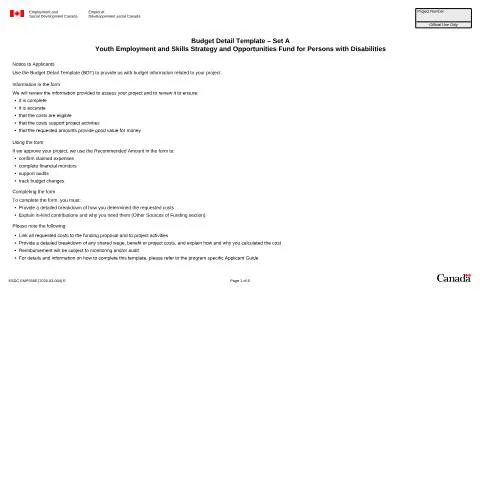
Unraveling the Budget Detail Template: A Vital Tool for Youth Employment Projects
When it comes to managing funding for youth employment initiatives in Canada, the Budget Detail Template - Set A is not merely a form; it is a crucial element that can make or break your project's success. This document, officially designated as ESDC-EMP5568, serves as the foundational block for organizations seeking financial support under the Youth Employment and Skills Strategy and Opportunities Fund for Persons with Disabilities. Understanding this template is essential for any applicant wishing to navigate the complexities of funding applications effectively.
Understanding Who Needs This Template
This document targets organizations that aim to implement programs focused on enhancing employment prospects for youth, especially those with disabilities. However, the intricacies of funding applications may vary based on specific organizational structures and project goals. This template is designed for:
- Non-profit organizations
- Community groups
- Educational institutions
- Other stakeholders focused on youth employment
Before diving into filling out the template, it is crucial to grasp the overall objectives of the funding program, which seeks to provide meaningful employment opportunities while fostering skill development in youth.
The Importance of Accuracy: Avoiding Pitfalls
Many applicants underestimate the importance of precision in their submissions. Errors or omissions can lead to refusals, delays, or even financial penalties. Accuracy plays a critical role in:
- Meeting Eligibility Criteria: Ensure that all costs listed are eligible and align with the funding objectives.
- Supporting Project Activities: Each expense must directly support the activities outlined in your project proposal.
- Facilitating Financial Monitoring: Accurate details help in tracking budget changes and auditing processes.
Before submitting your application, double-check each entry. A missing signature or an incorrect figure could jeopardize the entire funding process.
A Step-by-Step Walkthrough of the Submission Process
Completing the Budget Detail Template involves several crucial steps. Here’s how to approach it:
- Gather Necessary Information: Collect all relevant data about project expenses, including staffing, materials, and operational costs.
- Complete the Template: Fill in each section accurately, ensuring all financial figures are justified and linked to project activities.
- Review for Completeness: Ensure that no sections are left blank and that you have attached any required documentation.
- Submit the Template: Once completed, you can submit the form either online or in hard copy, depending on your organization's preference and the funding body’s requirements.
Each of these steps is pivotal, and understanding them thoroughly can save you from various hassles later on.
Special Considerations for Unique Circumstances
Applicants may encounter unique situations that complicate the submission process:
- International Applicants: Organizations based outside Canada may have additional requirements to fulfill, such as demonstrating local partnerships or verifying compliance with Canadian regulations.
- Minor Applicants: If the project involves minors, extra precautions such as parental consent or specific safeguarding measures may be required.
- Complex Organizational Structures: If you're part of a larger organization with multiple funding streams, ensuring that your proposed costs align with the funding guidelines is crucial.
Each of these cases demands careful consideration and often requires supplemental documentation or justifications.
Consequences of Non-Compliance: Knowing Your Risks
The stakes are high when it comes to compliance with the guidelines set forth in the Budget Detail Template. Neglecting these guidelines can lead to:
- Funding Refusal: Incomplete or inaccurate information may lead to outright rejection of your funding application.
- Delayed Project Implementation: Missing or erroneous details can stall the approval process, delaying your project timelines.
- Financial Repercussions: If your project is approved but later found non-compliant, you may be required to repay funds or face legal action.
Understanding these risks is paramount for any organization looking to navigate the funding landscape effectively.
Where Does This Template Fit in the Bigger Picture?
The Budget Detail Template doesn’t exist in a vacuum; it’s part of a larger bureaucratic process. Typically, here’s how it fits:
- Funding Application: This template is one component of your overall funding application package, which may include a project proposal and letters of support.
- Approval Process: After submission, the ESDC reviews your application, using the budget details to assess financial viability and alignment with project goals.
- Monitoring and Reporting: Post-approval, accurate budget details facilitate reporting and monitoring, ensuring compliance with funding conditions.
Each step interlocks, making the accurate completion of this template a cornerstone for your project’s success.
Exploring Alternative Submission Channels
While the Budget Detail Template can be submitted via various channels, each comes with its own set of pros and cons:
| Submission Channel | Pros | Cons |
|---|---|---|
| Online Submission | Quick processing, instant confirmation | Requires internet access and technical know-how |
| Paper Submission | Familiar for many applicants, no tech required | Longer processing times, risk of lost mail |
| In-Person Submission | Opportunity to clarify questions on the spot | Time-consuming, requires travel |
Choosing the right submission channel depends on your organization’s capabilities and circumstances.
Important Links and Resources for Applicants
Finally, as you navigate this complex bureaucratic landscape, having the right resources is invaluable. The following tools can aid in completing the Budget Detail Template:
- ESDC Guidelines: Visit the official ESDC website for comprehensive guidelines regarding eligibility and project expectations.
- Applicant Guide: Refer to the specific applicant guide associated with the Opportunities Fund for detailed instructions on requirements.
- Workshops and Webinars: Participate in ESDC-hosted events that offer insights into best practices for completing funding applications.
Leveraging these resources can significantly enhance your understanding and execution of the Budget Detail Template.
Understanding the Youth Employment and Skills Strategy (YESS)
The Youth Employment and Skills Strategy (YESS) is a critical initiative developed by the Government of Canada to assist young people in building their skills and gaining work experience. This program aims to respond to the unique challenges that youth face in the job market, particularly those from underserved or marginalized backgrounds. The strategy particularly emphasizes the importance of engaging youth with disabilities, ensuring that they have equal access to employment opportunities.
To participate in YESS, potential applicants must understand its key components. There are several streams available, including the Opportunities Fund for Persons with Disabilities, which provides funding to organizations that support individuals with disabilities. This funding can help cover costs related to training, assistive devices, and job placements, all tailored to meet the specific needs of youth with disabilities.
The eligibility criteria often revolve around age, typically targeting individuals aged 15 to 30, and the applicant's disability status. Additionally, organizations applying for funding must demonstrate a capacity for delivering effective programs that align with YESS's goals. Consideration is given to how well these programs address barriers faced by youth with disabilities, including transportation, communication, and workplace accommodations.
Creating a Detailed Budget for Your YESS Proposal
When applying for funding under the Youth Employment and Skills Strategy, particularly through the Opportunities Fund for Persons with Disabilities, crafting a detailed budget is imperative. A well-structured budget not only reflects the financial needs of your program but also demonstrates your capability to manage funds effectively.
Your budget should include various components such as personnel costs, materials, transportation, and any accommodations necessary for participants with disabilities. Here are some key considerations:
- Personnel Costs: Outline salaries for program coordinators, trainers, and support staff. Make sure to provide justifications for each position and the time commitment expected for the program’s duration.
- Training Materials: Itemize all necessary supplies and resources, including printed materials, digital tools, and assistive technologies that participants may need.
- Transportation Allowances: Many youth, particularly those with disabilities, may require assistance with transportation to job placements or training sites. Account for mileage, public transit fares, or taxi services as needed.
- Program Evaluation: Include costs associated with evaluating your program's effectiveness, such as surveys or assessments, to gather feedback from participants and stakeholders.
In presenting your budget, clarity is paramount. Using a standardized budget template can help organize your financial plan. Clearly delineate between fixed and variable costs, and provide rationales for anticipated expenditures. This will significantly enhance your proposal's credibility and demonstrate your preparedness to effectively manage the allocated funds.
Impact Measurement and Reporting for Funded Programs
Once funding is secured through the Opportunities Fund for Persons with Disabilities, it's essential to establish a robust framework for measuring and reporting the program's impact. Funders, including Service Canada, typically require detailed reports that outline how funds were utilized and the outcomes achieved. Here are some key aspects to consider:
Setting Clear Objectives: Before launching your program, define specific, measurable objectives. These could include the number of youth employed, the types of skills developed, or the overall satisfaction of participants. Having clear goals will provide a benchmark against which you can measure success.
Data Collection: Implement a systematic approach to data collection throughout the program. This can include participant surveys, employment outcome tracking, and feedback from employers. Ensure that the data collected is both quantitative (e.g., number of job placements) and qualitative (e.g., participant testimonials).
Regular Reporting: Prepare to submit periodic reports to Service Canada, detailing the progress of your program. These reports should include financial statements, a summary of activities undertaken, and an analysis of how well the program is meeting its stated objectives.
Continuous Improvement: Use the data gathered to inform program modifications. If certain strategies are not yielding the desired outcomes, be prepared to adapt and revise your approach. This not only demonstrates accountability but also a commitment to ongoing improvement, which is critical for future funding opportunities.
By establishing a structured approach to impact measurement and reporting, you not only fulfill the requirements set by the funding agency but also contribute to the overall knowledge base regarding effective practices in supporting youth with disabilities in the workforce.